
What Does It Really Mean to Light Up a Room?

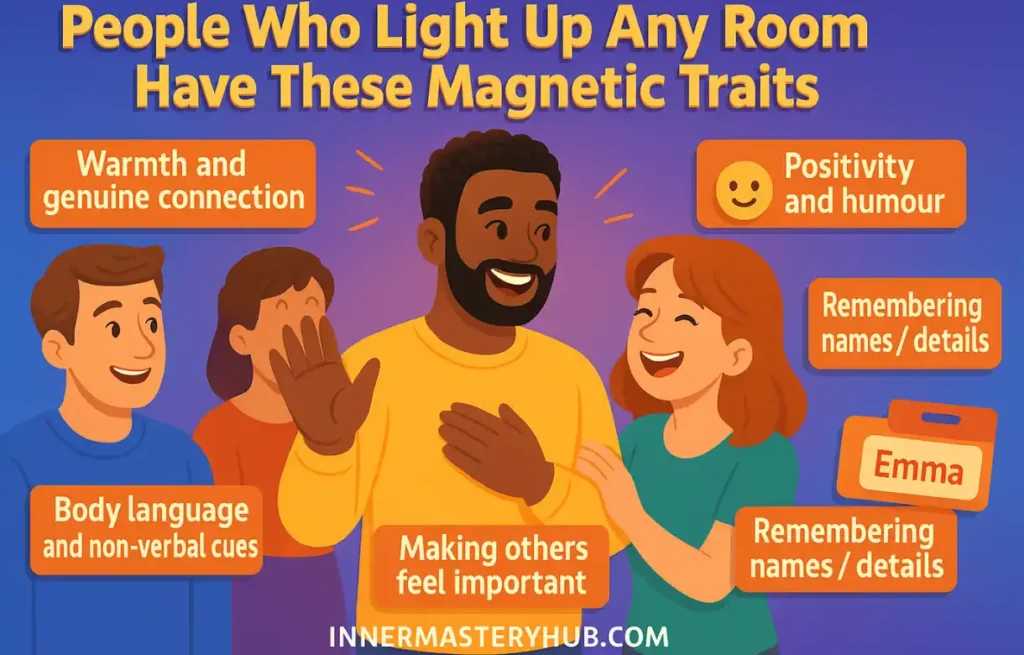
People who light up any room often make interactions feel a little easier. They may listen closely, respond warmly, remember small details, or give you the sense that they are genuinely present with you. You don’t necessarily notice them because they are loud or confident. Sometimes you notice them because you feel more comfortable being yourself around them.
What Does It Mean to Light Up a Room?
Over the past five years of counselling, I’ve met many different kinds of people who others seem to enjoy being around. Some are talkative. Some are quiet. Some speak confidently, while others take time to settle into a conversation.
What often stands out is how they behave with the person in front of them.
They let you finish a sentence instead of jumping in with their own story. They look up from their phone when you speak. They remember something you mentioned earlier and ask about it later. If you pause, they do not rush to fill the silence. And when you disagree with them, they can hear your point without immediately becoming defensive.
These small behaviours can make a conversation feel easier, although not everyone will experience the same person in the same way.
This is why I would not describe “lighting up a room” as simply being confident or charismatic. Someone may be funny, expressive, or good at getting attention. Still, another person may leave a stronger impression because they made space for you to speak, noticed when you became quiet, included you in the conversation, or responded without making you feel embarrassed for what you said.
Research offers some support for the value of noticing social cues. In a series of studies, people who were better at identifying emotional signals in facial expressions also tended to report better-quality social interactions, while misreading those signals was linked with more negative experiences of those interactions.1
You do not have to become more entertaining to be someone people remember. Sometimes it is as simple as putting your phone away, listening until the other person is finished, asking one thoughtful follow-up question, remembering what matters to them, and giving them room to be part of the conversation.
Charisma and Emotional Safety: What’s the Difference?
In everyday interactions, charisma and emotional safety can show up in different ways. Someone may be confident and socially engaging, while another person may help you feel more settled simply by listening carefully and responding without judgment. These qualities can exist separately or together.
| Charisma may involve | Emotional safety may feel like |
|---|---|
| Being engaging or expressive | Feeling respected and at ease |
| Confidence, humor, or social energy | Consistency and thoughtful responses |
| Making a strong first impression | Being able to speak more openly |
| Drawing attention in a group | Feeling listened to rather than judged |
| Creating excitement or interest | Supporting trust over repeated interactions |
Is charisma the same as emotional intelligence?
Not necessarily. Someone can be funny, confident, and good at holding a room’s attention while still interrupting, missing social cues, or reacting badly when challenged.
Someone quieter may show a different kind of social skill. They may notice when another person wants to speak, stop themselves from interrupting, or handle disagreement without making the conversation tense.
13 Emotional Traits of People Who Light Up Any Room
You do not need a bigger personality to become easier to be around. Much of it shows up in ordinary moments: how you greet someone, whether you let them finish speaking, how you respond when you disagree, and whether you make room for people who have not said much.
These 13 qualities are less about becoming “charismatic” and more about small behaviours you can practise in everyday conversations.
1. You Make People Feel Welcome
You do not need an exaggerated smile and a perfect greeting. A simple hello, using someone’s name, looking up when they approach, or making space for them to join the conversation can be enough.
The important part is not appearing friendly. It is showing the person that you have noticed them.
2. Your Body Language Matches the Conversation
Body language matters, but there is no single posture that makes someone trustworthy.
Instead of forcing eye contact and constantly leaning forward, notice whether your body shows that you are still engaged. Turn toward the person when possible, look up from your phone, and avoid appearing ready to leave while they are still speaking.
Comfortable body language will also look different across personalities, cultures, and situations.
3. You Bring Some Lightness Without Forcing Positivity
People often enjoy being around someone who can notice something funny, appreciate a good moment, or keep a small problem from becoming the centre of the day. That does not mean pretending everything is fine.
If someone is having a difficult time, you do not need to immediately cheer them up. Sometimes listening seriously is more helpful than searching for something positive to say.
4. You Can Speak With Confidence Without Needing to Win
Confidence can be as simple as saying what you think without apologising for every sentence.
You can have an opinion and still hear someone else’s. You can say “I don’t agree” without turning the conversation into a competition.
That tends to feel very different from confidence that depends on proving someone else wrong.
5. You Let People Finish
Listening becomes visible in small ways.
You wait until someone has finished their thought. You ask about something they just said instead of changing the subject. You do not spend the whole time preparing your own reply.
If you are unsure what they mean, ask instead of assuming.
6. Your Words and Behaviour Usually Match
Being genuine does not mean telling everyone everything about yourself.
It can be much simpler.
If you do not know something, say you do not know. If you cannot do something, avoid promising that you can. If something matters to you, you can say so without creating a version of yourself that you think other people will prefer.
7. You Have Things That Matter to You
People do not need a grand “purpose” to be interesting.
You may care about your work, family, art, study, faith, fitness, a business you are building, or something you are still learning.
Having things that matter to you gives you something real to talk about. You do not have to turn those goals into a performance for other people.
8. You Notice What You Do With Difficult Feelings
You are allowed to be tired, irritated, worried, or disappointed.
The difference is in what you do with those feelings.
You may take a moment before replying sharply. You might say, “I’m having a rough day,” instead of pretending nothing is wrong and then snapping at someone.
Emotional regulation is not about replacing every uncomfortable feeling with a positive one. It is about having more choice in how you respond.
9. You Try to Understand Before You Assume
Empathy does not mean accurately guessing what another person is feeling.
Instead of deciding, “They’re anxious,” or “They’re upset,” you can ask.
“You seem quieter today. Everything okay?”
Or simply give them room to tell you in their own words.
Understanding someone usually begins with listening rather than interpreting them from a distance.
10. You Give the Conversation Your Attention
You do not have to be completely focused every second.
But when someone is telling you something important, putting your phone down, looking away from the screen, and following what they are saying tells them the conversation matters.
Presence is often much more ordinary than it sounds.
11. You Share Stories Without Taking Over
Stories help people know you.
Instead of listing facts about yourself, you might tell a short story about something that happened at work, a mistake you can now laugh about, or something you recently learned.
The key is to notice whether the other person still has room to participate. A good conversation is not a performance with one speaker.
12. You Do Not Need to Look Perfect
You can admit that you made a mistake, changed your mind, or do not have an answer.
That does not mean sharing private experiences before you are ready.
Vulnerability should be a choice, not something you do because you have been told it will make people like you.
Sometimes humility is simply saying, “I got that wrong.”
13. You Keep Doing the Small Things
A single warm conversation does not define how you treat people.
What tends to matter over time is consistency.
You reply when you said you would. You remember something important to someone. You apologise when necessary. You include people even when there is nothing to gain from doing it.
You do not have to “bring good energy” every day. Aim for behaviours you can actually repeat.
How to Develop These Traits
You do not need to work on all 13 at once.
Start with what happens during your normal conversations.
- Notice one interruption.
- Ask one follow-up question.
- Pause before reacting when irritated.
- Include one person who has not spoken.
- Review one conversation at the end of the day.
You are not trying to become the person everyone likes. You are practising ways of relating to people that leave more room for both of you.
Why Some People Feel Naturally Magnetic
Some people are easy to talk to because they do not make every conversation about themselves.
They let you finish your point. They ask a follow-up question instead of immediately telling a similar story of their own. If someone in a group has barely spoken, they may turn to them and ask what they think. And when they disagree, they can say so without trying to embarrass or overpower the other person.
Those are often the moments people remember.
They may also notice small changes during a conversation. Someone starts giving shorter answers. Their voice becomes quieter. They stop making eye contact or hesitate before replying. Instead of pushing ahead, the other person may slow down, change the subject, or simply give them a little more time.
Research by Lopes and colleagues found that, among 76 college students, people who scored higher on a measure of emotion-regulation ability were also more likely to receive positive peer ratings for behaviours such as being considerate and helpful, and were more likely to have mutual friendships.[2] The study found a relationship between these factors; it did not show that emotion regulation automatically makes someone more likeable.
A larger set of three studies involving 544 college students in Germany, Spain, and the United States found something related: people who were better at choosing helpful responses in emotional situations tended to report less conflict with others. The connection was stronger for handling conflict than for creating closeness or companionship.[3]
So when someone seems “magnetic,” there may be nothing mysterious happening. You may simply remember that they gave you time to speak, noticed when the mood changed, included people who were being overlooked, and did not turn every difference of opinion into a fight.
Can Difficult Past Experiences Shape How You Read Other People?
If you grew up around frequent criticism, conflict, or unpredictable reactions, you may have learned to pay close attention to small changes in other people.
You might notice a sharper tone, a sudden silence, or someone becoming distant. You may also catch yourself wondering whether you did something wrong, even when nobody has said that you did.
That kind of watchfulness can look very different from person to person. It does not automatically make someone more empathic, socially skilled, or “magnetic.”
Research has found links between childhood adversity and later difficulties with emotion regulation. A meta-analysis of 215 studies found higher levels of rumination, emotional suppression, and broader regulation difficulties among people with more childhood adversity.[4] These were group-level findings, so they do not tell us how one particular person will respond.
The same behaviour can also come from very different places.
Noticing that someone has gone quiet may help you realise they need more space. But if you keep checking their face, replaying their tone, or trying to work out whether you have upset them, the interaction can become exhausting.
Some people I have worked with eventually begin to notice a useful difference: “I can see that this person is upset” is not the same as “I need to make them feel better.”
That shift can show up in ordinary situations.
You may stop apologising automatically when someone looks annoyed. You may ask what they mean instead of trying to guess. You may let someone disagree with you without changing your position just to keep the peace. And you may start recognising when you are taking responsibility for a mood that is not actually yours to manage.

Why Some Conversations Leave You Drained
A conversation can feel tiring when you spend most of it trying to keep things on track.
You may have to repeat yourself, wait for space to speak, soften everything you say, or keep reassuring the other person. Sometimes you leave the conversation thinking about what you should have said differently.
A different conversation may feel easier because you are not working that hard to manage it. You can finish your point, disagree without being pushed, and take a pause without feeling awkward.
Research on emotional contagion suggests that facial expression, tone of voice, and other social cues can influence how interactions feel.[5] But feeling tired after talking to someone does not tell you exactly what is happening inside that person.
Sometimes the most useful thing to look at is what actually happened: Did you have room to speak? Were you constantly defending yourself? Did you spend the whole conversation trying to keep the other person comfortable?
What Common Mistakes Stop People From Becoming Emotionally Magnetic?
Some habits can make a conversation feel harder than it needs to be. They often show up when you are trying to make a good impression, avoid awkwardness, or keep control of how other people see you.
Mistake 1: Trying Too Hard to Be Liked
You may notice yourself agreeing too quickly, laughing when you do not find something funny, explaining yourself more than necessary, or checking the other person’s face to see whether they approve.
The conversation can then become less about getting to know each other and more about managing their reaction.
A useful sign to watch for is this: are you changing what you say because it feels true to you, or because you are afraid the other person may not like it?
Mistake 2: Confusing Being Noticed With Being Good Company
Someone can hold everyone’s attention and still leave little room for anyone else.
They may tell the longest stories, interrupt often, steer every topic back to themselves, or keep raising the energy when the group is ready to slow down.
Being memorable does not always come from speaking more. Sometimes people remember the person who asked them a good question, noticed they had not spoken yet, or gave them enough time to finish a thought.
Mistake 3: Reacting Before You Notice What Is Happening
When you feel embarrassed, irritated, left out, or challenged, your first response may come out quickly.
You might interrupt. Defend yourself before the other person has finished. Make a joke to cover discomfort. Go quiet and withdraw. Or send a message you later wish you had worded differently.
The useful part is not trying to stay calm all the time. It is noticing your own pattern early enough to do something different with it.
Sometimes that means asking for a minute. Sometimes it means saying, “I think I took that personally,” instead of continuing the argument.
Mistake 4: Trying to Look Perfect
Trying to appear completely confident, knowledgeable, or unaffected can make ordinary conversation feel stiff.
You do not need to share private details to seem real. Small moments are usually enough.
You can say:
- “I don’t know.”
- “I misunderstood that.”
- “I was nervous about it.”
- “I need to think about that.”
Those responses give the other person something more honest to work with than a polished version of you that never hesitates, changes its mind, or gets anything wrong.
The goal is not to become more impressive. It is to notice the habits that make you less available in a conversation: performing, interrupting, over-explaining, competing for attention, or hiding every sign of uncertainty.
Conclusion
People who light up a room are not always the ones talking the most.
You may remember them because they listened without interrupting, included someone who had been left out, or disagreed without making the conversation uncomfortable. Those are ordinary behaviours, not a special personality type.
If you want to work on this, choose one thing you can actually notice in your next conversation. Let someone finish. Ask one more question. Put your phone away. Notice when you are changing what you say just to get approval.
You will not feel close to everyone, and everyone will not respond to you in the same way. What you can pay attention to is how you speak, listen, react, and make room for the person in front of you.
FAQs
What traits do people who light up any room share?
They often show it through small behaviours: letting people finish, asking follow-up questions, remembering details, including quieter people, and handling disagreement without trying to embarrass or overpower someone.
What body language do people who light up any room use?
There is no single posture that makes someone likeable or trustworthy. In conversation, attention may show through simple things such as looking up from your phone, turning toward the speaker when comfortable, and not appearing rushed while they are talking. Eye contact and posture also vary across people and cultures.
Why are some people easier to feel comfortable around?
They may give you time to speak, avoid mocking or interrupting you, ask before making assumptions, and allow disagreement without turning it into a contest. Different people will still feel comfortable with different personalities.
Can you learn to be more present in conversations?
Yes. You can practise specific behaviours such as putting distractions aside, letting someone finish before replying, asking follow-up questions, and noticing when you have stopped listening because you are preparing your own response.
Are charismatic people always emotionally intelligent?
No. Someone can be funny, confident, expressive, or good at holding attention and still interrupt, miss social cues, or react poorly to disagreement. Emotional skills and charisma can overlap, but one does not guarantee the other.
Can introverts have magnetic personalities?
Yes. Being memorable in a group does not require being highly talkative. An introverted person may stand out by listening closely, asking thoughtful questions, remembering details, or making room for other people to participate.
- Hess, U., & Kafetsios, K. (2016). Signal and noise in the perception of facial emotion expressions: From labs to life. Personality and Social Psychology Bulletin, 42(8), 1092–1110. ↩︎
- Lopes, P. N., Salovey, P., Côté, S., & Beers, M. (2005). Emotion regulation abilities and the quality of social interaction. Emotion, 5(1), 113–118. https://doi.org/10.1037/1528-3542.5.1.113 ↩︎
- Lopes, P. N., Nezlek, J. B., Extremera, N., Hertel, J., Fernández-Berrocal, P., Schütz, A., & Salovey, P. (2011). Emotion regulation and the quality of social interaction: Does the ability to evaluate emotional situations and identify effective responses matter? Journal of Personality, 79(2), 429–467. https://doi.org/10.1111/j.1467-6494.2010.00689.x ↩︎
- Miu, A. C., & Szentágotai-Tătar, A. (2022). Emotion regulation as mediator between childhood adversity and psychopathology: A meta-analysis. Clinical Psychology Review, 93, 102141. https://doi.org/10.1016/j.cpr.2022.102141 ↩︎
- Hatfield, E., Cacioppo, J. T., & Rapson, R. L. (1993). Emotional contagion. Current Directions in Psychological Science, 2(3), 96–100. https://doi.org/10.1111/1467-8721.ep10770953 ↩︎
Written By Mehwish Qurayshi
Mehwish Qurayshi is a Trauma-Informed Emotional Wellness Counsellor trained through NICABM’s Treating Trauma Master Series, which includes NBCC-approved education in Trauma Treatment and Emotional Wellness & Emotional Intelligence – Sourcecode Academia. She has over five years of experience providing emotional wellness counselling, helping individuals heal from trauma, regulate emotions, and build healthy relationships.