
Are You Absorbing Others’ Energy Like an Emotional Sponge
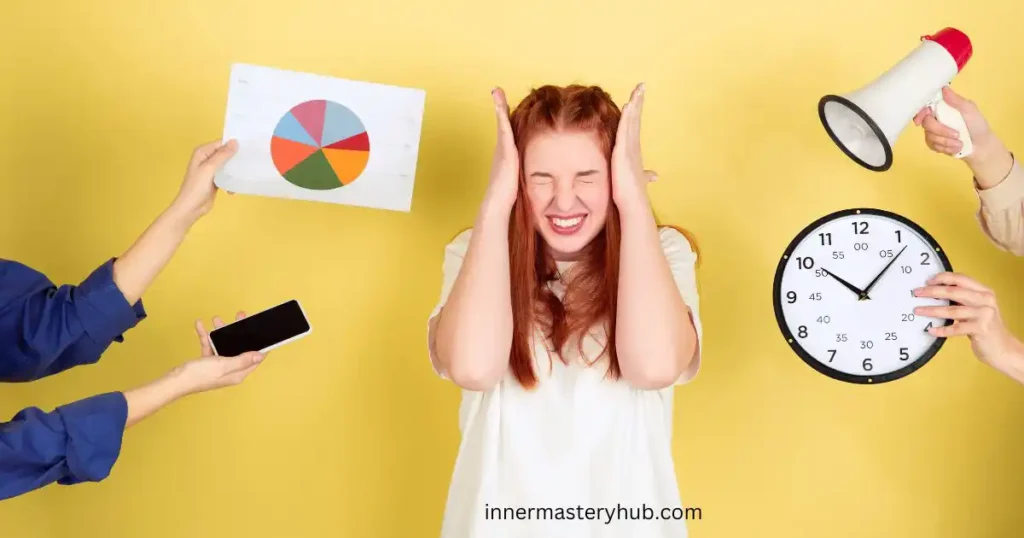
Absorbing Others’ Energy
Absorbing others’ energy can leave you feeling drained, anxious, or emotionally heavy, especially in crowded or stressful environments. Build simple boundaries: pause, breathe, and name what is yours versus what is not.
You walk into a room feeling fine, but leave feeling heavy. Nothing “happened,” yet something inside you shifted.
That’s the quiet reality of absorbing others’ energy.
You try to stay strong, but your mood keeps changing depending on who you’re around. You wonder, “Why do I feel so affected by others?”
This is not just sensitivity. It’s about emotional regulation, how your mind processes external emotions, and how your internal system reacts.
The struggle isn’t weakness. It’s confusion.
You feel deeply, but you don’t always know what belongs to you.
Psychologist Carl Jung once suggested that what we perceive externally reflects internal processes. And here, your emotional system is doing something important, but misunderstood1.
What Does Absorbing Others’ Energy Really Mean?
Absorbing others’ energy means unconsciously taking in and internalizing other people’s emotions, moods, or stress as if they were your own. This happens in emotionally sensitive people or those with high empathy.
When someone near you feels anxious, your brain reads subtle cues:
Tone of voice
Facial expressions
Body language
Your mind interprets these signals quickly.
Because you’re empathetic, you don’t just understand them, you feel them.
This creates a chain reaction:
You notice tension
You interpret it as something important
Your body reacts emotionally
You carry that feeling forward
But here’s the misunderstanding:
You think you’re reacting to your own emotions.
In reality, your system is responding to someone else’s emotional state.
Why Do You Absorb Other People’s Energy So Easily?
You absorb others’ energy due to high emotional sensitivity, learned behavioral patterns, and a strong need for connection and safety. Your brain prioritizes emotional awareness, sometimes at the cost of personal boundaries.
What’s Happening Inside You
It often starts early.
If you grew up needing to read people carefully, maybe to avoid conflict, you trained your brain to stay alert to emotional shifts.
That pattern stays.
According to research published in Frontiers in Psychology (2017), highly empathetic people exhibit increased activation in brain regions associated with emotional processing2.
So when someone feels:
- Angry
- Sad
- Stressed
Your brain doesn’t just observe, it mirrors.
But because you’re not consciously aware of this process, it feels like your own emotion.
Are You Absorbing Energy or Just Being Empathetic?
Empathy means understanding others’ emotions, while absorbing energy means internalizing and carrying those emotions as your own. The difference lies in emotional boundaries.
| Empathy | Absorbing Energy |
|---|---|
| You feel with others | You feel as others |
| You stay aware of self | You lose emotional clarity |
| You can step back | You stay aware of yourself |
Philosopher Brené Brown explains that empathy requires connection without losing yourself.
But when boundaries blur, empathy turns into emotional overload.
Why Does Absorbing Others’ Energy Feel So Draining?
It feels draining because your nervous system processes emotions that aren’t yours, creating overload, confusion, and emotional fatigue without clear resolution.
The Hidden Cycle
Here’s what naturally happens:
You sense someone’s stress.
You interpret it as something important.
Your body reacts, heart rate changes, thoughts shift.
You try to process it… But there’s no clear source.
This creates:
- Emotional fatigue
- Mental clutter
- Irritability
Because your brain is solving a problem that doesn’t belong to you.
Research from the American Psychological Association shows that emotional labor without boundaries leads to burnout3.
What Are the Signs You’re Absorbing Others’ Energy?
Common signs include sudden mood shifts, emotional exhaustion after social interaction, difficulty identifying your own feelings, and feeling responsible for others’ emotions.
Key Signs
- You feel tired after being around certain people
- Your mood changes quickly in social settings
- You overthink conversations
- You feel responsible for fixing others’ feelings
- You struggle to separate your emotions from those of others
These are not random.
They reflect a pattern of emotional absorption.
What Do Most People Get Wrong About Absorbing Energy?
Most people think that absorbing energy is a special ability or a weakness, but it’s actually a learned emotional pattern tied to boundaries and perception.
The Misunderstanding
You might think:
- “I’m just too sensitive.”
- “I can’t handle people.”
But the truth is different.
It’s not about sensitivity alone.
It’s about:
- How you interpret emotional signals
- How much responsibility do you take for them
- How your brain processes emotional input
Psychologist Elaine Aron describes highly sensitive people as deeply responsive rather than fragile4.
The issue isn’t feeling deeply.
It’s carrying what isn’t yours.
How Does Absorbing Others’ Energy Affect Your Mental Health?
It can lead to anxiety, emotional burnout, identity confusion, and chronic stress because your emotional system becomes overloaded and unclear.
Internal Impact
When this pattern continues:
- You lose emotional clarity
- Your stress increases
- You feel mentally scattered
Over time, this may contribute to:
- Anxiety disorders
- Emotional exhaustion
- Difficulty making decisions
Because your internal world becomes crowded with external emotions.
Causes of absorbing others’ energy
Absorbing other people’s energy, which is talked about in terms of emotional contagion, can happen for several reasons, including:
Imitation and Synchronization
People automatically mimic others’ expressions, postures, and behaviors, which might lead them to share those emotions.
Empathy
People with high empathy may more easily put themselves in others’ shoes and feel their feelings.
Social and Environmental Factors
Frequent, close interaction with others, especially in emotionally charged contexts, enhances the possibility of absorbing emotions.
Neurological factors
The brain’s mirror neuron system helps us interpret and mirror others’ feelings, leading to emotional synchrony.
The Ripple Effect of Absorbing others’ energy
The effects of absorbing other people’s energy go beyond simply temporarily altering your mood. Your well-being and mental health may suffer significant long-term consequences. Regular exposure to emotionally charged situations, for example, might raise stress levels and possibly exacerbate anxiety and depression.

Absorbing others’ energy during conversations
During a conversation, it’s simple to sense how someone is feeling, right? For example, you might feel the same way if they’re happy or overwhelmed. This is because when we talk to someone, we easily copy their facial expressions, tone of voice, and even their posture. This can make us feel the same way they do.
All of this is based on science. For example, Hatfield and her friends conducted extensive research in 1993 that showed how our brains and behavior interact when we’re with other people. It’s like getting a cold through emotional sensitivity!
Strategies to Shield Yourself from Absorbing others’ energy
Awareness and Identification
Knowing when it occurs is the first step in handling the absorption of other people’s energy. Observe how your feelings shift following social interactions. Are you feeling revitalized or exhausted? Identifying these patterns is vital for controlling emotional sensitivity.
Set Boundaries
Emotional boundaries must be established. This could entail being choosy about whom you spend time with, learning to say no, or reducing the time you spend in unpleasant situations. For instance, after interacting with challenging clients, you may begin taking brief pauses. This minor adjustment can give you a moment to refocus emotionally.
Mindfulness
Practicing mindfulness can improve your emotional balance. The effects of external emotions can be lessened with grounding techniques such as deep breathing, meditation, and staying present.
According to a University of California study, daily meditation improved participants’ emotional regulation and reduced their tendency to absorb negative energy from others.
Seek Positive Interactions
Make an effort to interact with kinder people more often. Feelings of happiness are equally contagious and can positively affect your emotional state. Getting involved in activities or groups that build positive connections can help counterbalance the negative energy you encounter.
Regulate in Separation
Establishing a process to release emotions after socializing is helpful. After intense group interactions, a shower helps wash away the day’s energy, both physically and mentally.
Symbolically pushing out undesired feelings from your heart with hand movements is another method. Many people use burning sage or palo santo to cleanse their surroundings and themselves of negativity.
To preserve emotional and energetic balance, find routines you enjoy and make them a habit.
Define your emotional baseline.
The vital step in better managing emotional absorption is to establish your emotional baseline in a private, comfortable environment. This will help you distinguish your emotions from others’.
Examine your initial feelings and note any changes when another person walks in. Changes like increasing agitation, despair, or anxiety could indicate that you are absorbing energy from others. Find out if the mental turmoil you’re experiencing is your own or someone else’s. If the feeling is yours, work through it.
Remind yourself that this isn’t mine if it isn’t. “I don’t have to take this on,” enabling you to release the feeling and safeguard your mental health.”
It’s okay to be vulnerable.
The idea is that if we strengthen our connection to our inner selves, we’ll be centered enough not to feel the need to defend ourselves. What could be more liberating than being independent and open?
Too many people associate vulnerability with weakness. Not so. I adore being strong and vulnerable. It empowers people. It requires that you increasingly harmonize yourself with whatever you face, allow it through you, and then recenter, stabilized by resilience. Pace yourself. A vulnerable position seems safer as you gain strength.
Be Curious
Sometimes people want to be heard, regardless of their assumptions. Curiosity about the other person’s feelings and how they’re affected can help you distinguish them from your own. Ask about someone else’s problems instead of assuming their mood. Curiosity about someone’s experience allows you to process it together, which can bring you closer.
Can You Stop Absorbing Others’ Energy Completely?
You can’t completely stop emotional sensitivity, but you can change how you process and respond to others’ emotions, reducing emotional overload.
The Real Shift
The goal is not to stop feeling.
It’s to:
- Notice emotional input
- Understand its source
- Separate it from your identity
As Viktor Frankl said,
“Between stimulus and response there is a space.”
That space is where awareness changes everything.
Conclusion
Absorbing others’ energy is not your flaw.
It’s your system trying to stay connected, aware, and safe.
But somewhere along the way, the boundary between you and others blurred.
The real shift is not about protection.
It’s about clarity.
When you begin to see:
- What you feel
- Where it comes from
- What belongs to you
You don’t lose your empathy.
You gain your center.
FAQs
What does it mean to absorb other people’s energy?
It means you pick up on someone else’s emotions, mood, or stress, and feel them as if they were your own. You may feel drained, weighed down, or unsettled after the interaction.
How can I tell if I’m absorbing someone else’s energy vs. feeling my own?
Check how you felt before the interaction vs after. If you leave feeling unusually drained, anxious, or sad, and those feelings don’t quite match your prior state, you may have absorbed someone else’s energy.
Is it “real” to absorb other people’s energy, or is it just metaphorical?
While the term “energy absorption” is metaphorical in many psychological contexts, research on highly sensitive people shows that brain patterns and mirror neuron activity may make others’ emotions impact you more.
What are the signs I’m absorbing other people’s energy too often?
Signs include: feeling exhausted after interactions, feeling emotions that don’t feel personal, confusion about where the feeling came from, physical tension or discomfort not linked to one’s own events.
How do I stop absorbing other people’s energy?
What if I can’t avoid interactions with draining people (e.g., at work or with family)?
Then focus on self-care after the interaction. Use short rituals to “reset” (like a walk, a shower, or journaling) and practice small boundaries (e.g., time limits, topic limits).
How to stop absorbing other people’s negative energy
Set boundaries: limit time with draining people and step away when needed. Notice what’s yours vs. theirs. Breathe slowly, relax your shoulders, and ground your feet. Visualize a protective bubble. After interactions, shake out tension, journal, move your body, and rest.
How to stop absorbing others’ energy?
Set clear boundaries: limit time with draining people and take breaks. Notice what’s yours vs. theirs, name your feeling, breathe slowly, relax your shoulders. Visualize “bubb”e around you. Ground yourself: feet on floor, short walk, water, sleep, journaling.
Absorbing negative energy from others?
You don’t have “abso”b” negative energy, you’re picking up stress signals. Protect yourself by pausing, breathing slowly, relaxing your shoulders, and imagining a clear boundary around you. Listen without fixing, don’t personalize their mood, and step away when needed. Then reset: water, walk, music, and sleep.
- Jung, C. G. (1964). Civilization in Transition (Collected Works of C.G. Jung, Vol. 10). Princeton University Press. ↩︎
- https://www.frontiersin.org/articles/10.3389/fpsyg.2017.01200/full ↩︎
- American Psychological Association. (2023). Burnout and stress. https://www.apa.org/topics/healthy-workplaces/workplace-burnout ↩︎
- Aron, E. N., & Aron, A. (1997). Sensory-processing sensitivity and its relation to introversion and emotionality. Journal of Personality and Social Psychology, 73(2), 345–368. (Aron, 1997; Aron & Aron, 1997). ↩︎
Written By Mehwish Qurayshi
Mehwish Qurayshi is a Trauma-Informed Emotional Wellness Counsellor trained through NICABM’s Treating Trauma Master Series, which includes NBCC-approved education in Trauma Treatment and Emotional Wellness & Emotional Intelligence – Sourcecode Academia. She has over five years of experience providing emotional wellness counselling, helping individuals heal from trauma, regulate emotions, and build healthy relationships.