
11 Ways To Let Go of Resentment Fast and Quick

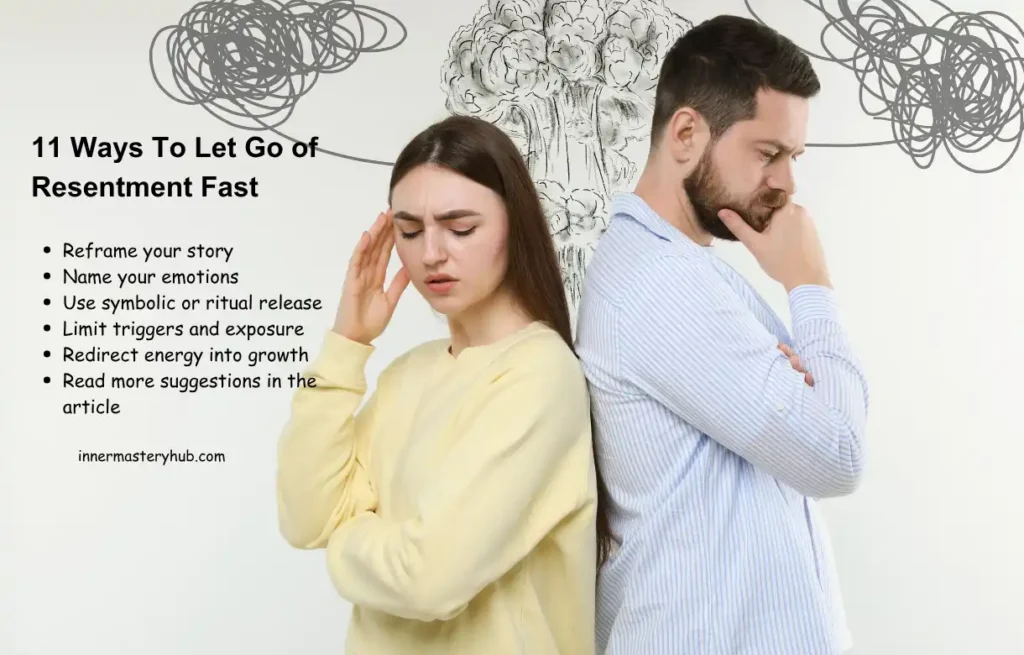
Resentment is a lingering emotional response to perceived unfairness, betrayal, or unmet expectations. To let go of resentment, you first need to understand that the pain continues not because of the original event, but because your mind and nervous system keep reliving its meaning. Healing begins when you recognize the emotional pattern beneath the resentment rather than fighting the feeling itself.
When resentment lives inside, peace cannot grow. Resentment towards someone you care about feels heavy. It spoils moments, poisons trust, and drags your spirit down. Letting go of resentment is hard work, but it is possible and necessary.
The urge to protect yourself keeps you stuck, but that same feeling stops healing. To let go of resentment, you must see it, feel it, and choose release over rumination. Research shows that unresolved resentment increases stress, damages relationships, and drains energy.
What Is Resentment and Why Does It Feel So Difficult to Release?
Resentment is a lingering emotional response to perceived unfairness, betrayal, rejection, or hurt. It remains active when emotional wounds have not been fully processed.
Resentment is more than anger. Anger usually responds to something happening now. Resentment keeps replaying something that happened before. The mind returns to the memory repeatedly because it believes there is unfinished emotional business.
Cause
When someone hurts you, your brain automatically tries to make sense of what happened.
Instead of simply registering the event, it creates meaning around it:
- They disrespected me.
- I wasn’t important.
- I can’t trust people.
- Life isn’t fair.
These interpretations become more painful than the original event.
Effect
Over time, resentment can lead to:
- Chronic stress
- Anxiety
- Emotional exhaustion
- Relationship difficulties
- Reduced life satisfaction
Research from the American Psychological Association shows that chronic rumination and unresolved anger are associated with elevated stress responses and poorer psychological well-being1.
Example
A friend forgets an important promise that he made to you. The event lasts one day. But the interpretation “I can’t rely on anyone” may last for years. The resentment remains attached to that interpretation.
Why Does the Brain Hold On to Emotional Pain?
The brain holds onto emotional pain because it views unresolved hurt as important information for future protection and Survival. Most people assume the brain is designed to make them happy. It is not. The brain is primarily designed to keep you safe.
When a painful experience occurs, your nervous system stores information connected to that event. If the experience felt emotionally threatening, your brain may continue to revisit it.
Naturally, this creates a cycle.
- A memory appears.
- You remember the pain.
- The body responds.
- The emotion returns.
- The memory feels important again.
- The cycle repeats.
Neuroscience research suggests that emotionally significant experiences undergo stronger memory encoding because they are linked to survival-related processes2.
This is why resentment feels automatic. Your brain believes it is helping you avoid future harm.
Is Resentment Really About the Other Person?
Not entirely. While resentment begins with another person’s actions, it continues because of the emotional meaning attached to the experience. This is one of the biggest misunderstandings about resentment.
Many people spend years focusing on the person who hurt them. But emotional healing begins when attention shifts inward.
In my experience working with clients over five years, resentment frequently remains active because the original wound touched a deeper fear.
For example:
- A betrayal may activate fears of abandonment.
- A criticism may trigger feelings of inadequacy.
- A rejection may awaken old childhood wounds.
The event becomes painful because it connects to something already present.
Example
Two people experience the same criticism.
One moves on quickly.
The other carries resentment for years.
The difference is not the criticism.
The difference is the emotional meaning attached to it.
What Happens Inside the Mind During Resentment?
Resentment develops through a psychological cycle where a trigger is interpreted as personal harm, creating emotional pain that reinforces negative thinking patterns.
The process usually unfolds quietly.
- A memory surfaces.
- Your mind interprets the event again.
- The body responds with tension.
- Emotions become activated.
- New evidence is unconsciously collected to support the original belief.
Soon, resentment feels justified. This cycle strengthens over time.
Research on rumination shows that repetitive negative thinking prolongs emotional distress and contributes to anxiety and depression3.
Because of this, resentment often feels alive even when nothing new has happened. The mind continues feeding the emotional wound.
How Does Resentment Affect Mental Health and the Nervous System?
Chronic resentment can keep the nervous system activated, increasing stress, emotional reactivity, and psychological distress.
When resentment remains unresolved, the body often reacts as though the threat is still present.
- Stress hormones continue circulating.
- Muscles remain tense.
- Sleep quality may decrease.
- Emotional triggers become stronger.
Research from Harvard Medical School has highlighted how chronic stress responses contribute to inflammation, cardiovascular strain, and mental health challenges4.
Common Effects
- Increased anxiety
- Emotional reactivity
- Difficulty trusting others
- Chronic tension
- Relationship struggles
- Reduced emotional resilience
For trauma survivors, resentment may also be connected to nervous system dysregulation. The body remembers what the mind is trying to forget.
Why Doesn’t Forgiveness Automatically Remove Resentment?
Forgiveness and resentment are related but different processes. Someone may forgive intellectually while remaining emotionally hurt.
Many people pressure themselves to forgive. Yet resentment persists. This creates confusion. The reason is simple.
- Forgiveness is a decision.
- Resentment is an emotional experience.
- The mind can choose forgiveness.
- The nervous system may still be processing pain.
- This distinction is particularly important within trauma-informed healing work.
True emotional release usually happens when the underlying wound feels acknowledged and understood, not merely when forgiveness is declared.
What Mistakes Keep Resentment Alive?
The biggest mistake is fighting the resentment itself rather than understanding what it is trying to communicate. Many people unintentionally strengthen resentment through habits such as:
Replaying the Story
Repeatedly revisiting the event reinforces emotional pathways.
Seeking Constant Validation
External validation may provide temporary relief but rarely resolves internal pain.
Suppressing Emotions
Avoiding emotions often increases their intensity over time.
Forcing Forgiveness
Pressure creates resistance.
Authentic healing rarely happens through force.
Defining Identity Through Hurt
Some people unconsciously build identity around their pain.
While understandable, this can make emotional release feel threatening.
Can Letting Go of Resentment Improve Relationships?
Yes. Releasing resentment often improves emotional availability, trust, communication, and relationship satisfaction.
Resentment acts like an emotional filter. It changes how you interpret future interactions. Neutral events may feel threatening. Small disappointments may feel enormous. Over time, relationships become burdened by unresolved emotional history.
Research published in the Journal of Personality and Social Psychology suggests that forgiveness and emotion regulation contribute positively to relationship satisfaction and psychological health (5)5.
Example
A partner forgets a text message. Without resentment, it feels minor. With years of unresolved hurt, it may feel like proof of abandonment. The reaction becomes larger than the situation itself.
Why do you not let go of resentment?
Resentment is a response to disappointment, betrayal, or hurt. Anger, resentment, and a sense of unfairness are all mixed. Anger, contempt, disappointment, and disapproval of a person or event combine to form resentment.
Because resentment seems like power, people tend to stick with it. According to psychologists, it’s like a burning flame: hatred won’t go away even if the first action does.
In my own life, I observed that I was replaying old hurts daily following years of dispute with a close friend. I could feel the sting even when we were not in contact. “Resentment as a verb” refers to the tendency to replay. Resentment is something you do, not something that occurs to you.
When there is no closure, no apology, or a belief that letting go means losing your position, resentment grows stronger. Many people find it difficult to let go of their grudges because doing so feels like “giving up” or letting the other person off the hook.
Often, harboring discord is like leaving a wound open, keeping the suffering alive. However, it’s you who suffers, not the person you’re angry at.
What does resentment cost you?
Resentment doesn’t stay only in your mind; it invades your body, your relationships, your future.
- Health toll. Having resentment lowers immunity, causes stress, and increases blood pressure. Forgiveness can lead to better mental health, less anxiety, and less animosity, according to the Mayo Clinic.
- Exhaustion on an emotional level. Ruminating is a waste of energy. You feel overly alert, take minor slights to heart, and exaggerate offenses.
- Distorted vision. Not letting go of resentment keeps you stuck in a limited story. You could emphasize someone’s flaws while downplaying their positive qualities. Resentment flourishes on presumptions such as “they did it on purpose,” therefore, “check your stories.”
- Broken ties. Loved ones hear your quiet, sense your isolation, and believe you are to blame. They might back off.
- Lost chances. You avoid forming new relationships or keep old ones from getting better because you are still more concerned with what went wrong than with what could go well.
I recall a time when resentment prevented me from talking to my sibling for two years. I imagined they didn’t care. When we finally met, I learned their silence came from fear and shame, not malice. The years lost could not be returned, but letting go opened the door to repair.
11 ways to let go of resentment
Here are 11 strategies to help you let go of resentment in relationships with family, partner, and friends.
1. Locate the root of your resentment
What you cannot see, you cannot heal. Identify the event, the unfulfilled need, and the disappointed expectation. Start by determining what you truly dislike: “Are you feeling taken advantage of? Unnoticeable? “Disrespected?”
Track down the first memory that still causes you sorrow by keeping a notebook or reflecting quietly. Resentment can occasionally be concealed by years of minor remarks rather than a single, severe injury.
2. Name your emotions and acknowledge them.
Anger, grief, guilt, and fear are often concealed by the belief that holding on to resentment is necessary. You have to let yourself feel and let go. Psychology Today recommends identifying the underlying feelings that anger covers, such as hurt or fear.
For instance: “I am sad because I lost trust,” “I am angry because I felt ignored,” and “I fear loneliness if I forgive.” Feelings lose their force when they are named.
3. Reframe your story (check your assumptions)
You convince yourself of things like “I will always suffer,” “They never cared,” and “They meant to hurt me.” Those tales might be somewhat accurate. Posing the question, “What narrative am I telling myself? Is it entirely true?
Reframe: Perhaps their actions were motivated by pain, ignorance, or fear. Perhaps their lack of concern isn’t reflected in their quiet. This softens animosity by altering your narrative, but it does not justify wrongdoing.
4. Show empathy to heal, not to justify.
Consider things from their point of view. Even if you disagree with their behavior, you can lessen your antagonistic obsession by comprehending their intentions. For instance, if a parent didn’t help you, enquire as to what stresses she was under. What traumas or limiting ideas did he take with him? Empathy is the ability to see complexity rather than unquestioningly trust.
5. Forgive, primarily for yourself
It’s a common misconception that forgiveness means forgetting, freeing the offender, or forgiving the behavior. Instead, it’s a decision to let go of authority and fury.
I forgave because it felt terrible to bear that grudge, not because their behavior became acceptable. Giving yourself forgiveness is a gift.
A good place to start is with the phrase “I forgive you, but I choose to move forward.” Or compose a letter of forgiveness that you never deliver.
6. Use symbolic or ritual release.
Forming internal transitions is beneficial to humans. I suggest a ritual: write down your grievance, read it out loud, then tear it up or burn it while declaring, “I choose peace.” I once expressed my feelings to my sibling in writing, then shredded the document. Although it didn’t instantaneously cure us or anything, that deed signaled the end of my daily burden.
7. Set healthy boundaries
Letting go of resentment does not imply remaining open to danger. Boundary violations occurred in many partnerships. When you consistently say yes to things, it means you can’t let go of resentment.
Make a clear decision about what conduct you will tolerate and what you will not. Communicate: “I am offended when you talk like that. If we don’t speak with respect, I want to put that conversation on hold.” Setting limits safeguards your recovery.

8. Limit triggers and exposure
Distance is sometimes necessary. Limit your exposure while you recover if certain situations, people, or discussions regularly make you feel resentful. Do not repeatedly stir the wound.
For instance, cut back on communication until you are strong enough to handle family reunions if they cause resentment. Instead of reinforcing the hurt, use that space to heal.
9. Show yourself warmth and self-compassion.
Not letting go of resentment often comes with shame or self-blame. You criticize yourself for being gullible or forgiving, and you feel weak for still caring. Sending love to the area of yourself that experiences anger or resentment is one way to try the “Love muscle” practice. “I’m doing the best I can,” tell yourself. “I will heal in my own time,” and “I deserve peace.”
If you punish yourself, you will never be able to let go of your bitterness. Therefore, the first step is self-forgiveness.
10. Redirect energy into growth
Resentment hides in idle space. Use your energy to build, not to replay. Focus on your goals, hobbies, relationships, and service. The more forgiving people are, the more satisfied they are with their lives.
11. Therapy, community, counsel
Some wounds are deep. Not letting go of resentment towards loved ones intertwines with betrayal, neglect, or trauma. In this case, professional help can guide you.
Studies show that forgiveness interventions reduce anger, depression, and stress. Mayo Clinic notes that releasing resentment leads to better mental health, lower blood pressure, and improved heart health.
You might try counseling, spiritual guidance, a support group, or a coach. You don’t have to walk this path alone.
Putting The Methods Of Letting Go Of Resentment Into Practice
You don’t have to do all 11 at once. Here’s a starter plan you can follow:
Choose one person you resent most now.
Journal to trace the root hurt, name your feelings, and write your own narrative.
Reframe and implement empathy in daily life.
Do one symbolic release (letter, ritual).
If needed, set one boundary at a time to protect your healing.
Fill your time with growth, art, nature, and relationships.
Reach out to someone trustworthy or a professional.
Over weeks, revisit. You may find the load is lighter, your heart softer, your energy freer.
Summary and Invitation
You should be relieved of the burden of not letting go of resentment against someone you care about. The recurring repetitions, the stories you create, and the unfulfilled expectations are all part of the issue, not simply the act that caused you pain. The problem is that you are more affected by the harm than they are.
Self-awareness, limits, empathy, ritual, letting go with compassion, and outside assistance are the answers. The 11 methods listed above provide you with a path: Find the source, label emotions, reframe, empathize, forgive, perform symbolic release, establish boundaries, restrict triggers, be compassionate, put growth back into your focus, and get help.
It’s okay if you don’t get full release right away. Your goal should be growth rather than perfection.
People Also Ask
Why am I not able to let go of resentment toward someone I love?
You feel resentment when expectations were broken, trust was violated, or you felt used or unheard. Resentment arises from perceived injustice, disappointment, or chronic unmet needs. Resentment is a mix of anger, disappointment, and disgust.
How long does it take to let go of resentment?
It varies. Letting go is a process that could take weeks, months, or even years, especially when wounds run deep, and patience and consistent practice matter more than speed.
What role does setting boundaries play?
Boundaries prevent future harm. They protect your emotional safety. When you say “no” to repeated hurt, you avoid re-injury and give yourself space to heal.
How can I manage triggers that make it hard to let go of resentment?
Recognize triggers (words, settings, reminders). Prepare a response, pause, breathe, reframe. Use distraction or grounded practices. Over time, triggers lose their grip.
Is therapy effective in releasing resentment?
Yes. Therapies like cognitive behavioral therapy, forgiveness intervention, EMDR, or guided counseling have shown effectiveness in reducing anger and letting go of resentment.
Can I forgive myself for nurturing and not letting go of resentment?
Absolutely. Self-judgment deepens bitterness. Self-compassion lets you accept your struggle and move forward. Forgiving yourself is essential to actual release.
Is holding resentment harmful to me?
Yes. Chronic resentment raises stress, harms mental health, weakens relationships, and may increase blood pressure. Studies show that forgiveness reduces anxiety and improves well-being.
Can I let go of resentment without forgiving the person?
Yes. You can release bitterness internally, stop ruminating, shift your meaning, set boundaries, even if you don’t restore the relationship or receive an apology. Forgiveness helps, but release is possible on your own.
What if the person who hurt me doesn’t admit wrongdoing?
You still can let go. You choose to release your resentment: empathy, reframing, and acceptance help. You don’t need their apology to heal yourself.
Does letting go mean forgetting the pain?
No. Letting go means you stop letting the past control your present. You may remember what happened, but you no longer let resentment reside in your heart.
- American Psychological Association. (2023). Anger, stress, and emotional health. Available at: https://www.apa.org ↩︎
- Fisher, H., Aron, A., & Brown, L. L. (2005). Romantic love activates reward systems in the brain similar to addiction. Journal of Comparative Neurology. Available at: https://pubmed.ncbi.nlm.nih.gov ↩︎
- Nolen-Hoeksema, S., Wisco, B. E., & Lyubomirsky, S. (2008). Rethinking rumination. Perspectives on Psychological Science. Available at: https://pubmed.ncbi.nlm.nih.gov ↩︎
- Harvard Medical School. Stress and health research. Available at: https://www.health.harvard.edu ↩︎
- Fincham, F. D., Beach, S. R. H., & Davila, J. (2004). Forgiveness and conflict resolution in marriage. Journal of Personality and Social Psychology. Available at: https://psycnet.apa.org ↩︎
Written By Mehwish Qurayshi
Mehwish Qurayshi is a Trauma-Informed Emotional Wellness Counsellor trained through NICABM’s Treating Trauma Master Series, which includes NBCC-approved education in Trauma Treatment and Emotional Wellness & Emotional Intelligence – Sourcecode Academia. She has over five years of experience providing emotional wellness counselling, helping individuals heal from trauma, regulate emotions, and build healthy relationships.