
Why Your Body Goes Into Fight, Flight, or Freeze Even When You Feel Safe

Medically reviewed by Dr. Usama Qureshi, MBBS
Medical Doctor | Reviewed August 2026
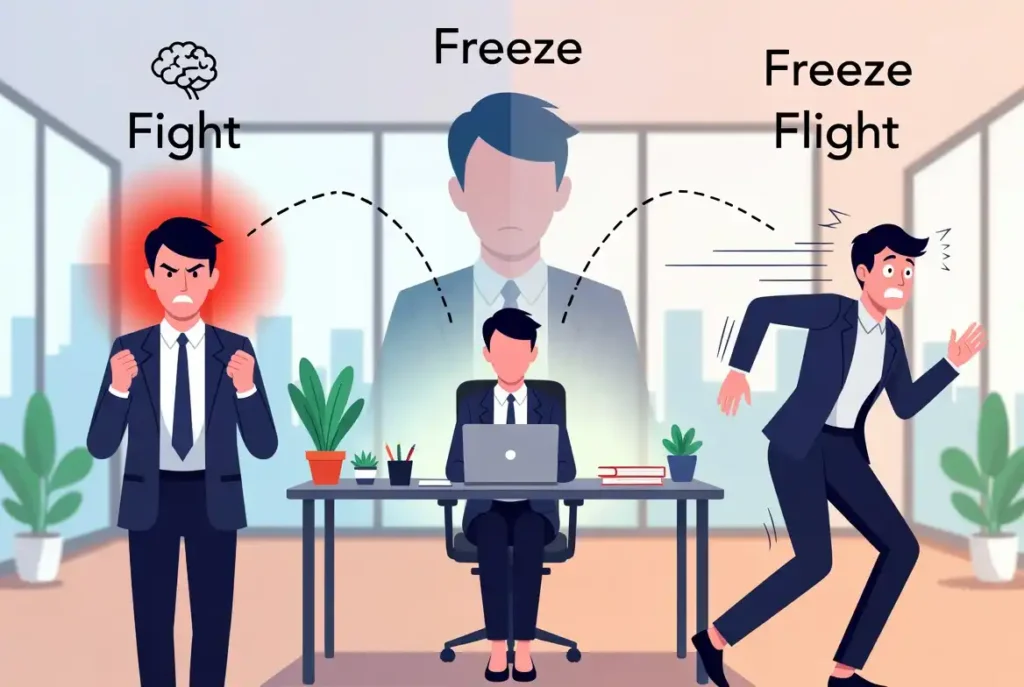
Sometimes your reaction feels bigger than the moment itself. A simple comment, tone of voice, or conflict may bring up a strong emotional response before you have time to process what is happening.
The fight-flight-freeze response is a natural stress response that helps the body prepare for challenges. For some people, past stressful experiences may influence how strongly they respond to certain situations.
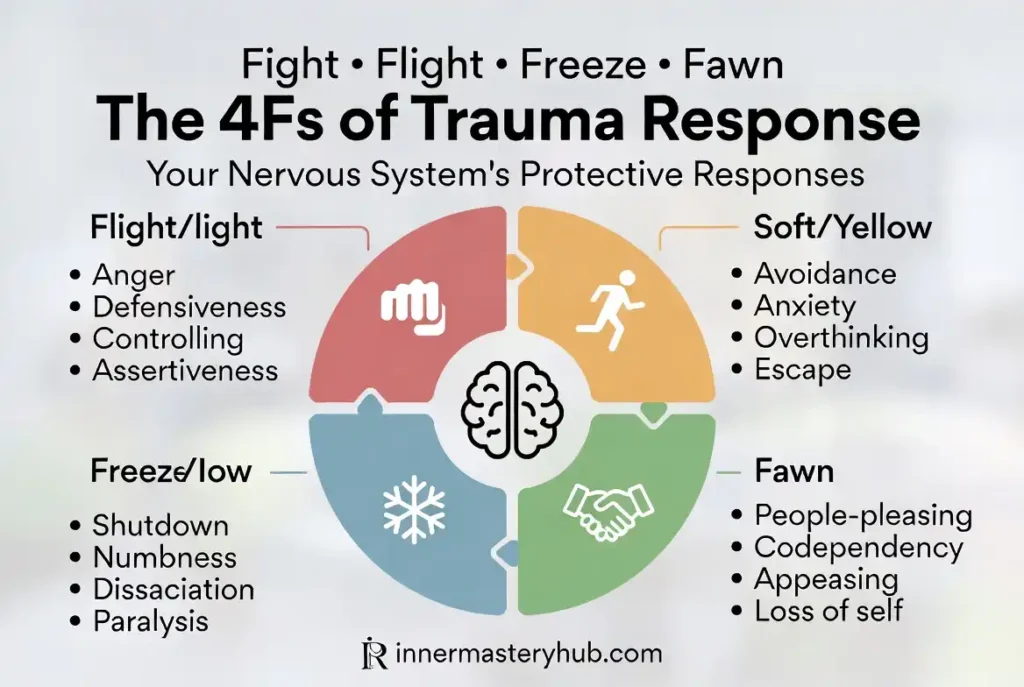
Four Common Stress Responses: Fight, Flight, Freeze, and Fawn
| Response | What it may look like | What you might notice inside |
|---|---|---|
| Fight | Becoming defensive, arguing, trying to control the situation | “I need to protect myself.” |
| Flight | Avoiding, leaving, overthinking, staying busy | “I need to get away from this.” |
| Freeze | Going quiet, feeling stuck, struggling to respond | “I don’t know what to do right now.” |
| Fawn | Trying to keep others happy, avoiding disagreement | “I need to keep things okay.” |
Some researchers and trauma-informed practitioners also discuss a fourth pattern called fawn, which involves trying to please others or avoid conflict.
Disclaimer: These responses are common ways people may react under stress. Having one of these reactions does not automatically mean someone has experienced trauma. Context, personality, current stress, and past experiences can all influence how a person responds.
What Is the Fight, Flight, or Freeze Response and What Can Trigger It?
The fight, flight, or freeze response is one way your body reacts when a situation feels stressful, threatening, or overwhelming.
Some situations are clearly stressful, while others may feel difficult because of what they mean to you. Conflict, criticism, uncertainty, rejection, or reminders of past experiences can sometimes bring up a strong reaction.
During these moments, you might notice changes in your body or behaviour. Your heart may beat faster, your muscles may tense, your thoughts may become focused on the situation, or you may feel the urge to argue, leave, or become quiet.
Research on stress responses shows that the autonomic nervous system plays an important role in preparing the body to respond during stressful situations. These responses can involve changes in heart rate, attention, and body readiness. (1)
People respond differently. One person may become more defensive, another may try to avoid the situation, while someone else may feel stuck and unable to respond immediately. Research on freezing suggests that this response can involve active changes in attention and preparation, rather than simply “doing nothing.” (2)
Understanding these reactions can help you understand what is happening without immediately judging yourself.
A strong reaction does not always mean the situation is dangerous. Stress levels, current circumstances, personal experiences, and the meaning you attach to a situation can all influence how you respond.
What Happens in Your Body During Fight, Flight, or Freeze?
When you feel stressed or threatened, your body can quickly prepare you to deal with the situation.
You may notice your heart beating faster, your breathing changing, your muscles becoming tense, or your thoughts becoming focused on what is happening. These reactions are part of the body’s natural stress response.
Your brain and body are constantly communicating during stressful moments. The amygdala plays a role in noticing emotionally important situations, while the prefrontal cortex helps with thinking, planning, and making decisions. During high stress, it can become harder to think clearly or consider different options, especially when emotions feel intense.
Research shows that stress can affect attention, decision-making, and emotional regulation. However, it is not accurate to say that the “thinking part of the brain shuts down.” Different parts of the brain continue working together, even during stressful moments.(3)
For some people, certain situations may feel especially intense because of current stress, personal experiences, or past difficult events. That does not mean every strong reaction comes from trauma. People respond differently depending on their circumstances and what a situation means to them.
Learning to notice these reactions can help you understand what is happening in the moment and choose how you want to respond.
Why Emotional Situations Can Feel Like a Threat
Have you ever received a comment, message, or reaction from someone and felt much more affected than you expected?
A disagreement, criticism, rejection, or feeling ignored can sometimes bring up a strong response. You might feel the need to defend yourself, leave the situation, or shut down.
Your mind is always making sense of what is happening and deciding how important it feels. Some situations become especially difficult when they touch things that matter to you, such as feeling respected, accepted, understood, or connected to someone.
Research suggests that social experiences like rejection or exclusion can involve some of the same brain systems connected with physical pain, although emotional and physical pain are not the same thing. The way a person responds can depend on the situation, their experiences, and what the moment means to them. (4)
For example, a disagreement with someone close to you may feel much harder than the same words coming from a stranger. It is not only about what was said, it is also about the relationship and what the situation represents.
If certain situations bring up a strong reaction, try asking:
“What feels difficult about this moment for me?”
Maybe it is feeling unheard, rejected, judged, or uncertain about what happens next.
Noticing this can help you understand your reaction instead of immediately blaming yourself for having it.
How Fight, Flight, Freeze, Can Show Up in Daily Life
These responses can look different from person to person. The same situation may lead one person to argue, another to leave, and someone else to become quiet.
Fight
You may notice a strong urge to defend yourself, prove your point, or take control of the situation.
Example:
Someone gives you feedback, and your first reaction is to explain why they are wrong.
Flight
You may feel the need to avoid the situation, leave, distract yourself, or keep busy so you do not have to deal with the discomfort.
Example:
You delay an important conversation because it feels too difficult to start.
Freeze
You may feel stuck, unable to find the right words, or unsure what to do next.
Example:
Someone asks you a difficult question and your mind suddenly goes blank.
Fawn
You may focus heavily on keeping others happy, avoiding disagreement, or making sure everyone else is okay.
Example:
You agree to something you do not want because saying no feels uncomfortable.
These reactions are not fixed labels. A person may respond differently depending on the situation, their stress level, and what the moment means to them.
The useful question is not:
“Which one am I?”
A better question is:
“What happens for me when I feel under pressure?”
Why Certain Situations Can Bring Up Strong Reactions
Sometimes a reaction feels bigger than the situation in front of you.
A small comment may feel deeply upsetting. A disagreement may leave you feeling overwhelmed. A simple request may bring up frustration, fear, or the urge to withdraw.
This does not mean you are overreacting or that something is wrong with you.
People respond to situations based on many things, including their current stress level, past experiences, relationships, and what the moment represents to them.
For example, criticism from someone you trust may feel different from criticism from a stranger. A disagreement may feel more difficult if it connects with feelings of being ignored, misunderstood, or rejected.
In trauma-informed work, it can be helpful to look at these reactions with curiosity rather than judgment. Instead of asking:
“Why am I reacting like this?”
you might ask:
“What about this situation feels so important or difficult for me right now?”
That question can help you understand your reaction without immediately labelling it.
How Past Experiences Can Influence Stress Responses
Past experiences can influence how certain situations feel today.
For some people, a disagreement, criticism, feeling ignored, or losing control of a situation may bring up a stronger reaction than expected. The reaction may feel connected to what is happening now, but it can also be influenced by earlier experiences.
This does not mean every strong reaction is a trauma response. People react differently depending on their current stress, relationships, personal history, and the situation they are facing.
Research suggests that traumatic experiences can be linked with changes in stress responses and emotional regulation. However, these effects vary from person to person, and not everyone responds in the same way after difficult experiences. (5)
A useful question to ask is:
“Is this reaction only about what is happening right now, or is something from my past making this moment feel harder?”
Do not blame yourself or your past, understand what is influencing your reaction and what you want to do next.
What Can Help After a Fight, Flight, or Freeze Response?
After a strong reaction, it can be difficult to think clearly about what happened. Before trying to analyse the situation, it can help to first slow things down.
Some things that may help:
- take a few slower breaths
- relax your shoulders or jaw
- step away from the situation for a short time
- write down what you are feeling
- wait before replying during a difficult conversation
These steps will not remove the feeling, but they may help you avoid acting on the first urge.
Research on emotion regulation shows that people use different strategies to manage emotional responses, including changing how they view a situation and using attention or calming techniques. What works can vary from person to person. (6)
If certain reactions happen repeatedly or feel difficult to understand, looking at the pattern can be helpful. For some people, support from a qualified professional may help them explore what is contributing to those reactions.
When Stress Responses Keep Showing Up
If the same reaction keeps happening, it can help to notice what usually comes before it.
Ask yourself:
- What situations bring this reaction up most often?
- What do I notice right before I react?
- What do I usually do afterward?
For example, you may notice that you become defensive during certain conversations, avoid difficult topics, or go quiet when you feel overwhelmed.
The earlier you notice these moments, the easier it may become to pause and decide how you want to respond.
If these reactions are affecting your relationships, work, or daily life, speaking with a qualified therapist may help you understand what is contributing to them.
You may still feel stressed but also understand how to respond differently.
How Fight, Flight, and Freeze Can Affect Relationships
Conflict in close relationships can feel more intense because the relationship matters to you.
During an argument or difficult conversation, people may respond in different ways.
Fight:
You may become defensive, argue strongly, or focus on proving your point.
Flight:
You may avoid the conversation, change the subject, or leave because the discussion feels too uncomfortable.
Freeze:
You may become quiet, feel stuck, or struggle to find the right words.
A person can care about someone and still react in ways they later regret. Often, the reaction happens quickly before they have had time to think about how they want to respond.
It can help to notice your usual pattern:
- Do I become defensive?
- Do I avoid difficult conversations?
- Do I shut down when emotions become intense?
Knowing your pattern can make it easier to handle similar moments differently in the future.
Conflict is part of relationships. What matters is learning how to communicate even when emotions are difficult.
What Fight, Flight, and Freeze Can Look Like in Everyday Situations
These reactions can appear during ordinary situations, not only during serious events.
At work:
You receive feedback and immediately feel the need to explain yourself or prove your point.
In a relationship:
A difficult conversation starts, and you become quiet, defensive, or try to end the discussion quickly.
During uncertainty:
You keep checking for a reply, look for reassurance, or avoid thinking about the situation.
During conflict:
You raise your voice, walk away, or feel unable to explain what you want to say.
These moments can happen quickly, which is why they are often easier to notice afterward. Looking back at what happened before the reaction can help you recognise your own patterns.
Can Fight, Flight, and Freeze Responses Change Over Time?
Stress reactions can change with practice and support.
The aim is not to remove stress completely. Instead, you can learn to recognise your reactions earlier and respond in ways that work better for you.
For example, someone who usually becomes defensive during an argument may learn to pause before replying. Someone who avoids difficult conversations may gradually become more comfortable staying with them.
These changes usually develop over time through experience, reflection, and practice.
Research on emotion regulation shows that people can use different strategies to influence how they respond to emotions, including changing how they interpret situations and practicing new responses. (6)
If these reactions are affecting your relationships, work, or daily life, speaking with a qualified professional may help you understand what is contributing to them.
How to Identify Your Dominant Stress Response
People do not always respond to stress in the same way. Your reaction can change depending on the situation, your relationship with the person involved, and how much stress you are already carrying.
You can start by noticing what usually happens when you feel under pressure:
- Do I become defensive, angry, or focused on controlling the situation? → Fight response
- Do I avoid the situation, distract myself, or keep thinking about it? → Flight response
- Do I go quiet, feel stuck, or struggle to respond? → Freeze response
These patterns are not fixed labels. A person may fight in one situation, avoid in another, and freeze during a different type of stress.
How to Calm Yourself During a Fight, Flight, or Freeze Response
When a strong reaction happens, the first step is often to slow things down before making a decision or responding.
Different approaches work for different people. Some options include:
1. Pause before reacting
If you feel the urge to immediately reply, argue, or leave, give yourself a short moment before taking action.
2. Bring attention back to the present
Notice simple things around you — what you can see, hear, or feel. This can help you reconnect with the current moment instead of staying focused only on the emotion.
3. Name what is happening
Putting your experience into words can make it easier to understand:
- “I feel overwhelmed.”
- “I feel angry.”
- “I need a moment before I respond.”
4. Choose a smaller next step
Instead of trying to solve everything immediately, focus on what you need to do next.
For example:
- taking a break from an argument
- asking for time to think
- returning to a conversation when you feel more prepared
These approaches are not about avoiding emotions. They are about creating enough space to respond instead of reacting automatically.
Key Takeaways About Fight, Flight, and Freeze Responses
- Fight, flight, and freeze are different ways people can react during stressful moments.
- These reactions can look different for everyone. Some people become defensive, some avoid situations, and some become quiet or unable to respond.
- These reactions can happen for many reasons, including current stress, personal experiences, and difficult situations.
- Recognising your usual response can make it easier to handle similar moments in the future.
- If these reactions are affecting your daily life, relationships, or work, a qualified professional can help you explore them.
People also ask
What triggers the fight-flight-freeze response?
Stress, fear, emotional conflict, or perceived danger.
Are fight-flight-freeze normal?
Yes, it is a natural survival mechanism.
Can trauma affect this response?
Past traumatic experiences may influence how some people respond to stress, but reactions vary widely from person to person.
How do I calm my nervous system?
Breathing, grounding, movement, and emotional awareness help regulate it.
How do you calm a fight-flight-freeze response?
Safety cues such as deep breathing, grounding, co-regulation with safe people, and orienting to the present environment help down-regulate the nervous system.
Is freeze response the same as dissociation?
Freeze can include dissociation as a protective shutdown when overwhelm is high, but they are related yet distinct nervous system states.
Can childhood trauma cause stronger fight-flight-freeze reactions?
Early experiences can influence how a person responds to stress later in life. However, people respond differently, and many factors shape these patterns.
How long does the fight or flight response last?
The most intense part of a stress response is usually short-lived, although people may continue feeling affected afterward depending on the situation.
What is the fawn response?
A people-pleasing or appeasing strategy to avoid conflict or harm, often developed in childhood environments where submission increased safety.
Does the stress response system ever go away?
The stress response remains an important part of the body’s normal functioning. However, people can learn different ways to respond to stressful situations
- Chrousos, G. P. (1998). Stressors, stress, and neuroendocrine integration of the adaptive response.
Annals of the New York Academy of Sciences, 851(1), 311–335. ↩︎ - Freeze for action: neurobiological mechanisms in animal and human freezing.
Philosophical Transactions of the Royal Society B: Biological Sciences, 372(1718), 20160206. ↩︎ - Ochsner, K. N., & Gross, J. J. (2005). The cognitive control of emotion. Trends in Cognitive Sciences, 9(5), 242–249. https://doi.org/10.1016/j.tics.2005.03.010 ↩︎
- The pain of social disconnection: Examining the shared neural underpinnings of physical and social pain.
Nature Reviews Neuroscience, 13, 421–434. https://doi.org/10.1038/nrn3231 ↩︎ - McFarlane, A. C. (2010). The long-term costs of traumatic stress: Intertwined physical and psychological consequences. World Psychiatry, 9(1), 3–10. ↩︎
- Gross, J. J. (2015). Emotion Regulation: Current Status and Future Prospects. Psychological Inquiry, 26(1), 1–26.
https://doi.org/10.1080/1047840X.2014.940781 ↩︎
Written By Mehwish Qurayshi
Mehwish Qurayshi is a Trauma-Informed Emotional Wellness Counsellor trained through NICABM’s Treating Trauma Master Series, which includes NBCC-approved education in Trauma Treatment and Emotional Wellness & Emotional Intelligence – Sourcecode Academia. She has over five years of experience providing emotional wellness counselling, helping individuals heal from trauma, regulate emotions, and build healthy relationships.