
10 Quiet Phrases Introverts Use Regularly To Protect Their Energy

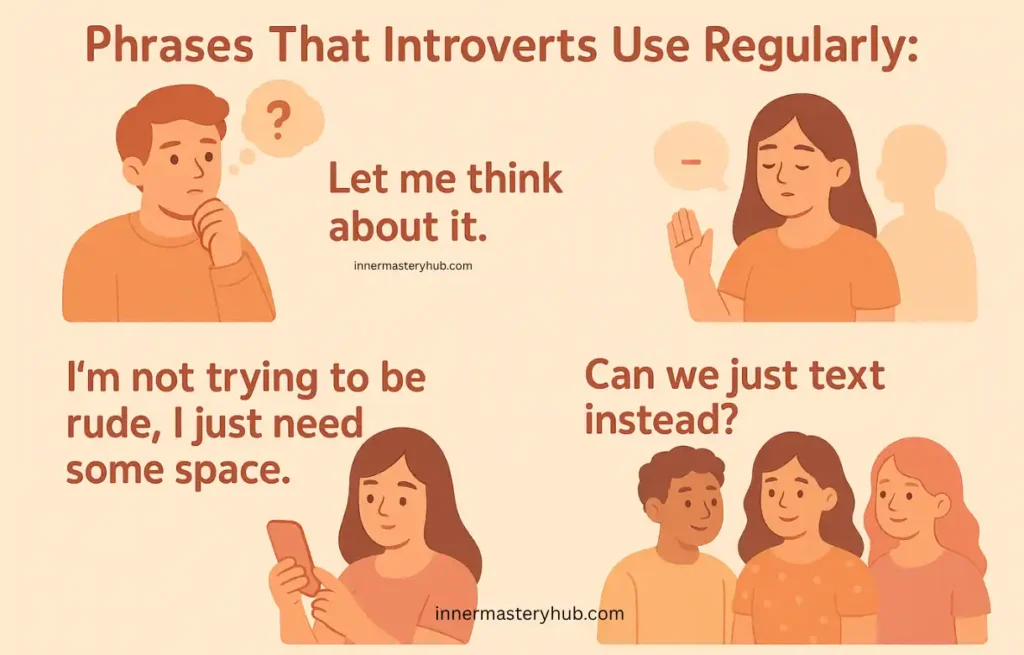
Introverts commonly use phrases like “I’m tired,” “I need space,” and “I’ll think about it” as emotional-regulation responses tied to overstimulation, deep processing, and nervous-system recovery rather than to rejection or disinterest.
When you start paying attention to the small patterns in your daily conversations, you may notice that certain phrases that introverts use regularly carry a gentle honesty, a sense of calm, and a desire for meaningful connection.
If you feel drained in crowded rooms, struggle to speak up when you want to, or find comfort in quiet company, you already recognise the phrases introverts use regularly. Many people mistake introversion for shyness, but the two are distinct traits. Many of these communication habits are also connected to broader female introvert characteristics, including deep processing, emotional awareness, and a preference for meaningful interaction.
Introverts recharge internally, while extroverts draw energy from outside stimulation. That natural difference shapes the speech patterns introverts develop over time, often without even realising it.
You may have spent years feeling misunderstood because your communication style doesn’t always match the pace of those around you. Maybe you’ve been told you’re too reserved. These labels can easily settle into your confidence and make you feel as if something is wrong with your way of speaking. But psychological studies from the past decade confirm that introspection, slower verbal processing, and selective social engagement actually strengthen creativity, emotional stability, and problem-solving1.
Why do introverts avoid small talk?
Introverts often avoid small talk because it feels emotionally draining and mentally repetitive. Many prefer meaningful conversations with emotional depth. Surface-level interaction can feel exhausting because introverts naturally process communication more deeply.
Common Phrases Introverts Use Regularly
I need a minute.
You’ve undoubtedly used this phrase as an introvert while you were feeling overwhelmed. It’s not a justification for avoiding people. It’s how you safeguard your mental acuity. Because introverts receive information through deeper cerebral pathways, too much stimulation at once might impair mood or slow down thought processes, according to cognitive science research.
For extreme introverts, these moments of pause are even more important because overstimulation can build up much faster. Persistent overstimulation may sometimes reflect a dysregulated nervous system rather than introversion alone.
When you say use this phrase, you’re requesting a moment to relax, take a deep breath, and let your mind function at its own rate. Stepping away isn’t retreat, as many introverts discover early on; instead, it’s a preparation for calmly and purposefully returning to conversations.
I’m good with something low-key.
When someone asks you about your plans for the weekend, you say this. Even though you enjoy interacting with people, you can easily become exhausted in loud environments or amid chaotic group dynamics. Because your brains are more susceptible to dopamine stimulation, introverts expend social energy more quickly.
You’re not being dull when you say this phrase. You’re opting for equilibrium rather than exhaustion. There have undoubtedly been times when you consented to an exciting outing only to be worn out midway through. You can conserve your energy while remaining receptive to connections with this simple statement.
Let me think about it.
You may not realise how you say this. It illustrates your natural tendency to consider options thoroughly rather than responding on impulse. Rushing decisions can make introverts uncomfortable, as they rely more on internal processing before responding.
You are not avoiding accountability by using this term. You are opting for clarity over impulsivity. Even though people sometimes misinterpret your pause as reluctance, this habit probably helped you make informed decisions over time.
I’d rather listen for a bit.
Some introverted alpha females use listening as a leadership strength, gathering information before offering thoughtful insights.
Before participating in a conversation, you could feel more at ease listening. This isn’t because you don’t have opinions; rather, it’s because you prefer to understand the situation before voicing them. Introverts actively listen more deeply than extroverts, enabling them to discern tone, emotion, and intention more accurately.
When introverts use these phrases, they allow themselves to learn before speaking. When you choose to talk, you may find it helps you offer more insightful comments.

I’m not trying to be rude. I need some space.
This phrase is a polite way to set boundaries if someone misinterprets your need for alone time, as you have battled the guilt of turning down invites or seeking time alone for years. Introverts use quiet time to refuel their minds, and a lack of solitude can cause emotional exhaustion. When you say this phrase, you’re safeguarding your capacity to completely show up when you’re ready, not separating yourself from other people.
Why do introverts struggle to express emotions?
This tendency is especially common among INFJ women, who often process emotions internally before sharing them with others.
Introverts usually process emotions internally before speaking. They may fear misunderstanding, emotional vulnerability, or saying the wrong thing. This can create long pauses or limited emotional expression, even when feelings are strong.
I enjoy small groups more.
Intimate get-togethers allow you to feel connected without feeling overwhelmed, as you have probably discovered via experience. Introverts do best in situations where they can focus on a few people rather than divide their attention among large groups. This expression does not criticise the preferences of others. It’s a recognition of what gives you a sense of engagement and presence. Your selection of smaller groups shows your depth and your most genuine self.
I’m already doing something that day.
“Doing something” can sometimes refer to a personal endeavour, reading, relaxing, or just spending a peaceful evening at home. Without explaining your need for downtime, you’ve most likely used this term to avoid disappointing someone.
Because they fear misinterpretation, many introverts are reluctant to be honest about their boundaries. However, studies consistently show the importance of personal downtime for cognitive repair2. Even if you don’t always say that sentence aloud, when you use this phrase, you’re keeping your word to yourself.
Can we text instead?
You already know how much power this affords you if you’ve ever selected a message over a phone call. You may connect without feeling pressured, think things through before reacting, and avoid unexpected emotional overload by using messaging. Introverts choose written conversations because they allow them time to think.
I don’t have anything to add right now.
Sometimes you are completely engaged in a conversation and don’t feel the need to fill in the gaps. You value significant pauses because they help you in determining the significance of your contribution. More focused, grounded conversations result from this communication approach. This behaviour comes naturally to many introverts, and when used honestly, it reduces needless conversation and creates trust.
I’m comfortable just being here.
This phrase reflects your appreciation for quiet companionship. You don’t need constant conversation to feel connected. Many people with introverted personalities value quality over noise and emotional closeness over performative engagement. Shared silence can be just as powerful as spoken communication. If you use this phrase often, you’re expressing a deeper level of comfort and trust.
Are introverts emotionally distant?
No. Most introverts are emotionally deep, but they express emotions differently. Quiet behavior is mistaken for emotional absence.
This misunderstanding damages many relationships.
In reality, introverts often:
- feel deeply
- observe carefully
- Remember emotional details
- Think extensively before expressing feelings.
But because they do not constantly externalise emotions, others may misread them.
What actually happens internally?
Many introverts fear:
- being misunderstood
- emotional exposure
- saying the wrong thing
- overwhelming others
So they filter themselves heavily.
That filtering creates pauses, quietness, and cautious communication.
Real-world insight from client work
Over the last 5 years, many clients have shared a painful pattern:
People only notice what introverts do not say.
But internally, introverts are carrying complex emotional worlds that rarely feel safe enough to express fully.
Why Do Introverts Need More Recovery Time?
Why Do Introverts Need More Recovery Time?
Introverts need more recovery time because their brains process social interactions, emotions, and environmental stimulation more deeply. A busy conversation, a crowded event, or a long day of meetings can require a lot of mental energy, even if one enjoys the experience.
Recovery time is not about avoiding people. It is about giving the mind a chance to slow down and recharge. Many introverts feel refreshed after spending time alone reading, walking, listening to music, or simply enjoying quiet surroundings.
For some people, this need for downtime becomes even stronger when they are highly sensitive or constantly overstimulated. In these situations, the nervous system may stay activated longer, making social recovery feel more important.
Taking time to recharge helps introverts return to conversations, relationships, and responsibilities with greater focus and emotional balance. Rather than a weakness, this recovery process is one reason introverts are thoughtful, observant, and emotionally aware.
What mistakes do introverts commonly make in communication?
Introverts suppress their real emotional needs until exhaustion builds. They minimise themselves to avoid conflict or attention.
This creates long-term emotional strain.
Common mistakes include:
- saying “yes” while overwhelmed
- pretending they are okay
- avoiding difficult conversations
- withdrawing without explanation
- overthinking responses
Why this happens
Many introverts learned early that quieter needs receive less validation.
So instead of expressing overwhelm directly, they adapt silently.
But emotional suppression eventually creates:
- resentment
- isolation
- burnout
- disconnection
How can you better understand the phrases introverts use regularly?
The key is listening beyond the literal words. Introverted communication is emotionally layered rather than emotionally absent.
When an introvert says:
- I need space.
- I’m tired.
- Maybe later
- I’ll think about it.
There is an unspoken emotional process beneath the surface.
Instead of assuming rejection, consider:
- Are they overstimulated?
- Are they processing internally?
- Do they feel emotionally safe?
- Are they trying to avoid conflict gently?
That perspective changes relationships completely.
Conclusion
The phrases introverts use regularly are rarely random. They are small windows into deeper emotional regulation, overstimulation, careful thinking, and quiet self-protection.
When you understand the internal process behind phrases like:
- I’m tired.
- I need space.
- Maybe
- I’ll think about it.
You stop viewing introverts as distant or uninterested.
You begin to see the emotional intelligence beneath the silence.
Most introverts are not trying to disconnect from people. They are trying to stay connected without overwhelming themselves emotionally.
That understanding changes conversations, relationships, and self-worth in powerful ways.
Many of these phrases reflect broader female introvert characteristics such as deep thinking, emotional awareness, and a need for meaningful connection. Understanding these patterns can help you appreciate that quiet communication is not a weakness but a different way of engaging with the world.
People Also Ask
What are common phrases that introverts use regularly?
Introverts often say things like “I need a minute,” “Let me think about it,” “I’m okay with something low-key,” and “I’d rather listen first,” which help them manage energy and communicate comfortably.
Do introverts avoid conversations when they use these phrases?
No. Introverts typically seek thoughtful, intentional communication. Their phrases often help them engage without feeling overwhelmed.
What does it mean when an introvert says, “I need space”?
It usually means they need time alone to recharge mentally. Solitude restores their energy and helps them re-engage with clarity later.
Why do introverts prefer texting over phone calls?
Texting gives them time to process their thoughts before responding, reducing the pressure and overstimulation that can occur during live calls.
How can Phrases That Introverts Use Regularly help in communication?
Phrases That Introverts Use Regularly help others understand when introverts need space or quiet time. These expressions reduce confusion, prevent overwhelm, and support more transparent communication. Recognising these phrases makes interactions smoother by respecting emotional comfort, personal boundaries, and energy levels.
Can learning Phrases That Introverts Use Regularly improve relationships?
Learning Phrases That Introverts Use Regularly can improve relationships by creating empathy and reducing misunderstandings. These phrases help others recognise when introverts need quiet time, slower conversations, or emotional space. Respecting these patterns builds trust and supports more balanced, comfortable interactions.
Why do introverts say “I’ll think about it”?
Introverts often prefer to process information internally before making decisions. Saying “I’ll think about it” gives them time to reflect, consider different options, and respond thoughtfully rather than reacting quickly in the moment.
- Jung, R. E., Mead, B. S., Carrasco, J., & Flores, R. A. (2013). The structure of creative cognition in the human brain. Frontiers in Human Neuroscience, 7, 330. https://doi.org/10.3389/fnhum.2013.00330 ↩︎
- Smallwood, J., & Schooler, J. W. (2015). The science of mind wandering: Empirically navigating the stream of consciousness. Annual Review of Psychology, 66, 487–518. https://doi.org/10.1146/annurev-psych-010814-015331 ↩︎
Written By Mehwish Qurayshi
Mehwish Qurayshi is a Trauma-Informed Emotional Wellness Counsellor trained through NICABM’s Treating Trauma Master Series, which includes NBCC-approved education in Trauma Treatment and Emotional Wellness & Emotional Intelligence – Sourcecode Academia. She has over five years of experience providing emotional wellness counselling, helping individuals heal from trauma, regulate emotions, and build healthy relationships.