
People Who Refused to Be Defined by Their Past Accept 11 Challenges

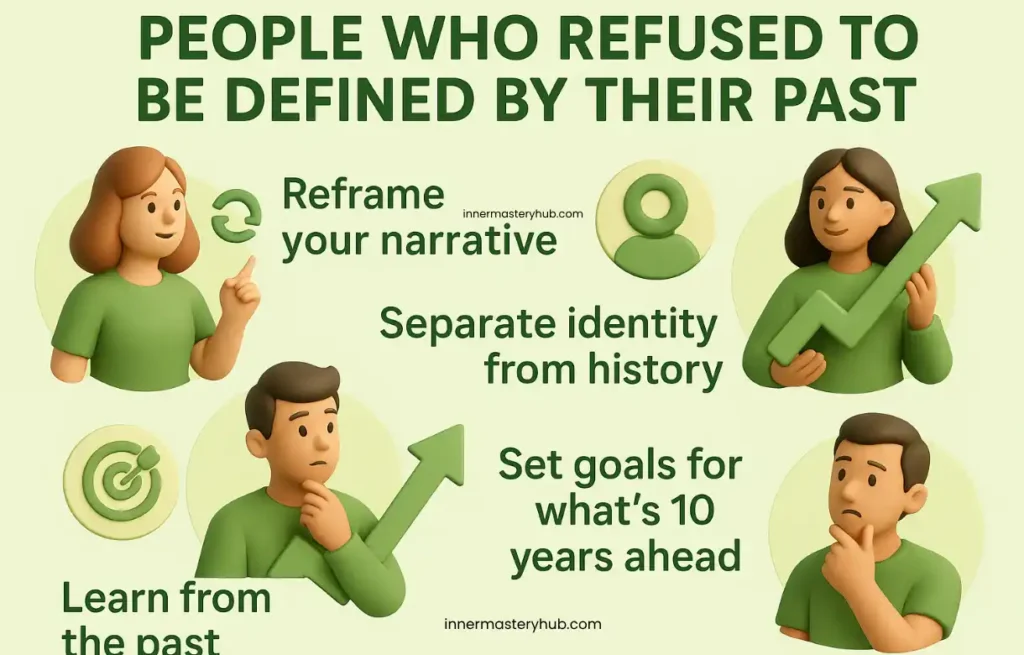
People who refused to be defined by their past did not erase their pain. They changed the meaning attached to it. Instead of seeing trauma, rejection, failure, or emotional neglect as proof that they were broken, they slowly understood that painful experiences shaped them but did not define their identity. That inner shift changes emotional regulation, self-worth, and the nervous system over time.
You Are More Than Your History. You can believe that your past defines who you are and restricts who you can become. This could be a label you’ve carried yourself or one others have placed on you for years. In reality, though, you can join those people who refused to be defined by their past. They are rising from the shadows of outdated narratives and refuse to be defined by their past.
Over the last 5 years of working with clients dealing with trauma bonding, emotional regulation struggles, fear of abandonment, and identity confusion, one pattern appears again and again. Most people are not trapped by events alone. They are trapped by the emotional conclusions they formed during painful moments.
An emotionally ignored child grows into an adult who believes their needs are “too much.” Someone who has been betrayed in a relationship unconsciously expects emotional pain everywhere. A person who failed publicly may start avoiding opportunities because shame feels safer than vulnerability.
This is why some people stay emotionally stuck for decades while others slowly rebuild themselves.
The difference is rarely willpower. It is an interpretation.
Research from the American Psychological Association shows that unresolved emotional experiences affect cognition, emotional responses, and stress regulation long after events end1. Trauma changes nervous system responses, especially when emotions remain unprocessed. But healing also changes the brain.
Neuroplasticity research shows the brain can reorganize itself through emotional processing, self-awareness, and new experiences2.
People who refused to be defined by their past did not become fearless overnight. They stopped treating old pain as permanent identity evidence.
Why do people let their past define them?
People let their past define them because emotional pain creates deep identity beliefs. Repeated rejection, trauma, or failure can shape thoughts like “I am not enough” or “I will always suffer.” These beliefs quietly influence relationships, behavior, and self-worth.
Why Do Some People Stay Stuck in Their Past?
Being “stuck in the past” means that old emotional experiences continue to shape present behavior, relationships, self-worth, and decision-making.
People stay stuck in their past because emotional pain becomes identity. Instead of seeing painful experiences as events, the mind starts treating them as proof about who you are. This creates shame, emotional triggers, fear of abandonment, and nervous system dysregulation that repeat automatically.
The real issue is rarely memory alone. It is an emotional interpretation.
This usually happens when painful events create unconscious beliefs, such as:
- “I am not lovable.”
- “People always leave.”
- “I will fail again.”
- “I cannot trust anyone.”
- “Something is wrong with me.”
The brain stores emotionally intense experiences differently. According to research published by Harvard Medical School, unresolved trauma can keep the nervous system in Survival Mode, making emotional reactions feel immediate even years later3.
When this happens, people may experience:
- Emotional attachment anxiety
- Trauma bonding
- Chronic overthinking
- Emotional numbness
- Self-sabotage
- Hypervigilance
- Fear of intimacy
- Shame-based identity
A client I worked with constantly apologized in relationships. At first, she believed she was “too sensitive.” But deeper emotional work revealed years of emotional neglect during childhood. She learned early that expressing her needs led to rejection.
As an adult, her nervous system treated emotional honesty as danger. That realization changed how she saw herself. She was not weak. She was adapting to old emotional conditions.
What Happens Emotionally When You Let the Past Define You?
When you let the past define you, your brain starts filtering present experiences through old emotional wounds. You react not only to what is happening now, but also to what your nervous system expects based on previous pain. This process happens automatically.
Trigger → Interpretation → Emotion → Consequence
A small trigger appears. Maybe someone replies to a message late. Your brain quickly searches emotional memory. If abandonment wounds exist, the silence may feel threatening. Then interpretation begins.
“They are losing interest.”
“I am not important.”
“I will get hurt again.”
That thought creates emotional fear. The nervous system activates stress responses. Anxiety rises. Overthinking begins. Then, behavior changes.
You withdraw emotionally.
You become clingy.
You shut down communication.
You seek reassurance repeatedly.
The consequence reinforces the original fear. This is how unresolved emotional pain quietly shapes identity.
Research on attachment theory by John Bowlby showed that early emotional experiences strongly influence adult relationship behavior and emotional regulation patterns4.
What is the difference between pain and identity?
Pain is an experience. Identity is the meaning you attach to yourself because of that experience. Healing begins when people understand that suffering may affect them, but it does not permanently define who they are.
Why Do People Who Heal Stop Identifying With Their Pain?
People who heal emotionally stop identifying with pain because they begin separating experience from identity. They understand that trauma explains certain reactions, but it does not define their worth, future, or emotional capacity. That distinction creates emotional freedom.
Many people believe healing means forgetting the past.
It does not.
Healing means your nervous system no longer treats old pain as current reality. You still remember what happened. But emotionally, it stops controlling your identity. This is where emotional regulation becomes important.
Research shows emotional regulation skills improve resilience, stress tolerance, and psychological flexibility5.
People who refused to be defined by their past usually developed three internal shifts:
- They stopped seeing emotions as enemies
- They questioned shame-based beliefs
- They rebuilt self-trust slowly
One man I worked with experienced repeated business failures in his twenties. He became emotionally avoidant and stopped taking opportunities entirely. Outwardly, it looked like laziness. Internally, he associated visibility with humiliation.
Once he understood that

Can Trauma Change Your Identity?
Yes, trauma can temporarily shape identity because repeated emotional pain influences beliefs, nervous system patterns, and self-perception. But identity is not fixed. The brain and emotional system remain adaptable throughout life.
Trauma is not only what happened to you. Trauma is also what happened inside you because of overwhelming emotional experiences.
According to trauma researcher Bessel van der Kolk, traumatic stress affects the body, emotional regulation, memory, and perception of safety6.
Trauma creates survival-based identities such as:
- The people pleaser
- The emotionally avoidant person
- The perfectionist
- The overachiever
- The emotionally numb protector
These identities once helped you survive emotionally. But over time, Survival
You may struggle with:
- Relationship psychology issues
- Emotional intimacy
- Chronic shame
- Nervous system dysregulation
- Low self-worth
- Fear-based decision making
Someone raised around unpredictable anger may become hyper-independent. They stop asking for help because vulnerability once felt dangerous. Years later, they may call themselves “strong,” while privately feeling emotionally disconnected.
What Mistakes Keep People Emotionally Trapped?
People stay emotionally trapped because they focus only on behavior, ignoring its emotional meaning. They try to force confidence, productivity, or positivity without addressing the underlying nervous system patterns. This creates emotional exhaustion.
Common Mistakes
Ignoring Emotional Triggers
People say:
“It should not bother me anymore.”
But emotional reactions are not controlled through shame.
Triggers usually point toward unresolved emotional experiences.
Confusing Avoidance With Healing
Being emotionally numb is not the same as peace.
Many people disconnect emotionally because vulnerability feels unsafe.
Over-Identifying With Labels
Some individuals unconsciously attach identity to suffering.
They stop seeing themselves as a person experiencing pain and start seeing themselves as “a broken person.”
That belief becomes self-reinforcing.
Seeking Constant External Validation
When identity depends completely on approval, rejection feels emotionally catastrophic.
Research published in the Journal of Personality and Social Psychology found that unstable self-worth increases emotional distress and relationship insecurity7.
How Does Emotional Regulation Help People Move Beyond Their Past?
Emotional regulation helps people move beyond their past by teaching the nervous system that present experiences are not always dangerous. This reduces automatic fear responses and creates emotional stability over time.
Emotional regulation is the ability to understand, process, and respond to emotions without becoming controlled by them.
It does not mean suppressing emotions.
It means staying connected to yourself while emotions move through you.
When trauma or chronic emotional stress exists, the nervous system becomes reactive.
Small situations feel overwhelming because the brain expects emotional danger.
Without emotional regulation:
- Conflict feels threatening
- Rejection feels unbearable
- Uncertainty creates panic
- Emotional attachment becomes unstable
With emotional regulation:
- Reactions slow down
- Self-awareness increases
- Relationships become safer
- Emotional resilience improves
Framework Breakdown: The Emotional Reframing Process
1. Awareness
You notice emotional patterns without immediate judgment.
2. Interpretation Shift
You stop treating emotions as proof of identity.
3. Nervous System Safety
Your body slowly learns that vulnerability is survivable.
4. Self-Trust
You begin to respond consciously rather than react automatically.
People Who Refused to Be Defined by Their Past Accept 11 Challenges
1. Acknowledge, but don’t stay there
Many of us struggle when we attempt to deny the past; we act as though it never happened, or spend so much time in it that the rest of our lives are stuck. Acknowledging that your past is real, painful, or flawed and integrating it into your narrative is the first step.
According to research on resilience, those who successfully recover from tragedy draw on their life experiences rather than just avoiding or repressing them, and do so when they allow themselves to acknowledge that it actually occurred. “I was mistreated, I made mistakes, and I was hurt,” placing an end to your denial. However, you may additionally choose that this won’t be the only thing that defines your past.
For reflection, ask yourself what you’re refusing to face about your past, and how acknowledging it (rather than denying it) might loosen its grip on you.
2. Reframe your narrative
The next step after accepting your past is to change how you describe it to yourself, and then your reaction to it. A story that encourages development, change, or opportunity is chosen by those who refuse to be defined by their past. Resilience theory holds that it is essential to frame an event as something to learn from and grow from.
Instead of saying, “Because that happened, I’m stuck,” you could say, “Because that happened, I learnt / I committed / I shifted direction.” That changes the meaning you give to your past, but it doesn’t define you. You go from victim-identity to author-identity when you tell yourself the old fairy tale in a more powerful and empowering way. That change is essential.
3. Separate identity from history
Labels like “a failure,” “hurt child,” “ex addict,” and “someone from a broken home” are internalized as a result of a bitter past. However, learn to reject the notion that these identities define who you are; eventually, these past struggles will show you how multifaceted you are.
Resilience is about growing one’s identity rather than merely recovering. “Yes, I did X/Y happen, but I am also and increasingly…” is what you start to ask. Instead of being fixed by the past, your identity becomes dynamic. Take a moment to write down three labels that you believe the past has bestowed on you. Next, list three aspects of yourself that those labels don’t honestly describe.
4. Build strong support systems
Relationships and social support play an important role in resilience. You may know people whose lives were transformed when they at last met a supportive environment or someone who believed in them. The lesson is that you don’t have to do it alone if you’re attempting to move past what used to be.
Look for those who see you differently. Allow them to control the person you are growing into. Thought: Is there somebody in your life who makes you feel valued beyond your past? How can you rely on them more, or look for someone else who can?
5. Set goals for 10 years ahead
When the past has overtaken you, you tend to focus on the past, on what happened, why, who is to blame, and the shame. However, those who let go of the past move forward by setting objectives, creating strategies, and focusing on taking action.
The focus should be on thriving, creating new pathways, rather than merely surviving. “This is where I’m going now,” you decide. “What I’ll do this week, this month, this year” is how you break things down. Taking action keeps you rooted in the here and now rather than just the past. List one yearly objective and three progressive measures you can take this month to reach it.
6. Your past does not have to define your future choices
Lessons can be learnt from your past, including what worked, what didn’t, and the patterns you followed. Harvesting those lessons and making intentional choices by moving ahead is a critical phase. Instead of learning and moving on, many people stall by reliving the past.
When you interact with challenges, derive meaning from them, and put them into practice, you can achieve success. What did that event tell me about my limitations, you might wonder? My advantages? What do I need? “How will I act differently now?” is the following question to ask. When you reflect, choose one lesson from your past and then make a list of two specific actions you will take to prevent being defined by your past.
7. Deal with the accumulated regret
Shame and regret often loom large when you have a bitter past. “That mistake defines you,” the whispers, your inner critic constantly reminds you of. However, you must be gentle to yourself to oppose their power. You must learn to respond with empathy rather than condemnation alone, but you can’t undo what happened.
Adopt the following: “I am deserving of kindness and second chances, but I made a mistake, I was hurt, or I acted under pressure.” Self-analysis: When you think back on your past, what self-compassionate term may you use? When the past pulls you back, work on expressing it.
8. Flexibility in adapting your identity
Rigidity traps those who refuse to be defined by their past. Successful trauma survivors are those who flex, adapt, and flip rather than adhere to a single coping strategy. In your narrative, that means being open to changing who you are, how you see yourself, and your course. “I used to think I was X because of my past, but now I’m discovering I might be Y, even Z,” you may remark.
Think, like, what aspects of your life are you adhering strictly to your self-concept? How could you be receptive to a different version of yourself?
9. Enjoy activities that shift your focus outward
Your history sometimes keeps you inward, causing you to think, relive, and suffer in silence. People who move on perform meaningful, outward-facing actions, such as helping others, making a contribution, or adding value to society. They find Purpose and connection to implement the lessons of resilience their past has taught them. You can pick up a new skill, mentor someone, start a little project, or volunteer.
10. Redefine what success means for you
Success may seem unattainable or alien when you refuse to be defined by your past. However, you can celebrate small victories and redefine success in your own terms. The thriving often requires continuous growth rather than abrupt changes.
“Today I chose differently,” you can say. “I didn’t respond in the same manner as before.” “When I used to hide, I reached out.” At the end of every week, write down one action you took that you would not have taken in the past and give yourself a pat on the back.
11. Keep the past in view, but don’t let it be your roadmap
Lastly, you perform better when you keep the past in mind (so you don’t make the same mistakes again or go into denial), but you don’t let it dictate how you live. People who refuse to be defined by their past and view it as a point of reference rather than a strategy. Instead of living by them, they live by the values of the present and the potential of the future.
Adaptive people respond to misfortune rather than ignoring it, according to resilience theory. In fact, that means reflecting on what took place, learning from it, forgiving others, and moving on. You don’t continue to live as if you were still there. Write a paragraph summarising your past experiences today. Next, write one paragraph about your future.
Takeaway
You’re already moving towards a deeper reality if you’re reading this: what has happened doesn’t have to determine who you are. The saying “people who refused to be defined by their past” refers to you, not just other people. The past does not bind you; you can move on from it.
You can reclaim your story by accepting your past, rewriting it, separating your identity from labels, seeking support, setting future goals, learning from your past, practicing self-compassion, being adaptable, interacting with others, celebrating your accomplishments, and keeping the past in mind without using it as a roadmap.
You develop into a person who considers the past, makes decisions about the future, and lives a life that challenges previous definitions. Enter that life.
People Also Ask
What does it mean to refuse to be defined by your past?
It means choosing not to let your previous mistakes, experiences, or labels decide who you are today. You acknowledge your past but focus on growth, learning, and change. It’s about creating a new identity that reflects your present choices and future goals, not old memories.
Why is it essential that people don’t let their past define them?
Because when you let your past define you, it limits your potential. Holding onto old pain, shame, or failures stops growth. By moving beyond it, you open doors to healing, new experiences, and self-acceptance. You begin to live freely, guided by Purpose rather than regret.
What everyday habits do people who refuse to be defined by their past practice have?
They practice self-reflection, forgiveness, and gratitude. They set clear goals, seek out supportive people, and focus on progress rather than perfection. They learn from mistakes rather than repeat them, maintain healthy routines, and regularly remind themselves that growth is a daily choice.
Can someone who made significant mistakes in their past still choose to refuse to be defined by their past?
Yes, absolutely. Everyone can change. Mistakes are not permanent identities; they are lessons. Through self-awareness, accountability, and consistent positive action, anyone can rebuild their character. Many people who once struggled deeply have transformed their lives by learning, adapting, and choosing to live differently.
How do you start shifting from being defined by your past to determining your future?
Start by accepting what happened without judgment. Reflect on what it taught you, then set new goals based on who you want to become. Surround yourself with supportive people and take small daily actions toward change. Each new choice helps rewrite your personal story.
What role do forgiveness and self-compassion play for people who refuse to be defined by their past?
Forgiveness releases the weight of blame, while self-compassion allows healing. Together, they break the cycle of guilt and shame that ties you to the past. By forgiving yourself and others, you create emotional space for growth, peace, and the freedom to move forward confidently.
How can you rebuild your identity after a difficult or traumatic past or being defined by your past?
You rebuild by reconnecting with your values, strengths, and goals. Therapy, journaling, and mindfulness help you understand your story differently. Gradually, you form new habits and beliefs that reflect who you are now, not who you were when pain or trauma shaped you.
Are there research-backed strategies for people who refuse to be defined by their past?
Yes. Studies on resilience and post-traumatic growth highlight techniques like reframing experiences, developing optimism, and building social support. Mindfulness, goal-setting, and practicing gratitude also strengthen emotional recovery. Research confirms that people who actively apply these strategies adapt faster and live more fulfilling lives.
How do you handle relationships and environment when you refuse to be defined by your past?
Choose relationships that support your growth and distance yourself from toxic environments that reinforce old patterns. Communicate your boundaries and changes clearly. Healthy connections encourage healing and new beginnings, while the right environment helps you stay aligned with your evolving identity and goals.
How do you stay motivated and celebrate progress when you refuse to be defined by your past?
Track small victories and regularly acknowledge your growth. Celebrate efforts, not just outcomes. Use positive reminders, affirmations, and supportive communities to stay encouraged. Reflect on how far you’ve come, and let that progress fuel your motivation to keep moving toward a better future.
What does “when you refuse to be defined by your past” really mean?
It means that although your past experiences, mistakes, regrets, and hurts may have influenced you, they don’t have to determine who you are today or who you’ll become. It’s about choosing to learn, grow, and move forward rather than staying stuck in an old identity.
What are common obstacles to refusing to be defined by your past?
Some obstacles: fear of what others think, guilt or shame that seems unshakeable, repeating old behaviors because of identity (“I’m a failure”), allowing old labels to stick (“I was abused → I’m always a victim”). Recognizing these helps you overcome them.
Does refusing to be defined by your past mean forgetting it?
No, it doesn’t mean erasing your past or pretending it didn’t happen. It means you recognize it and learn from it, but don’t let it dictate your self-worth or every decision you make now.
Can you still remember the past and heal even if you “refuse to be defined by your past”?
Yes, absolutely. Refusing to be defined doesn’t mean forgetting. It means acknowledging the past, learning from it, healing from it, and then choosing a future that isn’t dictated by it. It’s the difference between “I am what happened to me” vs. “I am what I choose to become.”
Does “when you refuse to be defined by your past” mean I should ignore the consequences of past actions?
No, it doesn’t mean avoiding responsibility or consequences. It means you don’t let those consequences become your permanent identity. You accept what must be accepted, make amends if needed, then choose to grow beyond the limits that the past tried to impose.
What difference does “when you refuse to be defined by your past” make in the long term?
Over time, you shift from reacting to what happened to proactively designing what happens next. It opens possibilities: new relationships, new goals, new identity. You’re no longer stuck in the old loops. You become the author of ongoing chapters rather than living in a closed box.
- Research from the American Psychological Association shows that unresolved trauma and chronic stress can continue affecting cognition, emotional regulation, memory, and physiological stress responses long after the original experience has ended.” ↩︎
- Doidge, N. (2007). The Brain That Changes Itself. ↩︎
- Yehuda, R., & LeDoux, J. (2007). Response variation following trauma: A translational neuroscience approach to understanding PTSD. Neuron, 56(1), 19–32. https://doi.org/10.1016/j.neuron.2007.09.006 ↩︎
- Bowlby, J. (1988). A Secure Base: Parent-Child Attachment and Healthy Human Development. ↩︎
- Gross, J. J. (1998). The emerging field of emotional regulation. ↩︎
- van der Kolk, B. (2014). The Body Keeps the Score. ↩︎
- Zeigler-Hill, V., & Wallace, M. T. (2012). Self-esteem instability and psychological adjustment. Self and Identity, 11(3), 317–342. https://doi.org/10.1080/15298868.2011.567763 ↩︎
Written By Mehwish Qurayshi
Mehwish Qurayshi is a Trauma-Informed Emotional Wellness Counsellor trained through NICABM’s Treating Trauma Master Series, which includes NBCC-approved education in Trauma Treatment and Emotional Wellness & Emotional Intelligence – Sourcecode Academia. She has over five years of experience providing emotional wellness counselling, helping individuals heal from trauma, regulate emotions, and build healthy relationships.