
Why Are Some People So Loud? Here’s What Science Says!

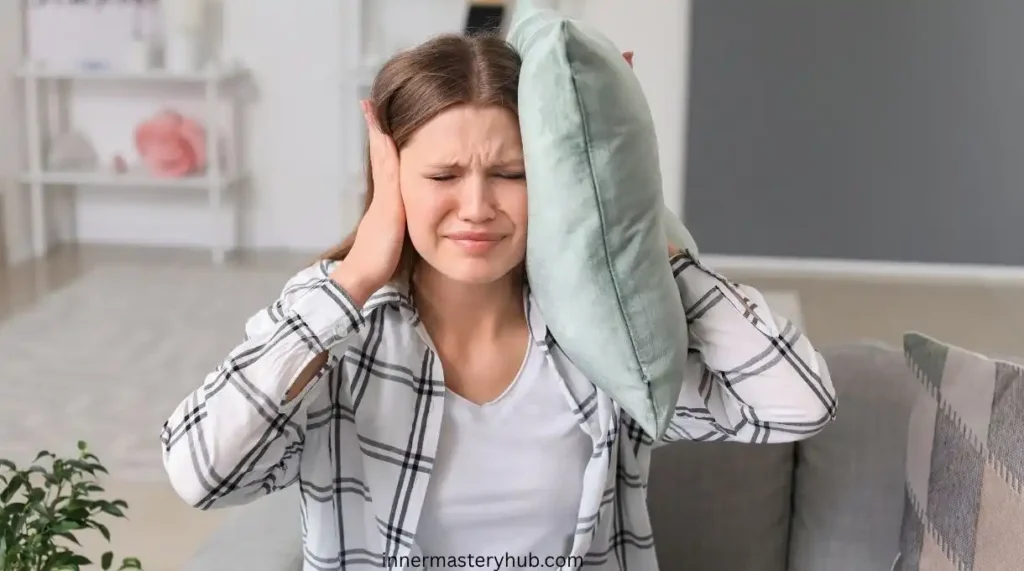
Some people are loud because of personality traits, emotional activation, nervous system patterns, trauma adaptation, anxiety, ADHD traits, or learned communication behaviors, and loudness is often more connected to emotional regulation than intentional disrespect.
Why Are Some People So Loud? At a Glance
| Cause | Explanation |
|---|---|
| Personality | Naturally expressive |
| Trauma | Nervous system activation |
| ADHD | Reduced self-monitoring |
| Anxiety | Emotional activation |
| Hearing loss | Speaking louder unconsciously |
| Culture | Different communication norms |
Why Are Some People So Loud?
A loud person consistently speaks, reacts, or behaves at a higher volume or intensity than is socially expected. This can come from personality, culture, emotional activation, nervous system sensitivity, learned family dynamics, or psychological coping mechanisms.
Some people are loud because, inherently, they grew up in noisy homes where being too loud was acceptable. Other factors, like culture, are also important. Being too loud can be seen as a sign of toughness, passion, and confidence in many cultures. What you consider to be loud and rude may be considered acceptable in some cultures.
Some people talk too loudly because they don’t realise how loud they are. Sometimes this is because they can’t hear you clearly. People with hearing loss speak loudly in order to be accurately heard. Hearing loss is a prevalent problem that affects people of all ages and may go undiagnosed until someone else brings it to our attention.
According to Stephen W. Porges’ Polyvagal Theory, voice tone, emotional expressiveness, and social interaction are all influenced by the autonomic nervous system1. Changes in nerve system activity can naturally increase vocal intensity and decrease awareness of speaking loudness during times of stress or elevated emotional arousal.
Loudness can include:
- Speaking at a high volume
- Interrupting conversations
- Intense emotional reactions
- Over-expressive body language
- Constant talking
- Needing external stimulation
- Difficulty sensing social volume cues
Psychologists connect communication style to emotional regulation, environmental conditioning, and personality traits. Research from the American Psychological Association suggests that emotional arousal directly affects vocal intensity because the nervous system changes breathing, muscle activation, and speech patterns during heightened emotional states.
Why Are Some People So Loud Without Realizing It?
Many loud folks are indeed unaware of their own volume. Self-monitoring declines as the brain becomes more preoccupied with emotion, stimulation, excitement, or social interaction. This is very typical.
Internal emotion and external behaviour are not always evenly monitored by your brain at the same time.
An individual’s neurological system is the first to change when they experience emotional activation. They change how they breathe. Their bodies start to feel energised. Naturally, their voice gets louder.
This occurs prior to conscious awareness catching up.
The Nervous System Connection
In trauma-informed emotional healing work, we see how activation affects voice intensity.
When the body enters stress activation:
- Adrenaline increases
- Sensory awareness narrows
- Emotional intensity rises
- Vocal volume increases naturally
The person is not thinking:
“I want to be loud.”
Their body is simply expressing activation. Research from Harvard Medical School explains that stress and emotional arousal influence physiological communication patterns, including tone and speech intensity2.
Common Misunderstanding
People often assume:
“They are loud because they do not care.”
But often, “They are loud because they are not fully self-aware in emotionally activated moments.”
How Does Loudness Affect Us?
Let’s now examine how our behaviour is impacted by this noise level. No matter how hard we try to remain composed, a noisy individual can nevertheless have a variety of negative effects on us.
One obvious result is stress. It might be unsettling when someone is constantly noisy. According to the American Psychological Association, being around noisy people causes you to become more stressed, which is detrimental to your health3. It may lead to long-term issues like anxiety or heart disease and make you agitated and unable to concentrate.
It is difficult to conduct a conversation with someone being too loud in a social or professional setting. Have you ever been in a meeting when someone keeps talking over everyone else? It is bothersome and difficult to converse with others. Stress and communication failures in both personal and professional contexts result from the loud person’s incapacity to comprehend the significance of their remarks.
Being the loudest person in the room might occasionally have unfavourable consequences. For example, it can make those who are more reserved feel as though they are peering in from the outside. A noisy person may inadvertently make someone feel uncomfortable or uneasy if they are really shy or simply like to keep to themselves. And it might be an issue. The quieter individual may simply cut off communication entirely, which is essentially an indication that they are permanently withdrawing from the discourse.
Let’s be honest: noise can be a problem. It can be quite annoying when someone is making excessive noise when you’re in public. After all, who enjoys having their time interrupted by someone laughing loudly with their buddies or using their phone too loudly? Respect is equally as important as showing consideration for others. You are essentially invading the space of those around you when you are chatting loudly or blasting your music. That is simply impolite.
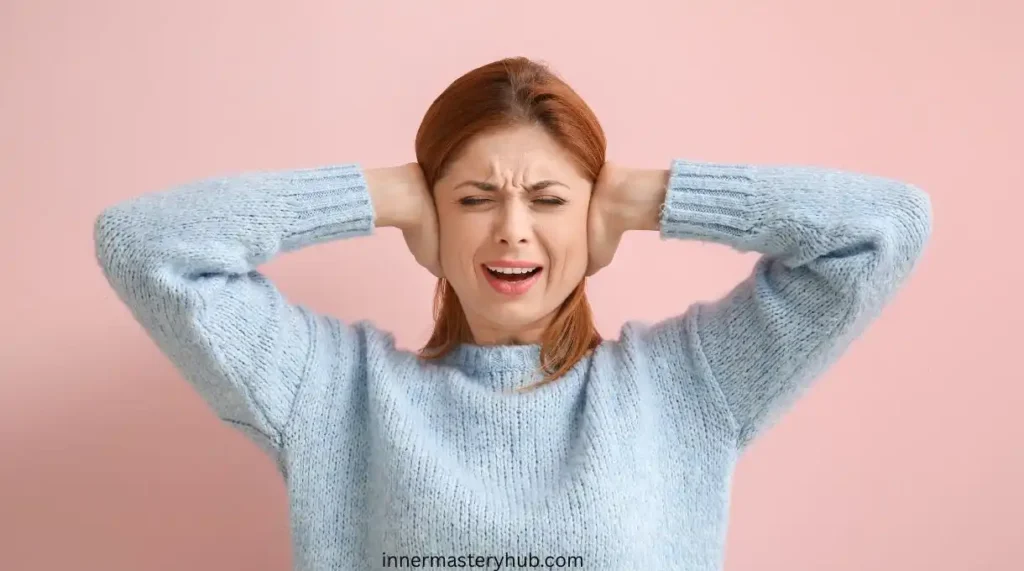
Is Being The Loud Person a Trait or a Psychological Pattern?
Both a psychological pattern and a personality attribute can contribute to excessive loudness. While some people are vocal and vivacious by nature, others become noisy due to emotional conditioning, stress, trauma, or unfulfilled emotional demands.
At this point, the situation becomes more complex. Not everyone who is noisy is having emotional difficulties. Some people actually like communicating expressively. However, personality cannot account for every circumstance.
Personality and Loudness
Extroverted people often:
- Process thoughts externally
- Feel energized socially
- Speak with emotional intensity
- Use expressive communication
Research on the Big Five personality traits shows that extroversion is associated with greater social expressiveness and vocal energy4. But loudness can also become compensatory.
The Psychological Pattern Beneath Loudness
Over years of client work, I noticed certain loud behaviors emerge from hidden emotional fears:
- Fear of being ignored
- Fear of rejection
- Fear of invisibility
- Fear of losing control
- Fear of emotional disconnection
Sometimes volume becomes emotional armor. The person unconsciously believes: “If I stay big, expressive, funny, or loud, I stay emotionally safe.” That pattern is rarely conscious
Can Trauma Make you too Loud?
Indeed, loud behaviour can be a result of trauma. Stress reactions, emotional safety, self-awareness, and nervous system regulation are all impacted by trauma, which can have an impact on how strongly people communicate and express their emotions.
Because not all loud persons are traumatised and not all trauma survivors become loud, this subject merits consideration. However, trauma undoubtedly alters communication styles.
How Trauma Shapes Voice and Expression
A nervous system shaped by chronic stress often stays alert.
This can create:
- Reactive speech
- Intense emotional expression
- Difficulty regulating volume
- Overexplaining
- Rapid talking
- Emotional impulsivity
Some people talk too loudly because they adopt this behaviour as a self-protection. Especially if they grew up in environments where:
- Quietness was ignored
- Emotions were unsafe
- Conflict was constant
- Attention had to be earned
Their brain adapts.
Why Do Loud People Sometimes Feel Emotionally Draining?
Loud people can feel emotionally draining because strong vocal intensity activates sensory and emotional responses in others. Highly sensitive people, in particular, may experience loudness as a nervous system overload.
Not everyone experiences loud people the same way. Some people feel energized around them. Others feel exhausted within minutes.
Why?
Because your nervous system also matters.
Highly Sensitive People and Loud Environments
Highly sensitive individuals often process stimulation deeply.
Loud voices can trigger:
- Mental fatigue
- Anxiety
- Irritation
- Emotional overwhelm
- Difficulty concentrating
Research by Elaine Aron on highly sensitive people explains that heightened sensory processing sensitivity affects emotional and environmental responsiveness5. This means loudness can feel physically stressful to some nervous systems.
Trigger → Interpretation → Emotion
Here is what happens internally:
There’s a loud voice in the room. It is perceived by your brain as overpowering, invasive, or emotionally dangerous. Your body reacts by becoming tense or irritated. Then, emotional avoidance, annoyance, or shutdown manifests. The response is not feeble. It is an interpretation of the nervous system.
Are Loud People Attention-Seeking?
While some noisy people actively desire attention, many are unconsciously looking for emotional presence, protection, connection, or validation instead of just attention.
The distinction between “attention-seeking” and judgement is crucial. However, because attention is linked to emotional safety, connection, and survival, humans naturally seek it out.
Healthy vs. Unhealthy Attention Needs
Healthy attention needs:
- Feeling seen
- Feeling valued
- Feeling connected
- Sharing joy
When someone continuously uses loudness to control feelings of insecurity or emotional emptiness, unhealthy tendencies develop.
Example
Every conversation is dominated by someone who speaks loudly because they find silence to be emotionally uncomfortable. Insecurity emerges in the absence of stimulus. They are shielded from inside discomfort by the volume. That does not justify bad behaviour. However, it clarifies the underlying emotional mechanism.
Why Some People are Loud in Public but Quiet Alone?
Because external stimulation awakens social identity, emotional energy, anxiety, or performance habits that are missing when alone, some people become boisterous in social situations.
People are unaware of how frequently this occurs. Different nervous system states are triggered by social situations.
1. Social Identity and Performance Energy
In groups, people may unconsciously perform roles:
- The funny one
- The entertaining one
- The dominant one
- The energetic one
These responsibilities sometimes started in childhood and never ended. The person is no longer able to unwind without engaging in social interactions.
2. Emotional Interpretation
Internally, the process may look like this:
Social situation → fear of invisibility → increased energy → louder communication → temporary social reassurance
However, emotional tiredness frequently follows. After persistent social performance, a lot of loud, extroverted people suffer from fatigue in private.
Is Loudness Connected to ADHD or Anxiety?
Yes, loudness can be linked to ADHD, anxiety, impulsivity, emotional dysregulation, or overstimulation because these conditions affect self-monitoring, emotional intensity, and communication control. This is an important but often misunderstood topic.
ADHD and Loud Talking
People with ADHD may:
- Speak impulsively
- Miss social volume cues
- Become emotionally expressive quickly
- Hyperfocus on excitement rather than self-monitoring
Research published in peer-reviewed ADHD studies shows that emotional regulation challenges are common in ADHD presentations.
Anxiety Can Also Increase Volume
This surprises many people.
Anxious people sometimes become louder because:
- Their nervous system is activated
- They overcompensate socially
- Fast speech increases vocal intensity
- They fear awkward silence
So while some anxious people become quiet, others become louder. Different nervous systems adapt differently.
What Mistakes Do People Make When Dealing With Loud People?
The biggest error is to assume that being too loud automatically equates to being disrespectful or having poor character. Suppressing your own boundaries rather than speaking calmly and honestly is another error. Before they comprehend the context, many people respond emotionally.
1. Personalizing the Behavior
Not everyone loud is out to harm you. Sometimes, rather than deliberate disrespect, their actions are a reflection of internal activity.
2. Avoiding Honest Communication
Until resentment erupts, people frequently remain mute. Setting boundaries calmly is more effective.
For instance: “When conversations are quieter, I can concentrate better.” This produces clarity without embarrassment.
3. Shaming the Person
Comments like: “You’re so annoying.” Often increase defensiveness and emotional dysregulation.
Seldom does shame lead to self-awareness. Clarity and safety do.
Can Loudness Change Over Time?
Indeed, self-awareness, nervous system control, emotional healing, therapy, maturity, and healthier surroundings can all help reduce loudness. People don’t have set personalities. As awareness grows, behaviour changes.
In my years of trauma-informed emotional treatment, I have witnessed clients organically soften their communication after they felt sufficiently safe on the inside. Not because they were coerced. But because the nervous system no longer needed intensity to feel visible. That is an important difference.
Healing does not erase personality. It reduces your old survival-driven expressions.
How to Handle Loud Behavior
So, how do you deal with a loud person? Is there a way to manage or even reduce the impact of their loudness without causing conflict?
1. Understand the Cause
Finding the cause of the person’s noisy behaviour is the first step. Does the person not realise how loud they are? Are the cultures different? Do they have difficulty hearing? Once you figure out what’s causing the noise, you’ll be better able to deal with the situation.
If you suspect hearing loss, you should calmly approach the person and recommend that they see a doctor. When you realise that they most likely have no intention of causing the disturbance, your comprehension of their behaviour will increase.
2. Communicate Your Concerns
Once you have identified the issue, the next step is to solve it. If their noise annoys you, it’s acceptable to let them know how you feel. Talking to them doesn’t have to be antagonistic. First, have a calm, private conversation with them about how their noise affects you.
You might say, “Hey, I wanted to talk about something that’s been bothering me.” I find it difficult to focus when the volume is extremely high. Would you mind lowering it a little? Dealing with them in this manner shows that you appreciate their identity, but you also need some quiet time.
3. Set Boundaries
Setting boundaries is necessary at times. For instance, you may need to inform a noisy and animated coworker that their noise is interfering with your job. In social situations, you may wish to leave and let others know that you need some quiet if the noise level gets too high. The most crucial thing is to do this discreetly and avoid aggravating the situation.
4. Be empathetic
Remember that the noisy person might not be aware of how their loudness is disturbing other people. Empathy is useful in this situation. Try to see things from their perspective rather than becoming irate or irritated. They may not be aware of how loud they are, or they may be speaking loudly because they want to be heard. You might be able to manage the situation more skilfully if you get their perspective.
5. Provide Constructive Feedback
You might need to give the loud person additional specific feedback if you’ve talked to them and they still can’t lower the volume. Instead of just saying, “You’re being too loud,” give them specific things to do.
“Maybe try lowering your voice a bit when we’re in a group, so everyone can be heard,” is one example of a statement. You can help them understand your concept by giving specific examples.
6. Choose Your Environment Carefully
You may need to change your surroundings when noise levels are inevitable. For example, if you work in a shared workplace, wearing noise-cancelling headphones can help you focus in spite of background noise. If you’re in a group setting, move to a more private area so the noise won’t interrupt your conversation.
7. Self-Regulation by Identifying Your Own Role
In the end, it’s critical to think about your personal role in these interactions. Are you reacting too strongly to the noise? Are you under more stress than you need to be? You can control how you react to noisy situations by using stress-reduction techniques like deep breathing or mindfulness. This will enable you to deal with the circumstance with less irritation and more grace.
Handling Being Too Loud in a Peaceful Way
They are not always trying to wreak havoc; sometimes their excessive noise is caused by their personality, the environment, or even a medical issue. Determining the reason behind someone’s excessive noise is the first step in coming up with a peaceful remedy. You may manage the situation without unneeded confrontation by establishing limits, communicating calmly, and demonstrating empathy.
Remember that not everyone is aware of how their loudness affects other people. If one is patient and understanding, loud situations can be managed in a way that respects all sides. Use these strategies the next time you engage with a loud person. It might be easier than you think to create a more peaceful, balanced environment for both yourself and other people.
People Also Ask
Why are some people louder than others?
Some people speak quite loudly because of cultural differences, personality traits, or hearing issues. In their surroundings, extroverts typically make more noise. People who have hearing loss also unintentionally speak louder to make up for their hearing loss.
What does psychology say about loud people?
According to psychology, loud behaviour can result from several things, including low self-esteem and a craving for attention. Additionally, it could indicate personality qualities like extroversion. It may occasionally be connected to stress or a failure to recognise social cues.
Why do I get irritated by loud people?
Loud people irritate a lot of people because loud noises overwhelm the brain. Noise feels bothersome and difficult to ignore when you’re sensitive, exhausted, or under stress. Additionally, loud behaviour is perceived as disrespectful, which causes annoyance as a defence mechanism for your comfort and concentration.
How to deal with loud people?
To deal with loud people, politely ask them to speak more softly. If needed, remove yourself from the situation. Focus on staying respectful and not getting frustrated, as staying calm helps manage the situation better.
Why are some people so loud in the morning
Some people appear louder in the morning because they are inherently busier and more lively. Loudness may also be interpreted as a sign of enthusiasm due to cultural differences or habits.
Why some people are loud?
Due to cultural communication techniques, emotional intensity, family settings, or personality attributes, some people are inherently noisy. Others unintentionally became loud due to nervous system adaptation, particularly if they had to express themselves more forcefully as children or in stressful situations.
- Porges, S. W. (2011). The Polyvagal Theory: Neurophysiological Foundations of Emotions, Attachment, Communication, and Self-Regulation. W. W. Norton & Company. ↩︎
- Harvard Health Publishing. (2020). Understanding the stress response. Harvard Medical School. Harvard Health Publishing ↩︎
- ↩︎
- John, O. P., & Srivastava, S. (1999). The Big Five trait taxonomy: History, measurement, and theoretical perspectives. In L. A. Pervin & O. P. John (Eds.), Handbook of personality: Theory and research (2nd ed., pp. 102–138). Guilford Press. ↩︎
- Aron, E. N., & Aron, A. (1997). Sensory-processing sensitivity and its relation to introversion and emotionality. Journal of Personality and Social Psychology, 73(2), 345–368. https://doi.org/10.1037/0022-3514.73.2.345 ↩︎
Written By Mehwish Qurayshi
Mehwish Qurayshi is a Trauma-Informed Emotional Wellness Counsellor trained through NICABM’s Treating Trauma Master Series, which includes NBCC-approved education in Trauma Treatment and Emotional Wellness & Emotional Intelligence – Sourcecode Academia. She has over five years of experience providing emotional wellness counselling, helping individuals heal from trauma, regulate emotions, and build healthy relationships.