
6 Ways to Live Life Without Regrets
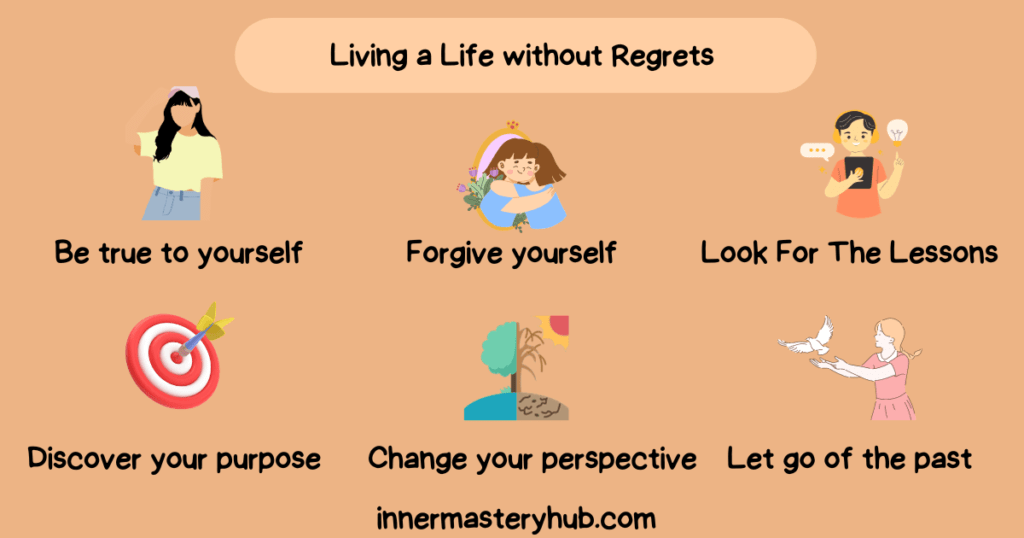
Life without regrets
Life without regrets means making choices that align with your values, learning from mistakes rather than blaming yourself, and letting go of what you cannot change. It is about living honestly, taking responsibility, and growing from every experience rather than wishing the past were different.
“The saddest summary of life contains three descriptions: could have, might have, and should have.”
~ Unknown
You keep going back to that one moment.
Something you said, or didn’t say, a choice you made, or avoided. And even though it’s over, it still feels like it’s not really finished inside you.
That’s where the question of how to live without regrets starts to feel real.
It’s not just about the past. It’s about how your mind keeps bringing it back. One thought leads to another, and before you notice, you’re replaying everything again. You tell yourself you should have known better or done things differently.
But here’s the part most people don’t see.
Regret is not only about what happened. It’s about how you are thinking about it now. The way you interpret that moment creates the feeling of being stuck. And when that feeling stays, it quietly shapes how you see yourself.
So the real struggle is not changing the past.
It’s understanding why it still feels so present.
What Is Regret in Psychology?
Regret is an emotional response to past decisions where you believe a different choice could have led to a better outcome. It involves comparison, self-judgment, and repeated “what-if” thinking.
Regret is not just sadness. It is built on counterfactual thinking, a concept studied in cognitive psychology in which your mind imagines alternative realities1.
You think:
- “If I had done this…”
- “Things would be different…”
This comparison creates a gap between:
- What happened
- What you believe should have happened
And that gap creates emotional discomfort.
Research from the American Psychological Association shows that this mental comparison is a core driver of regret and emotional distress2.
Why Do We Feel Regret So Strongly?
You feel regret strongly because your brain is wired to learn from mistakes, but it overcorrects by repeatedly replaying past decisions to prevent future errors.
Your brain is trying to protect you.
But it does it by revisiting the past again and again.
Here’s the internal process:
- A memory is triggered
- Your mind reinterprets it negatively
- Emotion (guilt, shame) rises
- You replay the scenario
This loop continues because your brain believes:
“If I understand this fully, I won’t repeat it.”
But instead of learning, you get stuck.
As Leon Festinger explained through the concept of cognitive dissonance, your mind struggles when reality and expectations don’t align.
What Is the Regret Loop?
The regret loop is a mental cycle where your mind replays past events, compares them to imagined better outcomes, creates emotional discomfort, and reinforces negative self-beliefs.
The Regret Loop
- Memory → You recall a past event
- Comparison → You imagine a better outcome
- Emotion → You feel guilt or disappointment
- Self-judgment → You blame yourself
This loop strengthens over time.
Not because the past changes,
but because your interpretation becomes more fixed.
Why Is It So Hard to Let Go of Regret?
It’s hard to let go of regret because your mind uses it as a tool for control, believing that holding onto it will prevent future mistakes.
Letting go feels risky.
Because part of you believes:
“If I stop feeling bad, I might repeat the mistake.”
So regret becomes:
- A form of self-punishment
- A way to stay “responsible.”
But this creates a problem.
You don’t grow from punishment.
You grow from understanding.
As Carl Jung suggested, awareness, not guilt, is what transforms behavior.
What Are the Two Types of Regret?
There are two main types of regret: regret of action (things you did) and regret of inaction (things you didn’t do), with regret of inaction lasting longer.
1. Regret of Action
- “I shouldn’t have done that.”
- Linked to mistakes
2. Regret of Inaction
- “I wish I had tried.”
- Linked to missed opportunities
Studies show inaction regret stays longer because:
- It leaves open possibilities
- It keeps imagination active
How to Live Without Regrets?
Living without regrets does not mean avoiding mistakes; it means making decisions with awareness and accepting outcomes without attaching your identity to them.
You don’t remove regret by controlling life.
You reduce regret by changing how you relate to it.
This means:
- You accept uncertainty before decisions
- You act based on values, not fear
- You reflect without self-attack
Living without regrets is not perfection.
It is alignment.
What Are the Signs You Are Letting Go of Regret?
You are letting go of regret when your thoughts about the past become less emotionally intense, less repetitive, and more focused on understanding rather than self-blame.
Signs include:
- You think about the past without strong emotion
- You stop replaying the same scenarios
- You feel less need to justify or explain
- You accept that different choices were possible
The memory remains.
But the emotional charge fades.
What Mistakes Keep You Stuck in Regret?
People stay stuck in regret because they try to suppress it, overanalyze it, or tie it to their identity instead of understanding its emotional root.
Common mistakes:
- Trying to “forget” instead of understanding
- Blaming yourself repeatedly
- Seeking perfect closure
- Comparing your life to others
These actions strengthen the loop.
Because they keep the focus on:
“What went wrong?”
Instead of:
“What is this teaching me?”
Breaking Free From Regret
✔ Direct Answer:
A shift happens when someone stops asking “Why did I do that?” and starts asking “What was I feeling at that time?”
Consider this:
Trigger: Missed opportunity
Interpretation: “I failed.”
Emotion: Regret
Consequence: Avoid future risks
But one change shifts everything:
“What did I fear back then?”
That question replaces judgment with understanding.
And that is where freedom begins.
How Does Self-Forgiveness Help?
Self-forgiveness reduces emotional burden by separating your identity from your past actions, allowing you to move forward without carrying guilt.
Research from Stanford University shows that self-forgiveness improves emotional well-being and resilience3.
Forgiveness does not mean:
- Saying it was okay
It means:
- Accepting it happened
- Learning from it
- Releasing self-punishment
Why Living Without Regrets Feels Difficult at First?
It feels difficult because letting go removes the illusion of control and forces you to accept uncertainty and imperfection.
You may feel:
- Exposed
- Uncertain
- Vulnerable
But that discomfort is not wrong.
It is the space where growth happens.
As Ralph Waldo Emerson said, self-trust requires courage.
What is the Cognitive Basis of Regret?
The cognitive basis of regret lies in how humans think and make decisions. Its complex emotion is rooted in comparing current circumstances and more desirable outcomes that might have been achieved with different choices or actions. It involves:
- Counterfactual Thinking. Mentally simulating alternative scenarios or “what-ifs” to imagine how life or a situation might have been different with different choices.
- Attribution of Responsibility. How individuals attribute responsibility for outcomes, with more regret when they perceive themselves as the primary cause of undesirable results.
- Temporal Perspective. Considering the passage of time and comparing current situations to what might have been intensifies regret when opportunities seem lost.
- Decision-Making Process. How decision-making can affect regret, with impulsive decisions often leading to more shame than thoughtful ones.
- Outcome Evaluation. The emotional response to the gap between the actual outcome and a more favorable alternative.
- Anticipation of Future Regret. Regret can occur in anticipation of regretting not taking a particular action or making a specific choice in the future.
What does it mean to live a life without regrets?
Navigating your trip with the attitude that you will make decisions today that your future self would appreciate is the key to living a life without regrets. The key is to seize opportunities, make choices consistent with your principles, and take measured risks while staying true to who you are.
Being careless does not equate to living guilt-free. It involves making well-considered changes, such as launching a carefully thought-out company or relocating to a new place that appeals to you.
When your dreams become a reality, you won’t regret playing it safe. Balance is key. Avoid letting work take over your life. Make time for your loved ones, yourself, and your favorite activities. Living guilt-free is savoring the here and now without compromising your well-being for the future.
Let’s say you have always loved music but decided to pursue a more secure career. Playing an instrument, joining a local band, or finding time to pursue your musical hobbies are all examples of living guilt-free. Knowing that you didn’t allow your passion to wane will make you look back with satisfaction.
Where Does Regret Come From?
Guilt originates from a complex interplay of emotions, thoughts, and experiences. It often arises when we reflect on past decisions or actions and wish we had chosen differently.
It arises from:
- Past decisions with unfavorable outcomes.
- We missed opportunities and unfulfilled aspirations.
- Hindsight bias and comparison with others.
- Societal expectations and fear of failure.
- Relationship conflicts and personal growth.
- Grief over the loss of experiences.
The Two Flavors of Regret
Action Regret
Our prior choices or behaviors are the source of this kind of emotion. It’s the sensation of regretting a financial or job mistake and wishing we had chosen a different course or made a different decision because we think something different would have worked out better.
Inaction Regret
In contrast, regret over inaction stems from opportunities we didn’t pursue or things we didn’t do. It’s the longing for chances we let slip by, such as not telling someone how we feel or not taking a risk when we have the opportunity.
Benefits of living a life without regrets
Because we have all experienced something we can never forget, it is difficult to live a life without regrets. However, this does not mean that we should live in the past. Making a concerted effort
to overcome your guilt will boost your self-esteem, develop a growth mentality, and promote optimism. When we live a life without regrets and shame, we enjoy every second of it. What transpires when we confront regrets:
- We can enjoy every moment in life, be less fearful, and take risks.
- We have more time for self-development and for implementing our self-development goals, which will make us feel good about ourselves.
- We will be honest with ourselves and others when we don’t need to conform to society’s demands.
- We can look at the future with hope and optimism rather than guilt and anxiety.
6 Ways to Live a Life Without Regrets
- Letting go of the past
Are you, consciously or unconsciously, punishing yourself for the past? Or are you still experiencing agony brought on by an old loved one? You felt guilty for not following your gut and for trusting the wrong person.
You feel guilty for not standing up for yourself and preserving your personal space. You let feelings of remorse, shame, and humiliation persuade you that you are not worthy of happiness.
Living without regrets is about improving your actions, learning from your experiences, and letting go of the past. Recognize what caused you to regret taking these actions, or even doing nothing, and comprehend the impact on you and others involved.
Try to make up for what can be recompensated with better solutions. Declutter your mind of ifs and buts, because they open doors to confusion. Spend time with your loved ones to avoid these regrets.
2. Look For The Lesson and Move on
Making mistakes is human. Everyone makes mistakes. But the wise are those who learn from them. Reflect on your actions, find the lesson they are trying to teach you, forgive yourself, and move on. Journal your thoughts to understand yourself better.
Don’t get stuck to your failures; these mistakes teach us to learn and grow. That’s how we should learn and become a better version of ourselves.
Moving on takes time. But it would be even more costly to dwell on the past or to refuse to learn those simple lessons.
What, then, are you prepared to undertake a fearless life that might leave you without any remorse? Do you prioritize your values, act in your best interests, and tenaciously protect all you hold dear? Committing to doing what’s right over what’s convenient is always complex. However, feeling guilty, reflecting on the past, and telling yourself “I should have” and “it could have been” are the worst things you can do.
3. Be true to your Authentic self and priorities
It’s always possible to start the journey towards your best version. You need to identify your truest self to live a life that is authentic to you. Things like the fear of being exposed, changed, or wrong might prevent people from being self-aware. But if you don’t learn about yourself, the likelihood that you’ll have remorse grows.
Opening yourself up to awareness of what’s happening in your mind is essential for progress, even though it can initially feel awkward.
Meditation is an effective strategy for achieving this. Finding yourself, self-reflection, and understanding who you are and what is important to you may all be done through meditation. It allows you to feel closer to yourself. Improve relationships with others by strengthening your connection to yourself, thereby avoiding regrets later in life.
4. Forgive yourself
According to Stanford University’s overview of recent findings on the topic, self-forgiveness results in.
- Wisdom
- Improved concentration
- Productivity
- Enhanced emotional well-being
- Meaningful relationships
- Feelings of joy, contentment, and Gratitude
5. Discover your purpose
Get yourself in the soul-stirring quest to find meaning in life. This passionate goal protects you against the scary shadow of remorse and is not simply about finding purpose. Strive to leave your comfort zone and seek what you want from yourself. What your life demands from you to get fulfillment will eventually lead you to stay focused on your goals.
By discovering your purpose, you give your life meaning and ensure that every action you take is genuine and worth taking. You construct a shield in this endeavor to find your life’s purpose, protecting yourself from the burden of unmet expectations and the guilt of lost opportunities.
6. Change your perspective
Be open-hearted, avoid grudges, and approach life’s challenges as if speaking candidly with a close friend. When you approach problems from different perspectives, it’s as if you bring diverse viewpoints to your life.
You can avoid the shadow of regret thanks to this sincere approach. You can better understand your circumstances and make decisions that align with your heart and spirit by seeking diverse perspectives.
Characteristics to Avoid Regrets in Life
- Confidence in decision-making
- Acceptance of imperfection
- A positive outlook on life
- Adaptability and resilience
- Clarity of values and priorities
- Focus on the present and future
- Effective decision evaluation
- Limited regret triggers
- Forgiveness of self and others
- Socially connected to gain exposure
Living A Life Without Regrets
Regret is awful. It can sometimes feel like it is consuming your whole being. Set off on a path of regret-free living, where your heart can dance openly, free from previous mistakes. It’s an emotional journey that guides you towards a peaceful, contented life.
By adopting this rule, you can break free from the chains of remorse and enjoy the wisdom you have gained from your experiences while cherishing the beauty of every moment. Living honestly with self-acceptance, making decisions that speak to your spirit, and enjoying the joy of the present, free from the burden of past guilt, are all part of regret-free living.
Living without guilt requires constant inquiry, evaluations, and self-discovery. But you’ll be better prepared for the adventure if you understand who you are better.
FAQS
How to live a life without regrets?
To live a life without regrets, know your values and make choices that match them. Speak honestly. Act even when afraid. Learn from mistakes instead of blaming yourself. Let go of what you cannot change, and focus on growing from each experience.
What are the 5 regrets of life?
The five most common regrets of life are:
I wish I had lived true to myself, not others’ expectations.
I wish I hadn’t worked so hard.
I wish I had expressed my feelings.
I wish I had stayed in touch with friends.
I wish I had let myself be happier.
How to live a life I won’t regret?
Live in line with your values, not others’ expectations. Take small risks instead of avoiding fear. Speak honestly. Care for your health and relationships. Learn from mistakes, forgive yourself quickly, and focus on what you can control today.
What are life’s biggest regrets?
Not living true to yourself.
Letting fear stop you from trying
Neglecting loved ones and friendships
Working too much and living too little
How do I stop regretting the past?
You stop regretting the past by understanding the emotions behind your decisions instead of judging them. Awareness reduces emotional intensity and helps you process the experience more clearly.
Why do missed opportunities hurt more?
They leave open-ended possibilities, allowing your mind to repeatedly imagine better outcomes.
What is the first step to living without regrets?
The first step is awareness: recognizing how your thoughts and emotions shape your view of the past.
- Roese, N. J. (1997). Counterfactual Thinking. Psychological Bulletin. https://doi.org/10.1037/0033-2909.121.1.133 ↩︎
- Roese, N. J. (1997). Counterfactual Thinking. Psychological Bulletin. https://doi.org/10.1037/0033-2909.121.1.133 ↩︎
- Wohl, M. J. A., DeShea, L., & Wahkinney, R. L. (2008). Looking within: Measuring state self-forgiveness and its relationship to psychological well-being—Canadian Journal of Behavioral Science. ↩︎
Written By Mehwish Qurayshi
Mehwish Qurayshi is a Trauma-Informed Emotional Wellness Counsellor trained through NICABM’s Treating Trauma Master Series, which includes NBCC-approved education in Trauma Treatment and Emotional Wellness & Emotional Intelligence – Sourcecode Academia. She has over five years of experience providing emotional wellness counselling, helping individuals heal from trauma, regulate emotions, and build healthy relationships.