
Female Introvert Characteristics and How They Show Up in Everyday Life

What Does Introvert Girl Mean?
An introvert girl is someone who usually prefers quieter surroundings, enjoys time alone, and feels more comfortable in small groups or one-to-one conversations. She may enjoy socialising but need some quiet time afterward, especially after a busy day.
These are common female introvert characteristics, although they don’t describe every introverted girl. Being introverted doesn’t automatically mean being shy, insecure, or antisocial. It’s a personality trait, not a weakness.
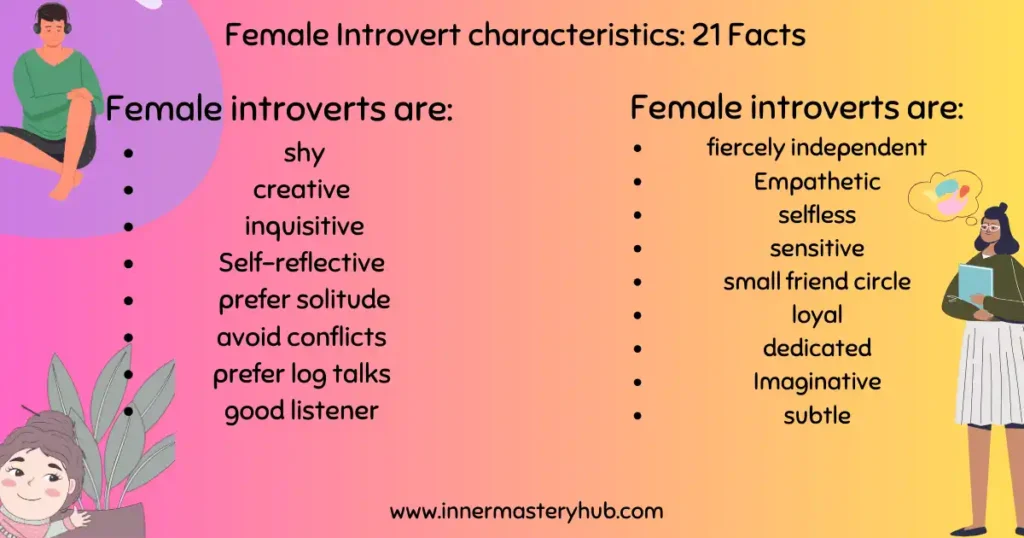
12 Common Characteristics of an Introverted Woman At a Glance
- Thinks before speaking – Takes a moment to gather her thoughts instead of answering right away.
- Enjoys time alone – Likes having some time to herself, even when she enjoys being around others.
- Prefers meaningful conversations – Would rather talk about something important than make small talk for hours.
- Notices small details – Often pays attention to what is happening around her before joining in.
- Values close friendships – May have plenty of acquaintances but keeps only a few people close.
- Needs quiet after busy days – Finds constant noise, activity, or conversation tiring.
- Likes to plan – Feels more comfortable when she knows about social plans in advance.
- Enjoys focused activities – May prefer reading, writing, or working on something without interruptions.
- Takes time to process feelings – Sometimes needs space to understand her emotions before discussing them.
- Can be a good listener – Gives others room to speak without feeling the need to lead every conversation.
- Values personal space – Enjoys close relationships while still needing time for herself.
- Can be quietly confident – May speak less in groups but still feel sure of her opinions and decisions.
These traits don’t apply to every introverted woman. Some are outgoing with people they know well, while others prefer quieter settings most of the time.
Introversion vs Shyness vs Social Anxiety
Two people can both choose not to speak in a group for very different reasons.
One may feel comfortable listening and simply prefer less interaction. Another may want to speak but feel self-conscious. Someone else may feel strong fear about being judged or embarrassed.
That is why I would focus less on the visible behaviour and more on the experience underneath it.
A helpful question is:
“Am I choosing less interaction because it suits me, or because discomfort is making the choice for me?”
Social anxiety is different from simply preferring less interaction. It can involve significant fear of being judged, embarrassed, or negatively evaluated by others.1
12 Characteristics of a Female Introvert
1. You May Like Time to Think Before Responding
When a conversation becomes emotionally charged or mentally demanding, you may prefer a little time before responding.
That space can help you notice what you think and feel before putting it into words. The important distinction is whether the pause helps you return to the conversation, rather than becoming a way to avoid it entirely.
2. Introversion and High Sensitivity Can Overlap, but They’re Not the Same
You might notice noise, tension, body language, or changes in someone’s tone very quickly. That can be part of your experience, but it doesn’t automatically mean you’re introverted.
Sensitivity and introversion can exist together without being the same thing.
Sensory-processing sensitivity and introversion can overlap, but research suggests they are partly distinct traits.2
3. Introversion Does Not Automatically Mean Shyness
People sometimes assume that being quiet or reserved means you’re shy. But introversion and shyness aren’t the same thing.
You may prefer a quiet evening or a small group without feeling nervous around people. Shyness usually involves discomfort or self-consciousness in social situations, while introversion is more about how you prefer to engage with people and stimulation.
4. Solitude Can Create Space for Creative Interests
Some introverted women enjoy writing, art, music, photography, or other activities that let them focus without interruption.
But creativity is not an introvert trait. Introversion may simply make solitary creative time appealing for some people.
5. You May Prefer Quieter Ways to Recharge
After a socially busy or highly stimulating day, you may want some time with fewer demands on your attention.
Reading, walking, gardening, listening to music, spending time with a pet, or simply being alone may feel restorative. The specific activity matters less than having enough space to settle.
Research on introversion and extraversion has found differences in responses to sensory stimulation, although individual experiences vary.3
6. You May Prefer Independent or Focused Work
You may enjoy collaborating and still look forward to the part of the project where you can put your headphones on and work something out yourself.
Introversion does not require working alone; it may simply make uninterrupted focus especially appealing.
7. You May Observe Before Joining In
You may not be the first person talking when you walk into a room.
Sometimes you simply like understanding the atmosphere before deciding where you want to join the conversation.

8. You May Appreciate Advance Notice Before Social Plans
A surprise invitation may be fun sometimes, but you may also love hearing, “We’re doing this on Saturday,” several days beforehand.
Knowing what is coming can make it easier to enjoy the plan rather than feeling rushed into it.
9. You May Prefer Getting to Know Someone Slowly
You might feel more comfortable building trust over time rather than sharing personal details early in a relationship. Taking things slowly can help you decide how much you want to open up.
10. You May Prefer Deeper Conversations
You can make small talk perfectly well and still feel most connected when the conversation moves beyond “How was your weekend?”
You may enjoy learning how someone thinks, what matters to them, or what they are genuinely interested in.
11. You May Need Time to Process Difficult Conversations
You may sometimes need to say, “I want to talk about this, but I need a little time to think first.”
Needing time does not mean you do not care. What matters is communicating that you intend to return to the conversation.
12. You May Prefer a Smaller Circle of Close Relationships
You may know many people but only feel genuinely close to a few of them.
For you, a small number of relationships with plenty of trust and familiarity may feel more fulfilling than constantly expanding your social circle.
Can Introverted Women Be Effective Leaders?
You do not have to be the loudest person in the room to lead it.
An introverted leader may listen before responding, give other people room to contribute, and then help the group move toward a decision.
Research suggests that introverted leadership can be effective in some contexts. In one study, introverted leaders performed particularly well when employees were proactive and willing to contribute ideas.4
What Work Environments May Suit Introverted Women?
Writers, designers, researchers, therapists, managers, developers, teachers, and many other professionals can be introverted, but those careers are not automatically better for introverts.
Career fit depends on your interests, skills, values, responsibilities, and preferred working conditions.
Introversion may simply influence how much uninterrupted focus, social interaction, collaboration, or recovery time feels comfortable to you.
Choose work based on the whole person, not one personality trait.
Psychological Facts About Introvert Girls
1. Introversion Is Part of Personality
Psychologists commonly study introversion as part of the broader extraversion personality trait. Most people aren’t entirely introverted or extroverted. They fall somewhere between the two.
2. Behaviour Can Change Depending on the Situation
An introverted woman might speak confidently during a meeting but stay quiet at a party. Her behaviour can change with the setting, the people present, and how comfortable she feels.
3. Introverts Can Enjoy Social Rewards
Being introverted doesn’t mean someone dislikes attention, friendship, or exciting experiences. People differ in how strongly they seek social activity and how much of it they enjoy.
4. Personality Doesn’t Explain Every Choice
Turning down an invitation isn’t proof of introversion. Someone might be tired, distracted, or simply have other plans. Patterns over time tell us more about personality than one decision.
What Introversion Does Not Mean
Knowing that a woman is introverted tells you very little about her confidence, social skills, emotional sensitivity, leadership ability, or relationships. It mainly tells you something about how she may prefer to engage with social interaction and stimulation.
Anything beyond that should be understood from the individual, not assumed from the label.
- shy or socially anxious
- insecure
- lonely
- emotionally sensitive
- afraid of conflict
- bad at communication
- unable to lead
- uninterested in other people
You might recognize some of these experiences in yourself, but they can have many causes and shouldn’t be automatically attributed to introversion.
For example, you can enjoy solitude and still have close relationships. You can prefer listening in a group and still be confident. You can dislike crowded social events and still be a good leader.
Your introversion reflects how you prefer to interact with the world. It doesn’t determine your emotional intelligence, confidence, abilities, relationships, or mental health.
Why Do I Feel Tired After Socializing?
You can enjoy spending time with people and still want quiet afterward. Those experiences do not contradict each other.
Pay attention to what feels tiring. It might be the length of the interaction, how much conversation was involved, the noise around you, the size of the group, or simply having little time to yourself.
Rather than assuming all social contact is exhausting because you are introverted, notice which environments leave you energised and which require more recovery time.
How Can Introversion Show Up in Relationships?
You can love being close to someone and still sometimes say, “I need a little time to myself.”
Those needs can exist together.
Problems are more likely when one person interprets space as rejection or the other assumes their partner should automatically understand why they are withdrawing.
Why Quiet Women Are Sometimes Misread
Some social and professional environments reward quick responses, frequent participation, visible enthusiasm, and easy networking.
A quieter woman may therefore receive messages that she should speak more, socialise more, or be more noticeable.
Growth does not have to mean becoming more extroverted. It can mean learning to participate confidently without treating your natural style as a problem.
Misunderstanding vs Reality
| What someone may assume | What could also be happening |
|---|
| “She’s shy.” | She may simply prefer listening first. |
| “She’s distant.” | She may want some time alone. |
| “She doesn’t care.” | She may express interest less visibly. |
| “She lacks confidence.” | She may feel confident without being highly expressive. |
| “She’s antisocial.” | She may prefer smaller groups or less frequent interaction. |
A quieter style does not need to be corrected simply because it is less visible.
Is Overthinking a Sign of Introversion?
I would not automatically describe repeated overthinking as part of being introverted.
Some introverted people enjoy spending time with their thoughts, but the more useful question is: “Is this thinking helping me understand something, or am I checking the same situation again because I still do not feel certain?”
That distinction tells us more than the personality label.
You do not need to stop being reflective; the goal is to notice when reflection stops helping you.
How Can Trauma-Related Withdrawal Look Like Introversion?
Both introversion and stress-related withdrawal can involve spending more time alone, avoiding complicated situations, or stepping back from other people.
The difference is often the reason behind the behaviour.
An introverted woman may choose solitude because she enjoys it or feels restored by it. Someone dealing with stress or difficult past experiences may withdraw because interaction feels unsafe, overwhelming, or emotionally demanding.
That is why it can help to ask:
“Do I want this time alone, or do I feel I need to escape from something?”
The answer will not diagnose anything, but it can help you understand your response more clearly.
Key Takeaways for Female Introvert Characteristics
Introversion can shape how much stimulation, interaction, and processing time feels comfortable to you.
The goal is not to push yourself into constant social activity. It is to understand what helps you feel grounded, connected, and able to respond with choice.
Sometimes quiet is exactly what you need. At other times, it may be worth asking whether you are stepping back because you want space or because something feels difficult to face.
Frequently Asked Questions About Female Introvert Characteristics
How Do Introverted Women Communicate Their Feelings?
If you’re introverted, you may appreciate having time to understand what you’re feeling before you explain it to someone else. You might prefer a private conversation, writing your thoughts down first, or taking a short pause before responding. The important thing is finding a way to communicate that feels clear and respectful.
What are some facts about introverted girls?
Introverted women often prefer quieter settings, smaller social groups, and time alone after a lot of interaction. They may also like having time to think before responding. These are common tendencies, not rules that apply to everyone.
Is introversion linked to trauma?
No. Introversion is a personality trait, not a trauma response. However, trauma-related behaviours such as withdrawal, avoidance, or hypervigilance can sometimes look similar to introversion from the outside.
Can an introverted woman be confident?
Yes. Introversion and confidence are different things. You can be quiet, reserved, or prefer smaller social settings and still feel confident in yourself and your abilities.
Can introverted women enjoy socializing?
Yes. Being introverted does not mean disliking people or socializing. You may enjoy spending time with friends, family, or colleagues and still want some quiet time afterward.
- Cremers, H. R., & Roelofs, K. (2016). Social anxiety disorder: A critical overview of neurocognitive research. WIREs Cognitive Science, 7(4), 218–232. https://doi.org/10.1002/wcs.1390 ↩︎
- Stelmack, R. M. (1990). Biological bases of extraversion: Psychophysiological evidence. Journal of Personality, 58(1), 293–311. https://doi.org/10.1111/j.1467-6494.1990.tb00917.x ↩︎
- Stelmack, R. M. (1990). Biological bases of extraversion: Psychophysiological evidence. Journal of Personality, 58(1), 293–311. https://doi.org/10.1111/j.1467-6494.1990.tb00917.x ↩︎
- Grant, A. M., Gino, F., & Hofmann, D. A. (2011). Reversing the extraverted leadership advantage: The role of employee proactivity. Academy of Management Journal, 54(3), 528–550. https://doi.org/10.5465/amj.2011.61968043 ↩︎
Written By Mehwish Qurayshi
Mehwish Qurayshi is a Trauma-Informed Emotional Wellness Counsellor trained through NICABM’s Treating Trauma Master Series, which includes NBCC-approved education in Trauma Treatment and Emotional Wellness & Emotional Intelligence – Sourcecode Academia. She has over five years of experience providing emotional wellness counselling, helping individuals heal from trauma, regulate emotions, and build healthy relationships.