
What Are the Low-Key Signs That Reveal a Person’s True Character?

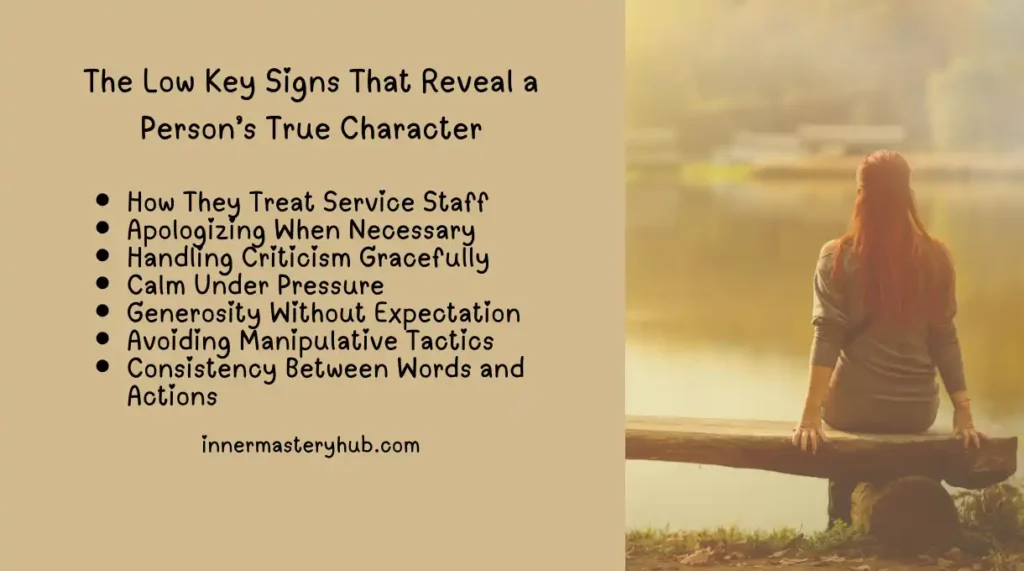
Low key signs that reveal a Person’s True Character often appear in small daily behaviours, not big public gestures. The way someone handles boundaries, stress, accountability, empathy, and other people quietly reveals their emotional maturity, integrity, and relationship patterns. Consistent actions, emotional regulation, and respect usually show who someone truly is over time.
Why Do Small Behaviours Reveal More Than Big Gestures?
Small behaviours reveal true character because they are harder to fake consistently. Public kindness can be performative, but repeated private actions often reflect someone’s emotional patterns, values, nervous system regulation, and deeper beliefs.
You have probably met someone who said all the right things. They sounded caring. They looked emotionally intelligent. But over time, something inside you kept feeling unsettled.
That inner discomfort matters.
In my 5 years of working with clients in emotional healing and nervous system regulation spaces, I have noticed something consistent. People rarely feel emotionally unsafe because of one dramatic moment. They feel unsafe because of repeated small experiences that slowly create confusion, tension, or emotional exhaustion.
Character is not built during impressive moments. It appears during ordinary moments.
When someone feels ignored, frustrated, jealous, embarrassed, or powerless, their emotional patterns become visible. That is why relationship psychology focuses heavily on consistency rather than intensity.
Research from the American Psychological Association shows that emotion regulation strongly affects interpersonal trust and relationship stability 11. People who struggle to regulate emotions react impulsively under stress, which impacts how others experience emotional safety around them.
What Are the Low-Key Signs That Reveal a Person’s True Character?
Low-key signs include how someone treats service workers, reacts to boundaries, handles accountability, speaks about absent people, responds to your success, manages disappointment, and behaves when nobody is watching.
These signs seem small because they happen quietly. But psychologically, they reveal emotional maturity, empathy, integrity, and attachment patterns.
How Do They Treat People Who Cannot Benefit Them?
The way someone treats people with less power often reveals their true empathy and respect.
Definition:
This includes interactions with waiters, cleaners, assistants, delivery workers, children, elderly people, or anyone who cannot “offer” social value back.
Cause:
People who seek validation through status may perform kindness selectively.
Effect:
Over time, relationships become emotionally transactional.
Example:
Someone may treat you lovingly but become cold or dismissive toward service workers. That inconsistency matters.
This behaviour reflects conditional empathy. Healthy emotional attachment includes consistent respect, not selective kindness.
Research on narcissistic personality traits shows that people high in narcissism display charm toward socially valuable individuals while devaluing others perceived as lower status2.
Why Does Someone’s Reaction to Boundaries Reveal Their Character?
A person’s response to your boundaries shows whether they respect your autonomy or only value access to you.
Boundaries create emotional clarity. But emotionally immature people often interpret boundaries as rejection, control, or abandonment.
This creates a hidden emotional process:
- You say no.
- They interpret it personally.
- They feel emotionally threatened.
- Then they punish, guilt-trip, withdraw, or manipulate.
That reaction reveals more than their words ever will.
In trauma-informed relationship work, this pattern appears constantly. Many clients confuse emotional intensity with emotional closeness. But emotionally safe people do not force access. They respect emotional pacing.
Common Low-Key Signs Around Boundaries
- Silent treatment after hearing “no”
- Passive-aggressive comments
- Making you feel guilty for resting
- Mocking emotional needs
- Becoming distant after accountability
- Acting supportive publicly but resentful privately
Research published in the Journal of Personality and Social Psychology found that emotionally secure individuals respond more constructively to relational stress and boundary issues than those with insecure attachment styles3.
How Does Gossip Reveal Someone’s Inner Character?
The way someone talks about absent people often predicts how they will eventually talk about you.
Definition:
Gossip is not just sharing information. It often reflects emotional insecurity, patterns of comparison, projection, or unresolved resentment.
Cause:
People who struggle with self-worth sometimes regulate their emotions by criticizing others.
Effect:
Trust becomes unstable when the connection is built on judgment rather than emotional safety.
Example:
Someone constantly shares private details about others to create closeness with you. At first, it feels intimate. Later, you realize your vulnerability may also become social currency.
Character reveals itself through emotional containment.
Emotionally mature people do not need to expose others to feel connected.
Harvard Medical School notes that chronic negative social interactions increase stress responses and emotional dysregulation, affecting long-term mental well-being4.
Can Someone’s Reaction to Your Success Reveal Jealousy?
Yes. One of the clearest low-key signs of true character is how someone reacts when good things happen to them.
Some people support your pain better than your growth.
This happens because your success unconsciously activates comparison, insecurity, fear of abandonment, or unresolved self-worth wounds.
The signs are subtle:
- Backhanded compliments
- Changing the subject quickly
- Minimizing achievements
- Competing immediately
- Emotional distance after your growth
- Acting supportive but emotionally cold
Healthy people feel inspired by your growth. Emotionally threatened people feel exposed by it.
This does not always mean they are “bad.” Sometimes it reflects unresolved trauma bonding patterns or chronic insecurity. But it still affects emotional trust.
In relationship psychology, secure attachment allows mutual growth without emotional competition.
What Does Accountability Say About Someone’s Character?
A person’s ability to take responsibility without excessive defensiveness is one of the strongest signs of emotional maturity.
Definition:
Accountability means acknowledging impact without immediately shifting blame.
Cause:
People with fragile self-worth often experience criticism as a rejection of their identity.
Effect:
They defend themselves rather than repair the connection.
Example:
You explain calmly that something hurt you. Instead of listening, they immediately explain why your feelings are wrong.
This creates emotional confusion because your experience becomes emotionally erased.
Over the years, I have seen clients stay trapped in emotionally draining relationships because they focused more on intentions than patterns.
Intentions matter. But repeated emotional impact matters more.
Research on emotional intelligence consistently links accountability and self-awareness with healthier relationships and greater psychological resilience5.
Why Do Tiny Moments During Stress Reveal True Personality?
Stress reduces emotional masking. During pressure, people often reveal their default emotional regulation patterns.
You truly see someone when plans fail.
Not because stress “changes” them, but because stress exposes emotional habits that are usually hidden under control.
Watch for These Patterns During Stress
- Do they become cruel?
- Do they shut down emotionally?
- Do they blame others immediately?
- Do they become emotionally manipulative?
- Do they regulate emotions responsibly?
- Can they communicate without attacking?
Many emotionally unsafe patterns appear during nervous system activation.
When someone feels overwhelmed, their unresolved emotional wounds often surface through:
- criticism
- withdrawal
- anger
- control
- emotional unpredictability
This is why emotional regulation matters deeply in healthy relationships.
According to research by Gross (1998), poor emotional regulation predicts relational conflict, impulsive reactions, and emotional instability (6)6.
How Does Consistency Reveal a Person’s Real Character?
Consistency matters because character is not a mood. It is a repeated behavioural pattern over time.
Anyone can act lovingly temporarily.
Real character is evident in emotional consistency across different situations.
Definition:
Consistency means values remain stable regardless of convenience.
Cause:
Emotionally mature people act from internal values rather than emotional impulses.
Effect:
You feel emotionally safe because behaviour becomes predictable and trustworthy.
Example:
Someone who respects your needs only when happy is not consistently respectful.
Consistency creates nervous system safety.
This is especially important for people healing from trauma bonding, emotional neglect, or fear of abandonment. Unpredictability can activate anxiety because the brain keeps searching for emotional certainty.
What Are the Most Overlooked Signs of Good Character?
Good character quietly appears through emotional steadiness, humility, accountability, and respectful behaviour in difficult moments.
People misunderstand character when they focus on charisma rather than emotional integrity.
Here are subtle signs of healthy character:
Quiet Signs of Emotional Maturity
- They apologize without making excuses
- They listen without preparing defences
- They stay respectful during disagreements
- They do not weaponize vulnerability
- They celebrate others genuinely
- They admit when they are wrong
- They respect emotional boundaries
- They stay kind even when frustrated
- They do not need constant validation
- They communicate clearly instead of manipulating
These behaviours create emotional safety.
And emotional safety is one of the clearest signs of healthy character.
Missing the low-key signs About People
You’ve likely met someone who initially seemed wonderful. They seemed to have it all together, made you laugh, and said all the right things. Over time, however, their words and deeds became inconsistent. Perhaps they didn’t follow through on plans, didn’t care about your sentiments, or revealed an unexpected side. Isn’t that annoying?
You feel deceived, confused, and sometimes even doubt your own perspective. The issue is that we tend to pay more attention to what people say than to what they actually do. We fail to notice the subtle clues that might have given us a sneak peek into their true nature right away.
Why This Matters
First impressions are formed in a matter of seconds, according to research, yet they are based on flimsy cues such as charm or appearance7.
However, over time, consistent behavioural patterns reveal true character. If you ignore these low-key signs, you may wind up misjudging those who are truly excellent or putting your trust in the wrong individuals. Understanding these low-key signs can help you avoid heartbreak and build more solid, genuine relationships.
The Cost of Ignoring Low-Key Signs
There may be serious repercussions if these low-key signs are ignored. I’ve been in that situation before, trusting someone because they seemed kind, only to discover they were dishonest. For instance, I used to work with a coworker who was constantly grinning and complimenting me throughout meetings.
They would, however, avoid their duties and engage in backroom gossip about coworkers. I could have avoided relying on them if I had been more aware of their little behaviours, such as how they interacted with others or handled deadlines.
This is supported by research showing that people’s moral character can be strongly predicted from their tiny, daily actions8. You risk surrounding yourself with people who sap your energy, violate your trust, or hinder your progress if you ignore these low-key signs.
The stakes are enormous, particularly in intimate partnerships or work environments where morality is crucial.
Observing Low-key Signs & Behaviours
1. How They Treat Service Staff
A person’s behaviour with servers, cashiers, or cleaners reveals a lot about them. People generally express their actual selves when they believe no one is watching them or when they don’t expect anything in return. A person’s true kindness is clearly shown by how kind, friendly, and respectful they are to service personnel. On the other hand, someone who treats employees rudely or casually could be entitled toward others.
For instance,
Consider someone who shows courtesy to a server despite the restaurant being busy and the delayed service. They exhibit empathy and maturity by remaining understanding and avoiding blame for the employees.

2. Consistency Between Words and Actions
The proverb “Actions speak louder than words” is surely familiar to you. This is particularly relevant when determining an individual’s genuine character. Trustworthy people are those who always match their words with their deeds.
A warning sign is when someone claims to care about something but never does. Sincere people don’t just act when it’s convenient; they act by their principles and convictions.
For instance,
It’s possible that a friend who consistently offers to support you but never does so is more concerned with projecting compassion than with truly being there for you.
3. Handling Criticism Gracefully
Although everyone makes mistakes, a person’s response to criticism reveals a lot about their emotional maturity. Good-natured people take constructive criticism without getting defensive or upset.
Instead of viewing it as a personal assault, they see it as a chance to develop. You can rely on someone to manage other difficulties with poise if they respond to criticism in a composed manner and use it to do better.
Imagine giving a coworker feedback on their presentation, and rather than becoming defensive, they express gratitude and ask for additional advice. This indicates that they respect your viewpoint and are receptive to change.
4. Accountability
When someone accepts responsibility for their acts, even when it is uncomfortable, they are demonstrating true character. Refusing to assign blame and admitting faults are unmistakable indicators of integrity. Individuals who never acknowledge their shortcomings or errors might be concealing something, or perhaps they are not self-aware enough to change.
A person demonstrates high responsibility when they own up to their mistakes at work and take action to correct them rather than placing the blame elsewhere.
5. Empathy
Empathy refers to the capacity to understand and relate to another person’s emotions. Empathic people are sensitive to others’ feelings and ready to lend a hand when others are struggling. A person is compassionate and kind-hearted if they consistently seem to understand your feelings without you having to explain them.
A friend’s capacity to support you during your time of need is evident when they lend you their ear when you’re anxious or agitated.
6. Generosity Without Expectation
Big acts aren’t the only way to be generous. Sincere generosity is giving without anticipating anything in return. This could be as easy as volunteering your time to assist a buddy in need or offering to help someone with their shopping. They act out of concern rather than in an attempt to regain something.
Selflessness is displayed by a coworker who stays late to assist you in finishing a project, even if they have nothing to gain from it.
7. Respecting Boundaries
One important indicator of emotional intelligence is the ability to respect others’ boundaries. People who truly care about other people won’t force them into uncomfortable circumstances. They are aware that everyone has boundaries and that respecting those boundaries is crucial.
It demonstrates respect for your limits when someone extends an invitation to you, and you accept their “no” without pressuring them.
8. Listening Skills
Hearing is only one aspect of listening; another is comprehending and reacting correctly. In talks, people of good character eagerly listen to you and make you feel important. Instead of talking over you or interrupting, they pay attention to what you have to say and make sure they grasp your viewpoint.
Making eye contact, nodding in agreement, and asking questions to demonstrate understanding are all examples of active listening during a conversation.
9. Humility
A key characteristic of emotional maturity is humility. Humble people don’t flaunt their accomplishments or try to draw attention to their good deeds. Rather, they are happy to let their actions speak for themselves. They are aware of their shortcomings and know that they are always developing.
Someone is grounded when they acknowledge others’ efforts and modestly attribute their accomplishments to teamwork.
10. Handling the Success of Others
When someone enjoys others’ achievements without feeling envious or resentful, that person demonstrates true character. A person who truly celebrates others’ accomplishments exudes confidence. On the other hand, someone who feels angry or jealous may be insecure or self-centred.
Imagine a coworker who, rather than being upset about your promotion, supports you. This demonstrates their stability and support.
11. Apologizing When Necessary
An expression of maturity is an apology. Self-reflection is possible for those who are prepared to apologize when they have erred. A genuine apology demonstrates that the other person loves the relationship and is prepared to make things right.
A buddy shows accountability and respect by expressing regret for being late and admitting that their behaviour affected your time.
12. Avoiding Gossip
Those who refrain from gossiping are typically better people. Insecurity, envy, or the desire to control others are common causes of Gossip. You can rely on someone to be direct and honest if they refrain from spreading rumours and engaging in this behaviour.
A trustworthy person is often one who avoids speaking ill of others behind their back or publicly criticizing them.
13. Calm Under Pressure
One can learn a lot about a person’s actual character from how they respond under pressure. Those who maintain their composure under duress are frequently more grounded and confident. People who lash out or panic may have trouble controlling their emotions and may find it harder to trust when things become tough.
A coworker who maintains focus and helps others stay on course under a challenging deadline exhibits strong moral fibre and emotional stability.
14. Being Present
Being fully present during a discussion or circumstance demonstrates respect for the subject matter and the individuals concerned. Their phone or other worries aren’t keeping them from paying attention. Someone values you if they pay attention to you and try to participate without interjecting.
A spouse shows respect and attention by putting down their phone at dinner and having a meaningful conversation.
15. Consistency in Behaviour
When someone acts consistently in various contexts, it reveals who they really are. Being authentic means behaving the same way around everyone, no matter who is around. However, if they adopt different personas based on the population or circumstance, that is a warning sign.
It’s more likely that a friend is sincere if they act the same way in official and informal situations.
16. Open to Feedback
Humility and a desire for development are demonstrated by someone receptive to criticism and eager to improve. Instead of taking criticism personally, they view it as an opportunity to grow and improve.
A person who solicits and acts on feedback about their work is demonstrating dedication to personal development.
17. Supportive in Difficult Times
Going through difficult situations frequently reveals a person’s genuine nature. A true buddy or ally is someone who supports you during difficult times, even if it is inconvenient for them.
A friend demonstrates their commitment and concern by helping you through a difficult time without flinching or whining.
18. Avoiding Manipulative Tactics
To get what they want, manipulative people frequently resort to pressure, flattery, or guilt. Genuine character is demonstrated by someone who respects your independence and doesn’t attempt to dictate your choices.
Emotional maturity is demonstrated by a buddy who accepts your choice to turn down an invitation without making you feel bad about it.
19. Respect for Differences
A strong character is characterized by respect for others’ cultural, religious, and intellectual differences. Individuals who appreciate diversity are typically more tolerant and open-minded.
When someone listens respectfully to conflicting viewpoints without attempting to persuade you to change, they are exhibiting tolerance and openness.
20. Gratitude
An appreciative person acknowledges and expresses gratitude for the positive aspects of their life. Being grateful is a sign of humility and gratitude for other people. Expressing gratitude frequently demonstrates appreciation for and awareness of others’ contributions.
A coworker who expresses gratitude for your assistance, even with minor tasks, demonstrates respect for the work put out by others.
21. Self-Reflection
Self-awareness is typically a sign of true character. Individuals are more likely to be grounded and genuine when they take the time to consider their feelings and behaviours. They want to get better and learn from their mistakes.
A person showing a high degree of self-awareness acknowledges when they were in error and acts to rectify their actions.
Why Do People Ignore These Low-Key Signs?
People ignore character red flags because emotional attachment can override emotional clarity.
When you deeply want a connection, your brain naturally tries to protect the relationship.
This can create:
- rationalizing behavior
- minimizing discomfort
- confusing chemistry with compatibility
- ignoring emotional inconsistency
- staying attached to potential instead of patterns
This is especially common for people with a fear of abandonment or trauma bonding tendencies.
The emotional process usually looks like this:
- You notice discomfort.
- You question yourself.
- You explain away the behaviour.
- You become emotionally invested.
- Then the pattern repeats.
Over time, self-trust weakens.
That is why emotional awareness matters so much in healing work.
How to Use These Signs in Your Life
You don’t have to keep a checklist with you, but start looking for these low-key signs in conversations. Over time, make a mental note of trends. For instance, it’s a warning sign if someone is consistently nice to strangers yet unkind to you. They are probably trustworthy if they regularly arrive on time and fulfil their commitments. Although they are not infallible, these indicators help you get a better sense of a person’s character.
Practical Tips for Spotting Low-Key Signs
- Observe Over Time. Avoid making snap judgments based on a single encounter. Seek out recurring trends.
- Trust Your Gut. These small clues are frequently the reason why something feels strange.
- Pose Questions. Have discussions with them to observe their responses to various subjects.
- Compare their words and behaviour; if they don’t match, believe what they say.
What Shift Changes How You See People Completely?
The biggest shift happens when you stop judging people mainly by words, charm, or intentions and start paying attention to repeated emotional patterns.
True character rarely announces itself loudly.
- It appears quietly:
- in frustration,
- in disappointment,
- in boundaries,
- in jealousy,
- in accountability,
- and in ordinary moments where no performance is needed.
Over the past 5 years, working with clients in emotional healing spaces, I have seen one truth repeatedly change people’s relationships:
When you begin trusting patterns more than promises, emotional clarity becomes easier.
You stop chasing emotional intensity.
You start recognising emotional safety.
And that changes everything.
Low-Key Signs That Reveal a Person’s True Character
Low key signs that reveal a person’s true character are usually subtle, emotional, and deeply consistent over time. The way someone handles stress, boundaries, accountability, emotional regulation, empathy, and everyday interactions often says far more than charm or words ever can.
Character is not revealed in perfect moments. It is revealed when comfort disappears.
When you start paying attention to emotional consistency instead of emotional performance, relationships become clearer, safer, and more honest.
If you are healing from emotional confusion, trauma bonding, or relationship anxiety, noticing these quiet patterns can help you rebuild self-trust and emotional clarity.
People Also Ask
What are low-key signs of a person’s true character?
Pay attention to how they behave in normal circumstances, particularly when they believe no one is looking. Words and deeds must be consistent.
How can I identify someone’s true character?
Pay attention to how they behave in normal circumstances, particularly when they believe no one is looking. Words and deeds must be consistent.
Are these signs universal across cultures?
Certain actions can be viewed differently across cultures, even though other behaviours are universally accepted. The cultural environment must be taken into account.
Can someone fake these behaviours?
Indeed, some people can imitate these actions. But eventually, contradictions frequently surface, exposing their actual nature.
How do these signs relate to emotional intelligence?
A person’s capacity to comprehend and manage emotions is reflected in several subtle indicators of strong emotional intelligence, including empathy and self-awareness.
Why is it important to recognize these signs?
Building sincere relationships and avoiding those with ulterior motives are easier when you are aware of these warning flags.
Do these signs apply in professional settings?
Of course. One can learn about a colleague’s character by observing how they handle criticism, manage stress, and treat their subordinates.
Can these signs predict future behaviour?
Consistent low-key indicators can provide hints about a person’s potential future behaviour; however, they are not infallible.
How can I apply this knowledge in daily life?
Observe how people treat others, especially in difficult circumstances, pay attention to subtle signs, and listen intently.
Are there any resources to learn more?
Indeed, psychological papers and books on body language and emotional intelligence can offer a more in-depth understanding.
- Mikulincer, M., & Shaver, P. R. (2007). Attachment in Adulthood: Structure, Dynamics, and Change. Guilford Press – Attachment in Adulthood
↩︎ - Campbell, W. K., & Foster, C. A. (2007). Narcissism and interpersonal relationships. ↩︎
- Mikulincer, M., & Shaver, P. (2007). Attachment in Adulthood. ↩︎
- Harvard Medical School. (2023). Social interaction and brain health. Harvard Health Publishing. Retrieved from Harvard Medical School ↩︎
- Goleman, D. (1995). Emotional Intelligence. ↩︎
- Gross, J. J. (1998). The emerging field of emotion regulation ↩︎
- Willis, J., & Todorov, A. (2006). First impressions: Making up your mind after a 100-ms exposure to a face. Psychological Science, 17(7), 592–598.
American Psychological Association ↩︎ - Mehl, M. R., Gosling, S. D., & Pennebaker, J. W. (2006). Personality in its natural habitat: Manifestations and implicit folk theories of personality in daily life. Journal of Personality and Social Psychology, 90(5), 862–877.
Journal of Personality and Social Psychology (APA) ↩︎
Written By Mehwish Qurayshi
Mehwish Qurayshi is a Trauma-Informed Emotional Wellness Counsellor trained through NICABM’s Treating Trauma Master Series, which includes NBCC-approved education in Trauma Treatment and Emotional Wellness & Emotional Intelligence – Sourcecode Academia. She has over five years of experience providing emotional wellness counselling, helping individuals heal from trauma, regulate emotions, and build healthy relationships.