Highly Intuitive Person: 15 Powerful Signs You Secretly Sense What Others Miss
A Highly Intuitive Person is someone whose brain rapidly processes emotional and environmental signals through subconscious pattern recognition, making emotional regulation essential for transforming intuitive sensitivity into clear insight.
Many people hold a confusing inner experience in silence. As soon as you enter a room, you can sense the atmosphere. When someone says, “I’m fine,” you know deep down that they’re not. You pick up on tiny patterns that others overlook. However, you also doubt yourself.
A highly intuitive person leads a life like this.
You have a keen sense of feeling. You take in your surroundings thoroughly. It comes naturally to you to read between the lines. Although intuition can be a gift, it can also lead to mental conflict. You can ask yourself, “Why do I feel so much?” Why do I see things that others don’t?
The true challenge is not intuition per se. Learning to control the accompanying emotions is a challenge.
Psychologists are increasingly linking intuition to sensitivity to social cues, emotional processing, and subconscious pattern identification. According to cognitive science research, the brain continuously collects minute signals and makes snap decisions before conscious thought1.
However, intuition may feel overpowering rather than beneficial when emotional control is lacking.
What Is a Highly Intuitive Person?
Someone who naturally picks up on social, environmental, or emotional cues fast and unconsciously is said to be very intuitive. Compared to most people, they process patterns, tone changes, facial expressions, and emotional energy more quickly.
A person who is more sensitive to emotional and environmental cues, enabling them to recognise intentions, feelings, and even patterns without conscious thought.
According to psychologist Daniel Kahneman, author of Thinking, Fast and Slow, System 1 thinking, a quick, instinctive mental process, is responsible for much of human judgment.
People with high intuition rely mostly on this internal mechanism.
However, intuition isn’t magic. It’s a quick recognition of subconscious patterns.
According to research from the American Psychological Association, the brain integrates social cues, environmental information, and emotional memory to form intuitive judgments2.
Common Signs of Highly Intuitive People
You may be highly intuitive if you:
- Sense emotional tension quickly
- Pick up subtle tone changes
- Feel drained in chaotic environments
- Notice patterns others miss
- Trust “gut feelings” that later prove accurate
- Understand people’s feelings without explanation
These experiences are often linked to high emotional awareness and empathy.
Why Do Highly Intuitive People Feel Emotionally Overwhelmed?
Highly intuitive people feel overwhelmed because they quickly absorb others’ emotional signals, but lack effective strategies for managing them.
The Inner Process Behind Overwhelm
The experience follows a psychological pattern.
When a small event happens, someone’s tone changes, a friend seems distant, or the environment feels tense.
Your mind instantly interprets the signal.
Your brain connects it to past emotional memories.
An emotion appears quickly: anxiety, concern, sadness.
Before you consciously analyze the situation, your nervous system reacts.
This process unfolds as,
Trigger → interpretation → emotional reaction → internal stress
Because intuitive people process signals rapidly, the emotional response feels immediate and intense.
Research published in the Journal of Personality and Social Psychology shows that emotional sensitivity correlates with deeper environmental processing3.
This is why intuitive people feel mentally fatigued in crowded, emotionally charged environments.
How Does Emotional Regulation Affect Intuition?
Whether intuition is overwhelming or clear depends on emotional control. Intuition turns into insight when emotions are controlled. When intuition is not controlled, it becomes overthinking, leading to anxiety.
Understanding Emotional Regulation
The capacity to properly control and react to emotional experiences is known as emotional regulation.
Psychologist James Gross, a pioneer in the field of emotional regulation, says people with strong emotional regulation skills can understand their emotions without being affected by them4.
This skill is essential for extremely intuitive people.
Emotional control helps in decision-making since intuition continuously picks up signals:
- Which signals matter
- Which emotions need attention
- Which reactions should be released
Without regulation, intuition may trigger constant emotional scanning.
But with regulation, intuition becomes deep awareness and calm understanding.
Intuition vs Emotional Intelligence
| Aspect | Intuition | Emotional Intelligence |
|---|---|---|
| Definition | A quick gut feeling based on subconscious pattern recognition. | The ability to understand, manage, and respond to emotions effectively. |
| Process | Happens instantly and automatically without conscious analysis. | Involves conscious awareness and thoughtful emotional control. |
| Focus | Detects subtle signals, patterns, or hidden meanings in situations. | Focuses on recognizing and managing your own and others’ emotions. |
| Role in Decisions | Guides fast judgments or instincts about people and situations. | Helps make balanced decisions by regulating emotional responses. |
| Example | Feeling something is wrong in a conversation without clear evidence. | Feeling that something is wrong in a conversation without clear evidence. |
Why Do Highly Intuitive People Doubt Themselves?
Due to society’s preference for logical reasoning over intuitive awareness, which can make intuitive insights seem illogical and unreliable, many highly intuitive people experience self-doubt.
The Misunderstanding of Society
Logic and quantifiable proof are highly valued in contemporary culture.
However, intuition works in silence.
It seems to be an emotion, less than a formula.
Due to this difference, intuitive people occasionally receive signals such as:
- “You’re overthinking.”
- “That’s just in your head.”
- “You’re too sensitive.”
These messages create internal conflict.
You feel something strongly, but external voices question your perception.
Psychologist Carl Jung, author of Psychological Types, described intuition as a core psychological function that perceives possibilities beyond immediate data5.
He believed intuitive people naturally detect patterns, meanings, and hidden emotional signals.
But when intuition is constantly dismissed, self-doubt grows.
What Psychological Mechanisms Power Intuition?
Subconscious pattern recognition, emotional memory, and quick brain processing that combines signals from the past with those from the present are how intuition functions.
The Hidden Processing System of the Brain
The brain continuously processes massive volumes of information without conscious awareness, according to a neuroscience study.
The detection of emotional signals is mostly dependent on the insula, prefrontal cortex, and amygdala.
These regions help people:
- Detect facial micro-expressions
- Sense threat or tension
- Recognize familiar emotional patterns
According to research published in Nature Reviews Neuroscience, the brain uses emotional memory to make fast decisions before conscious reasoning occurs6.
This explains why intuitive feelings appear suddenly.
Your brain has already processed the data.
What Mistakes Do Highly Intuitive People Commonly Make?
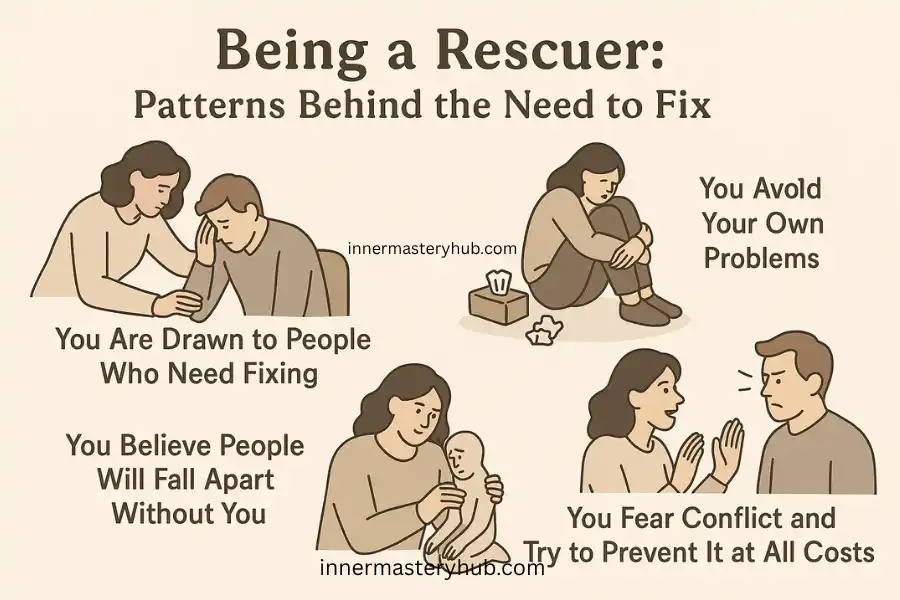
Highly intuitive people misinterpret emotional signals as personal responsibility. They may try to fix others’ feelings or assume negative emotions are their fault.
Common Misinterpretations
Because intuitive people sense emotions quickly, they sometimes assume responsibility for those emotions.
This leads to behaviors such as:
- Overanalyzing conversations
- Trying to solve everyone’s problems
- Absorbing others’ stress
- Avoiding conflict to maintain emotional balance
But intuition does not mean emotional ownership.
You may sense someone’s pain.
But that pain is not yours to carry.
Psychologist Elaine Aron, author of The Highly Sensitive Person, explains that emotionally sensitive people must learn boundaries between awareness and responsibility.

Case Study: The Workplace Intuition Experience
Sarah, a marketing analyst, constantly sensed tension in meetings.
She noticed tone shifts that others ignored.
Initially, she assumed she was imagining things.
But over time, she realized her intuition often predicted team conflicts before they happened.
The problem was not her perception.
The problem was emotional exhaustion from trying to manage everyone’s mood.
When Sarah learned emotional regulation techniques, her intuition became a professional strength rather than a personal burden.
This pattern is common among highly intuitive professionals.
What Famous Thinkers Say About Intuition
Several influential thinkers explored intuition deeply.
Albert Einstein once said:
“The intuitive mind is a sacred gift and the rational mind is a faithful servant.”
Einstein believed intuition often guides discovery before logic explains it.
Carl Jung described intuition as the ability to perceive future possibilities hidden within present signals.
Daniel Kahneman showed that intuition arises from rapid cognitive processing shaped by experience.
These perspectives reveal a shared insight:
Intuition is not irrational.
It is fast intelligence shaped by experience and emotion.
How Does Society Misunderstand Highly Intuitive People?
Society labels intuitive people as overly sensitive, but research shows their brains simply process emotional and environmental signals more deeply.
The Hidden Strength
What many call “too sensitive” is often:
- High emotional intelligence
- Advanced pattern detection
- Deep social awareness
- Environmental sensitivity
Studies suggest that individuals with heightened sensory processing sensitivity often demonstrate strong empathy and creativity (Aron & Aron, 1997).
So the issue is rarely intuition itself.
The issue is learning how to live with it peacefully.
Intuition psychology explained
Many people struggle to define intuition. It’s a complex, internal feeling that is hard to explain. Intuition feels like an inner voice or an unexplained knowing of a situation, but not everyone experiences it in the same way.
If you’re a highly intuitive person, you might find that others around you dismiss your feelings or chalk them up to coincidence. This can leave you feeling misunderstood. It’s distressing when you’re convinced of something, only to have others question your perspective.
This problem can lead to confusion. Should you trust your gut? Or should you rely on logic and reason? The uncertainty about whether to follow your instincts can be challenging, especially when others don’t understand or validate your experiences.
The Struggles of Being a Highly Intuitive Person
Being intuitive comes with its own set of challenges. At times, it can be overwhelming to feel so connected to your inner sense of knowing. Often, this connection can cause heightened emotional responses, leaving you feeling drained or exhausted. You may find that your instincts are constantly telling you things that others aren’t seeing, or perhaps you’re feeling an emotional burden because you can’t explain why you know something to be true.
Moreover, highly intuitive people have a stronger-than-average sense of empathy. This means they can pick up on others’ emotions and feelings, which can be both a gift and a curse. Constantly sensing the energies of people around you feels like an emotional rollercoaster.
There can also be moments where intuition seems to go against logic. For example, you may have a strong feeling that a particular situation will end poorly, but everyone else around you thinks it will work out fine. The disconnect between your gut feeling and the facts on the surface can lead to doubt and self-questioning.
15 Signs You Are a Highly Intuitive Person
So, how can you tell if you’re highly intuitive? Here are 15 signs to help you recognize the power of your intuition and understand its role in your life.
1. You Often Trust Your Gut
One of the most apparent signs of a highly intuitive person is their trust in gut feelings. When making decisions, you don’t always rely solely on logic or reason. Instead, you listen to that inner voice telling you what feels right or wrong. It’s as if you know something before it even happens. This intuitive feeling guides you in both big and small decisions, from personal matters to career choices.
2. You Experience Strong Emotional Responses to Certain People or Situations
As a highly intuitive person, you find that certain people or situations stir up strong emotional reactions in you. You might feel drawn to someone you’ve just met or suddenly feel uneasy about an interaction without knowing why. These emotional responses can often be linked to your ability to pick up on the energy of the environment or the people around you.
3. You Often Have Vivid Dreams or Premonitions
Many highly intuitive people experience vivid dreams or premonitions about future events. These dreams can offer insights into what might happen or provide guidance on a situation you’re facing. You may sometimes wake up from a dream feeling as though it had a deeper meaning or message for you.
4. You Find Yourself Sensing Other People’s Emotions
Empathy is a common trait among highly intuitive people. You find yourself sensing what others are feeling, even if they haven’t said anything. For example, you might walk into a room and immediately feel tension in the air or recognize when someone is upset even though they’re not showing it outwardly. This ability to tap into others’ emotions helps you manage relationships in a better way.
5. You’re Highly Sensitive to Energy
If you’re highly intuitive, you may be sensitive to the energy around you. This means you can feel the atmosphere of a room or sense the mood of a group without any visible signs. Energy sensitivity sometimes feels overwhelming, especially in crowded or emotionally charged environments. You might find that you need time alone to recharge after being around other people.
6. You Often Know Things Without Being Told
Intuition manifests as knowing things without external explanation. This could be a sense of knowing that something is about to happen or understanding someone’s feelings without them having to say a word. Highly intuitive people describe this feeling as a “knowing” or an understanding that comes to them.
7. You Have a Strong Sense of Purpose
People with high levels of intuition feel that a sense of purpose guides them. They feel driven to follow specific paths, whether in their careers, personal lives, or relationships. This deep sense of knowing what is right for them helps them make decisions with confidence.
8. You Easily Pick Up on Subtle Cues
Highly intuitive individuals can pick up on subtle cues that others miss. This could include body language, tone of voice, or even small changes in someone’s behavior. You may notice that you are very observant of details, and these small clues often help you better understand a situation or a person than others do.
9. You Feel a Strong Connection to Nature
Being in nature provides a sense of calm and clarity for highly intuitive people. You might feel more connected to the world around you when you’re outside, as if nature itself is speaking to you. This connection can provide the peace and space you need to listen to your inner wisdom.
10. You Can See the Big Picture
Intuitive people often see the bigger picture that others miss. They have a unique ability to connect seemingly unrelated dots, allowing them to understand complex situations quickly. This ability helps in problem-solving and making decisions that require a broader perspective.
11. You Feel Drawn to Certain People or Places
There are times when you may feel inexplicably drawn to certain people or places. Whether it’s a specific location that feels like home or someone you meet that immediately feels familiar, these attractions are often a sign of your intuition guiding you toward something meaningful.
12. You Experience “Aha!” Moments Frequently
Highly intuitive people have moments of sudden insight that seem to come out of nowhere. These “Aha!” moments provide answers to questions you’ve been pondering on a situation that seemed unclear. You find that these moments happen more often than you’d expect.
13. You Rely on Your Inner Wisdom in Tough Situations
When faced with difficult decisions or challenging situations, highly intuitive people rely on their inner wisdom rather than outside opinions. Your intuition helps you stay grounded and focused, even when logic or reasoning alone might not provide the clarity you need.
14. You Can Sense When Something Is Off
If something doesn’t feel right, your intuition will likely tell you so. Whether it’s a situation, a relationship, or a decision, you’ll sense when something is off. This ability to detect discrepancies enables you to navigate life with greater caution and awareness.
15. You Feel More Fulfilled When You Follow Your Intuition
Finally, one of the most significant signs that you are a highly intuitive person is the sense of fulfillment you feel when you follow your intuition. When you trust your gut and allow it to guide you, you feel more aligned with your true self and your purpose. On the other hand, ignoring your intuition can lead to confusion and dissatisfaction.
The Real Shift for a Highly Intuitive Person
Being a Highly Intuitive Person is not about predicting the future or reading minds.
It is about sensing patterns before they become obvious.
Your mind gathers signals quietly.
Your emotions translate those signals quickly.
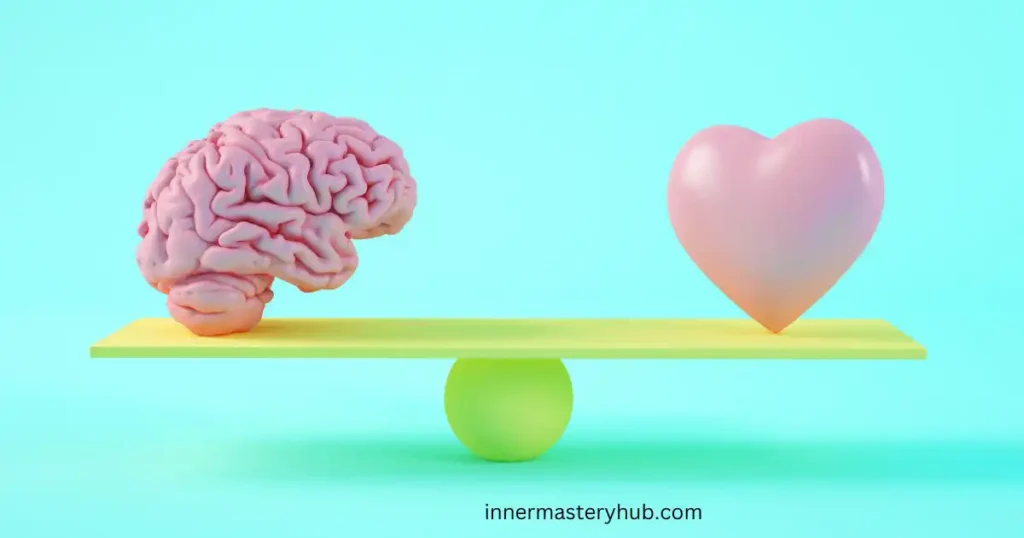
But the true transformation happens when intuition is paired with emotional regulation and self-trust.
When that balance appears, intuition no longer feels like chaos.
It becomes clear.
FAQs
How can I tell if I’m highly intuitive?
Signs include trusting your gut, sensing others’ emotions, having vivid dreams, and knowing things without being told. If these resonate with you, you might be more intuitive than you think.
Is intuition the same as instinct?
While both involve quick, subconscious responses, intuition is linked with higher reasoning and emotional intelligence, whereas instinct is closely tied to Survival and basic reactions.
Can intuition be developed or strengthened?
Yes, practices like meditation, mindfulness, journaling, and spending time in nature can help increase your intuitive abilities by quieting the mind and tuning into subtle cues.
Do highly intuitive people make better decisions?
Intuitive individuals make decisions that align with their values and inner guidance, leading to choices that feel right for them, even if they can’t always explain why.
Is there a link between intuition and creativity?
Absolutely. Intuition often sparks creative ideas and solutions by connecting seemingly unrelated concepts and allowing for innovative thinking.
Can everyone develop their intuition?
Yes, with practice and openness, anyone can strengthen their intuitive abilities. It’s about becoming more aware of your inner signals and learning to trust them.
What is the difference between intuition and empathy?
Intuition refers to rapid subconscious pattern recognition, while empathy involves understanding or sharing another person’s emotional state. Highly intuitive individuals often possess strong empathy, but intuition focuses more on recognizing patterns and signals than feeling the emotion itself.
Are highly intuitive people also highly sensitive?
Often yes. Research on sensory processing sensitivity suggests that many intuitive individuals process environmental stimuli more deeply. This deeper processing can increase emotional awareness and pattern recognition, but may also lead to overstimulation.
Can intuition be wrong?
Yes. Intuition relies on past experiences and pattern recognition, which means biases or incomplete information can influence it. This is why reflective thinking helps refine intuitive insights.
Why do intuitive people feel drained around others?
Highly intuitive individuals detect emotional signals quickly. Constant exposure to strong emotions or social tension can overwhelm their nervous system, leading to emotional fatigue.
Can intuition improve decision-making?
Research suggests that intuitive judgments can be highly accurate when grounded in experience and expertise. Professionals in fields like medicine and emergency response often rely on refined intuition.
How can someone know if they are highly intuitive?
Common signs include strong gut feelings, emotional awareness, sensitivity to environments, pattern recognition, and the ability to read social situations quickly.
- Kahneman, D. (2011). Thinking, Fast and Slow. Farrar, Straus and Giroux. ↩︎
- Aron, E. N., & Aron, A. (1997). Sensory-processing sensitivity and its relation to introversion ↩︎
- Journal of Personality and Social Psychology, 73(2), 345–368. ↩︎
- Gross, J. J. (2015). Emotion regulation: Current status and future prospects. Psychological Inquiry. ↩︎
- Jung, C. G. (1971). Psychological Types. Princeton University Press. ↩︎
- Damasio, A. (1996). The somatic marker hypothesis and the possible functions of the prefrontal cortex. Philosophical Transactions of the Royal Society B. ↩︎