
Dysregulated Nervous System: Signs, Causes & What Helps

Medically reviewed by Dr. Usama Qureshi, MBBS
Medical Doctor | Reviewed August 2026
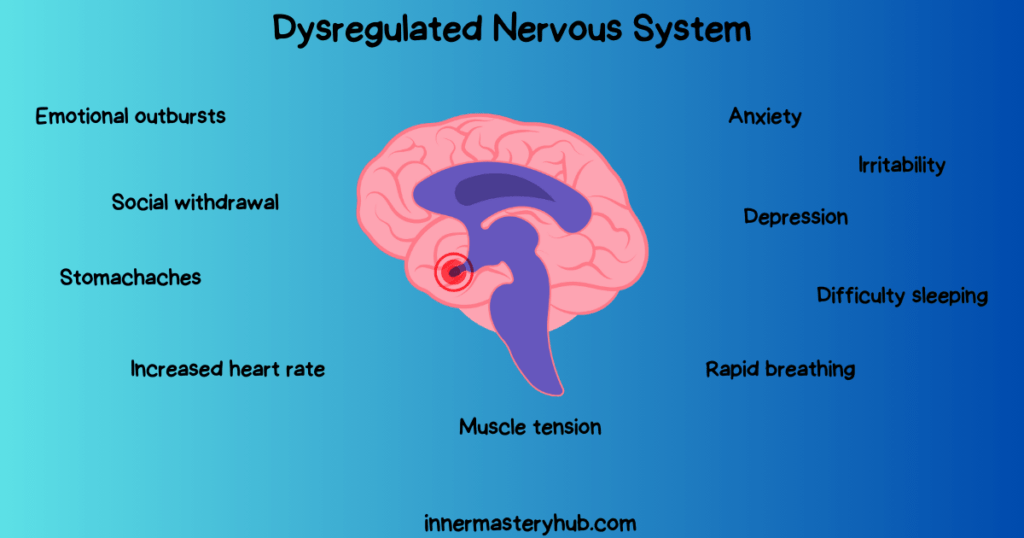
Nervous system dysregulation” is an informal term often used to describe difficulty returning to a calmer physiological and emotional state after stress. It can involve patterns such as hyperarousal, emotional shutdown, sleep problems, irritability, or difficulty concentrating, but it is not itself a formal medical diagnosis.
Dysregulated Nervous System at a Glance
| Question | Quick Answer |
|---|---|
| What does it mean? | Difficulty returning to a calmer baseline after stress |
| Is it a diagnosis? | No |
| Common signs | Tension, hypervigilance, numbness, sleep or focus problems |
| Possible contributors | Chronic stress, trauma, illness, sleep loss, ongoing pressure |
| What may help? | Sleep, breathing, movement, boundaries, support |
| When to seek help | When symptoms persist or affect daily functioning |
What is the Dysregulated Nervous System?
When someone refers to a dysregulated nervous system, they typically indicate that stress reactions are hard to control. After the stressor has passed, a person may continue to feel tense, alert, restless, emotionally reactive, numb, or even worn out.
The autonomic nervous system, brain, hormones, emotions, sleep, and behaviour are all involved in these experiences. Systems related to threat detection, memory, attention, and emotional control can all be impacted by long-term stress.
Although it is a helpful descriptive term, “nervous system dysregulation” is not a diagnostic in and of itself. Anxiety disorders, trauma-related conditions, despair, burnout, sleep issues, illnesses, and autonomic abnormalities can all present with similar symptoms.
Signs of a Dysregulated Nervous System
A healthy autonomic nervous system maintains homeostasis. Dysregulated nervous systems can cause many physical and emotional disorders.
- Anxiety, Depression
- Shutdown, numbness
- Difficulty concentrating
- Difficulty sleeping
- Emotional outbursts
- Social withdrawal
- Impulsive and compulsive behaviour
- hypervigilance
What Can Contribute to Nervous-System Dysregulation?
A dysregulated nervous system can be caused by several factors, including:
Chronic Stress
Your Cortisol levels remain high due to ongoing stress from caregiving, relationships, employment, and money. This ongoing stimulation gradually weakens the body’s capacity to return to baseline. Prolonged stress has been shown to alter brain regions involved in danger sensing and emotional regulation.
Trauma
Trauma is not just significant occurrences. Unpredictable family care, bullying, emotional neglect, and repeated criticism can teach your nervous system to look for threats. The Polyvagal Theory of Dr Stephen Porges states that the body naturally adjusts to perceived threats, generally without conscious knowledge.
Childhood Attachment Insecurity
Your nervous system learns, from early relationships, whether the environment is secure. Later in life, hypervigilance or shutdown habits can result from the emotionally unavailable behaviour of your caregivers.
Suppression of Emotions
Healthy stress release is prevented when emotions are consistently ignored. Your body retains the activation when emotions are not handled properly, leading to dysregulation. Habitually suppressing or avoiding emotions can sometimes increase distress or make emotional recovery harder, although the effects vary by person and situation.
Lack of Rest and Recovery
Sleep and emotional regulation are closely connected. Research reviews suggest that inadequate or disrupted sleep can increase emotional reactivity and make it harder to regulate both positive and negative emotions. This is one reason consistent sleep can be an important part of stress management1.
Medical Conditions and Hormonal Imbalances
Thyroid disorders, chronic inflammation, autoimmune conditions, and hormonal shifts (such as postpartum or menopause) can disrupt nervous system regulation. Some medical conditions can cause genuine autonomic dysfunction. If you have fainting, persistent dizziness, abnormal heart rate changes, unexplained sweating, severe fatigue, or symptoms triggered by standing, a medical assessment may be important.
What is Survival Mode?
Survival mode” is an informal term people use to describe patterns associated with prolonged stress, such as hypervigilance, shutdown, irritability, avoidance, or difficulty relaxing. It is not a formal diagnosis.
While Survival Mode can help during genuine threats, staying in this state for long periods can cause nervous system dysregulation. Many people find themselves stuck in Survival Mode because of chronic stress, unresolved trauma, burnout, difficult life experiences, or ongoing emotional pressure.
To protect you from perceived danger, the nervous system typically relies on four automatic Survival responses: fight, flight, freeze, and fawn.
Fight Response
The fight response prepares the body to face a threat. Someone in a fight state may become irritable, reactive, controlling, argumentative, or quick to anger. This response is driven by the nervous system’s attempt to regain a sense of safety through action and control.
Flight Response
The fight-or-flight response prepares the body to escape danger. It may show up as restlessness, overworking, perfectionism, excessive busyness, overthinking, or difficulty slowing down. People in a flight state feel as though they must keep moving to stay safe.
Freeze Response
The freeze response occurs when stress feels overwhelming, and the nervous system perceives that fighting or escaping is not possible. This can lead to feeling stuck, emotionally numb, disconnected, exhausted, or unable to take action despite wanting to move forward.
Fawn Response
The fawn response involves prioritizing other people’s needs to avoid conflict, rejection, or disapproval. It may appear as people-pleasing, difficulty setting boundaries, excessive caretaking, or seeking approval at the expense of one’s own needs.
“Fawn” is a trauma-informed term for appeasing or people-pleasing behavior and is not a formal diagnostic category.
Can a Dysregulated Nervous System Cause Impulsive or Compulsive Behaviours?
Although there are numerous potential reasons for impulsivity and compulsivity, stress and emotional dysregulation might increase the likelihood of impulsive reactions or persistent coping behaviours in some people. These behaviours cannot be explained just by a “dysregulated nervous system.”
Can Trauma Cause Nervous System Dysregulation?
Trauma can contribute to persistent changes in stress reactivity, hypervigilance, emotional numbing, sleep, and arousal. However, responses vary widely, and not everyone who experiences trauma develops long-term symptoms.
Trauma is not only about what happened to you. It is also about how your mind and body responded to experiences that felt overwhelming, frightening, or impossible to cope with at the time.
When a person experiences trauma, the nervous system learns to stay on high alert to prevent future harm. Even after the danger has passed, the body continues responding as if a threat is still present.
This can make it difficult to feel calm, safe, and regulated.

How Does Emotional Regulation Connect to Nervous System Healing?
The ability to recognize and understand emotions and to behave sensibly rather than impulsively is known as emotional control. But if your body feels insecure, you can’t control your emotions adequately.
During intense stress, brain systems involved in threat detection can become more dominant, while attention, working memory, and flexible decision-making may become harder. This does not mean the amygdala “takes over” or that the prefrontal cortex switches off.
Dysregulated Nervous System vs Autonomic Nervous System Disorder
| Informal “nervous system dysregulation” | Autonomic nervous system disorder |
|---|---|
| Describes difficulty settling after stress | Medical dysfunction of autonomic control |
| Not a formal diagnosis | Can be clinically diagnosed |
| May involve anxiety, tension, numbness, sleep issues | May involve heart rate, blood pressure, sweating, GI, or orthostatic abnormalities |
| Often discussed in therapy/self-help | Evaluated medically |
| Usually addressed through stress-management and mental-health support | May require specialist testing and treatment |
How to Support Nervous System Regulation
It is not necessary to “calm down” to heal a dysregulated nervous system. It involves telling your body that it is safe once more. Emotional regulation naturally increases as your nervous system learns to feel safe through repeated experiences.
Here is a straightforward, research-supported strategy.
1. Recognize the changes taking place in your body
Recognizing your early signs of stress can help you respond sooner and more deliberately.
Your stress response- fight, flight, or freeze- activates too quickly and continues for too long if your neurological system is dysregulated. The Dysregulated nervous system continuously scans for danger or safety without your conscious awareness, according to Dr. Stephen Porges’ Polyvagal Theory.
When you stop criticizing your reactions and start seeing them as defensive responses, healing can begin. From “What’s wrong with me?” to “What is my body protecting me from?”
2. Regulate Through the Body First
When you are in a dysregulated state of the brain, logic alone cannot calm you, as stress hormones override your reasoning faculty. Slow breathing can influence autonomic activity, including parasympathetic processes, and may reduce physiological arousal2.
- Slow, extended exhale breathing (inhale 4, exhale 6)
- Gentle stretching or yoga
- Cold water on the face
- Slow walking in nature
These signals tell the body that danger has passed.
3. Improve Emotional Regulation Skills
Emotion regulation influences how people manage and recover from stressful experiences. Research suggests that the strategies people use to understand, modify, or respond to emotions can affect psychological functioning and the intensity of emotional reactions3.
Try:
- Naming emotions instead of just wanting to react (“I feel anxious” instead of “I am anxious”)
- Journaling your emotional triggers and patterns
- Practicing self-compassion during activation
Naming feelings reduces amygdala activation in the brain.
4. Build More Predictable Daily Routines
Your dysregulated nervous system heals through consistency. Unpredictability increases threat perception.
Focus on:
- Regular sleep schedule
- Balanced meals
- Reducing caffeine
- Structured daily routines
Small stability signals accumulate over time.
5. Heal Through Safe Relationships (Co-Regulation)
Humans regulate each other. Warm eye contact, calm voices, and empathetic presence activate calming neural pathways.
If possible:
- Spend time with emotionally safe people
- Consider trauma-informed therapy
- Join support groups
Supportive relationships may also influence how people respond to stress. Research suggests that social support can buffer some psychological and physiological effects of stress, although the strength of this effect varies depending on the relationship, person, and situation4.
6. Reduce Chronic Stress Load
Chronic stress reshapes brain circuits linked to fear and emotional control5. You cannot heal if activation never pauses. Reduce unnecessary stressors where possible:
- Set boundaries
- Limit overstimulation (news, social media)
- Schedule recovery time
Healing requires recovery cycles.
7. Address Trauma Gently
If trauma symptoms are persistent, evidence-based trauma treatments such as trauma-focused CBT, EMDR, or other clinician-recommended approaches may be appropriate depending on the individual.
The goal is not to relieve pain but to complete unfinished stress responses.
8. Strengthen the Window of Tolerance
The “window of tolerance” is the range where you feel calm and functional. Healing expands this window.
Signs it is growing:
- Faster recovery after stress
- Less emotional overwhelm
- More choice in responses
This growth happens gradually, not overnight.
Advice like “just think positively” fails because dysregulation is physiological in nature. High stress can make reflective thinking, working memory, and flexible decision-making more difficult.
How Long Does It Take to Heal a Dysregulated Nervous System?
Healing is not linear. Because the nervous system learns through repetition, change requires consistent experiences of safety. There is no fixed timeline. Recovery depends on the cause and duration of stress, current circumstances, health, sleep, support, and whether professional treatment is needed.
The shift in perception of when your body begins to experience safety without immediately scanning for danger is a strong sign that your dysregulated nervous system is healing.
Coping Mechanisms for a Dysregulated Nervous System
If your dysregulated nervous system feels overwhelmed, certain coping strategies for healing may help create a sense of safety and stability.
Some helpful techniques include:
- Slow, deep breathing
- Grounding exercises
- Spending time in nature daily
- Gentle movement
- Journaling
- Limiting overstimulation
- Connecting with trusted people
These strategies may not eliminate stress, but they can help the nervous system return to a more balanced state.
Building a More Regulated Response to Stress
You must realize that your body is not broken and does not need to be healed to address a dysregulated nervous system. Survival, however, kept you rigid even as it kept you operating.
The change starts when you listen to what your reactions are protecting and stop fighting them. Since healing is about establishing safety so that peace arises organically, it is not about imposing calmness.
If this strikes a chord with you, start observing when your body stiffens and ask yourself softly, “What is my system protecting me from right now?” The first indication of safety is awareness.
Apply this realization to your day and look for patterns in your behavior without passing judgment.
Key Takeaways
- A dysregulated neurological system is not a diagnostic; rather, it is a frequently used word.
- It can be used to characterize feelings of tension, numbness, overwhelm, restlessness, or difficulty unwinding.
- Ongoing strain, trauma, insufficient sleep, and chronic stress could all be factors.
- An autonomic nervous system dysfunction is distinct from nervous system dysregulation.
- Regular sleep, movement, rituals, support, and slow breathing could all be beneficial.
- A medical expert should be consulted if symptoms are severe, persistent, or uncommon.
People Also Ask
Can anxiety feel like nervous system dysregulation?
Yes, chronic anxiety signals prolonged sympathetic activation, meaning your body remains in fight-or-flight Mode even without immediate danger.
Can trauma affect stress regulation?
Trauma trains the brain to detect danger faster and more intensely, strengthening Survival pathways and weakening calming circuits.
What does a dysregulated nervous system mean?
An informal name for having trouble calming down after stress is a dysregulated nervous system. Even after the stressful event has passed, you may still feel tense, overwhelmed, emotionally numb, restless, or particularly alert.
Is nervous system dysregulation a diagnosis?
No, there is no official medical or mental health diagnosis for nervous system dysregulation. It is a descriptive term frequently used to discuss issues related to stress management. Anxiety, trauma, sadness, sleep issues, and illnesses can all cause similar sensations.
What are common signs?
Problems relaxing, impatience, feeling alert all the time, emotional numbness, poor sleep, problems focusing, exhaustion, or feeling easily overwhelmed are common symptoms. These symptoms can have a variety of reasons and are not exclusive to nervous system dysfunction.
Can trauma affect stress regulation?
Indeed. Some people may have hypervigilance, emotional numbness, trouble sleeping, or increased reactivity to perceived threats as a result of trauma. However, each person’s reaction to trauma is very different.
Can anxiety feel like nervous system dysregulation?
Indeed. Restlessness, tense muscles, a fast heartbeat, trouble focusing, trouble sleeping, and a persistent sense of alertness are all signs of anxiety. Although anxiety disorders have particular clinical criteria, these sensations can mimic what is known as nervous system dysregulation.
What helps regulate stress responses?
Frequent sleep, exercise, grounding exercises, deep breathing, regular meals, supportive relationships, and minimizing persistent stressors may all be beneficial. Different strategies are effective for different people, particularly in situations including trauma or mental health issues.
When should I see a doctor?
Consider seeing a healthcare professional when symptoms are persistent, worsening, unexplained, or interfering with everyday life. Seek medical assessment for concerns such as fainting, persistent dizziness, significant heart-rate changes, chest pain, or other concerning physical symptoms.
- Palmer, C. A., & Alfano, C. A. (2017). Sleep and emotion regulation: An organizing, integrative review. Sleep Medicine Reviews, 31, 6–16. https://doi.org/10.1016/j.smrv.2015.12.006 ↩︎
- Zaccaro, A., Piarulli, A., Laurino, M., Garbella, E., Menicucci, D., Neri, B., & Gemignani, A. (2018). How breath control can change your life: A systematic review on psychophysiological correlates of slow breathing. Frontiers in Human Neuroscience, 12, 353. https://doi.org/10.3389/fnhum.2018.00353 ↩︎
- Gross, J. J. (2013). Emotion regulation: Taking stock and moving forward. Emotion, 13(3), 359–365. https://doi.org/10.1037/a0032135 ↩︎
- Hostinar, C. E. (2015). Recent developments in the study of social relationships, stress responses, and physical health. Current Opinion in Psychology, 5, 90–95. https://doi.org/10.1016/j.copsyc.2015.05.004 ↩︎
- McEwen, B. S. (2017). Neurobiological and systemic effects of chronic stress. Chronic Stress, 1, 2470547017692328. https://doi.org/10.1177/2470547017692328 ↩︎
Written By Mehwish Qurayshi
Mehwish Qurayshi is a Trauma-Informed Emotional Wellness Counsellor trained through NICABM’s Treating Trauma Master Series, which includes NBCC-approved education in Trauma Treatment and Emotional Wellness & Emotional Intelligence – Sourcecode Academia. She has over five years of experience providing emotional wellness counselling, helping individuals heal from trauma, regulate emotions, and build healthy relationships.