
11 Reasons For Parents Who Seem To Be a Failure To Their Kids
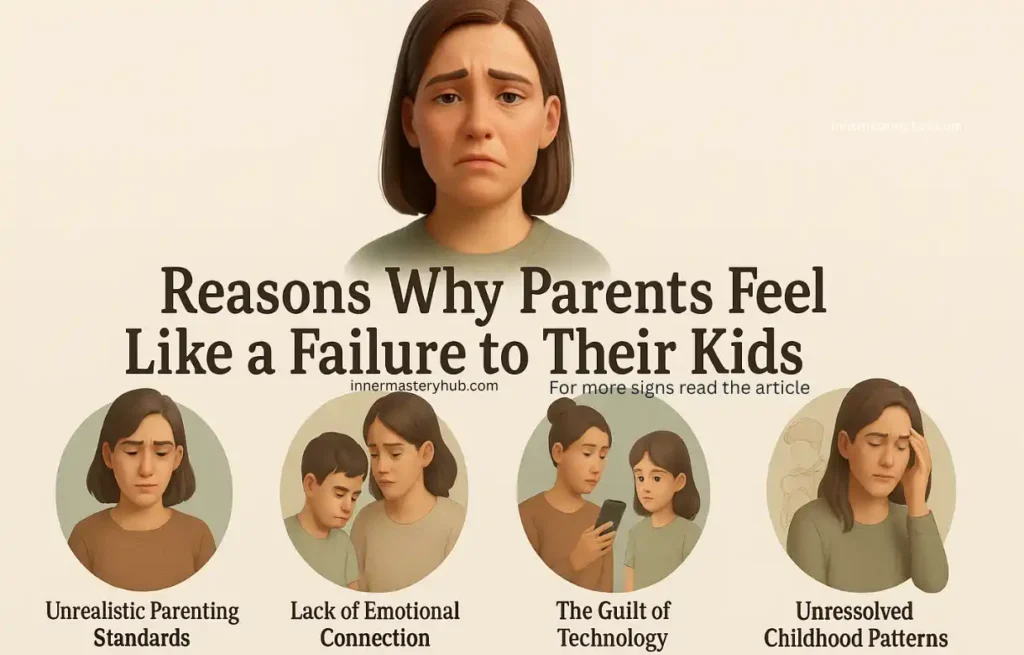
Parents who seem to be a failure are not lacking love; they are usually struggling with emotional dysregulation, burnout, shame, trauma, and poor repair skills, and meaningful change begins when they replace denial or self-hate with responsibility, support, and emotional repair.
It’s not always the case that parents who appear to be failures are poor. Despite their intense love for their children, many parents are overburdened, emotionally spent, harboring childhood scars, or imprisoned by shame. Lack of emotional control, support, self-awareness, healing, and inner safety is frequently a real issue.
You might experience a pain you don’t express aloud while you watch your child sleep.
You recall the shouting, the stillness, their expression. The times when you couldn’t react patiently because you were too worn out, too upset, too far away, or too preoccupied.
Then one question rises inside you: “Am I failing as a parent?”
The inner struggle behind parents who seem to be failures is not about behavior. It is about shame, regret, fear, love, and the deep wish to do better, even when not always knowing how.
The common misunderstanding is simple. People see a parent lose control and assume the parent does not care. But inside, many parents are fighting a storm. A child’s crying triggers pressure. The parent interprets it as disrespect, pr personal failure, that they are not enough. That meaning creates anger, panic, sadness, or numbness. Then the parent reacts, withdraws, shouts, gives in, or shuts down. The child feels it, and the parent carries the guilt.
This is why emotional regulation matters. A parent’s nervous system becomes part of the child’s emotional world. Research on emotion regulation and parenting shows that parental warmth, positive affect, and supportive responses are linked with healthier child development1.
Spiritually, this pain also points to a deeper disconnection. Not because you are cursed or unworthy, but because your heart is asking for alignment. You want your actions to match your love. You want your presence to feel safer than your pressure. You want to stop reacting from fear and begin responding from awareness.
What does “parents who seem to be a failure” really mean?
Parents who seem to be failures are parents whose actions, emotional reactions, absence, or inconsistency make them appear careless or incapable. Reasons could include burnout, trauma, shame, poor coping skills, lack of support, and unhealed emotional patterns.
A parent can fail in moments without being a failure as a person.
That difference matters because shame turns one mistake into an identity. You forget the meals you made, the nights you stayed awake, the bills you paid, the times you tried. Your mind keeps the worst scene and says, “This is who you are.”
But parenting is not judged by a single moment. Patterns, repair, safety, connection, and growth shape it.
A parent may seem like a failure when they:
- Yell often and apologize rarely
- Ignore a child’s feelings
- Compare one child to another
- Use fear instead of guidance
- Feel emotionally absent
- Depend on the child for comfort
- Give love only when the child performs
- Avoid responsibility after hurting the child
- Feel trapped by parenting stress
- Believe love is enough without emotional change
The hard truth is that love alone does not make parenting safe. Love must become a behavior. It must become listening, repair, limits, patience, and protection.
Donald Winnicott’s famous idea of the “good enough” parent helps here. His work is understood as a rejection of perfect parenting. Children do not need flawless parents; they need caregivers who are present enough, responsive enough, and able to allow repair and growth.
That view is freeing because it does not excuse harm, but it also does not worship perfection.
Why do good parents sometimes feel like failures?
Good parents feel like failures because they care deeply, but their stress, emotional triggers, and unrealistic expectations make them judge themselves harshly. Parenting guilt grows when your actions do not align with your values, especially during periods of exhaustion or emotional overload.
A parent usually feels like a failure when love and behavior split apart.
You love your child, but you snapped. You want to be calm, but you shouted. You want to listen, but your mind is full of bills, work, marriage tension, loneliness, or your own childhood pain.
Then your brain turns the moment into a verdict.
The trigger may be small. Your child refuses homework. They spill food. They talk back. They cry when you need silence. On the surface, it looks like a normal parenting moment. But inside, the parent hears something else.
“They do not respect me.”
“I am losing control.”
“Everyone will judge me.”
“I am becoming my mother.”
“I cannot handle this.”
That interpretation creates emotion. Anger rises because fear is underneath. Shame rises because you think the moment proves something about your worth. Then the consequence comes. You shout, lecture, punish too hard, walk away, or give up completely.
Afterward, guilt enters.
This is the private cycle many parents never name. It is not simply “bad parenting.” It is a nervous system under threat.
Research on parental burnout describes emotional exhaustion, emotional distance from children, and loss of fulfillment in the parenting role as key signs2. It appears when parenting demands stay high while resources, support, rest, and emotional capacity stay low.
So the parent who feels like a failure may actually be a parent whose inner resources are empty.
That does not remove responsibility. But it changes the question from “What is wrong with me?” to “What is happening inside me, and what needs repair?”
1. Unrealistic Parenting Standards
Today’s parents live in a comparative age. Only the most significant elements of family life, perfect dinners, beautiful homes, and happy kids, are shown on social media. Even though these “highlight reels” are often made or filtered, many parents feel as though they are not doing enough when they are constantly exposed to them.
2. Excessive Work-Life Stress
Many parents struggle to balance work and family life due to demanding jobs, long workdays, and financial hardship. As a result, guilt kicks in when parents are unable to devote enough time to their kids, leading them to feel as though they are failing when, in fact, they are just overextended.
3. Lack of Emotional Connection
Today’s kids often prefer emotional attention over material possessions. They can sense emotional neglect when parents are preoccupied, which can make them feel as though their needs aren’t being addressed in a fulfilling way.
4. Making Comparisons with “Perfect” Parents
Parents sometimes wonder why they can’t be the same when they see others who appear composed, well-organized, and incredibly patient. Although every family’s circumstances are unique and hidden hardships may be occurring behind closed doors, this comparison trap can lead to constant self-doubt and feelings of failure.
5. Fear of Failing Their Child’s Future
There is a lot of pressure on modern parents to ensure their children’s success, which includes good schools, high grades, extracurricular activities, and emotional health. Even though many aspects are beyond their control, parents often blame themselves when things don’t go as planned, believing they have compromised their child’s potential.
6. Insufficient Support and Community
Families in earlier generations were surrounded by neighbors and relatives who helped to nurture their children. Nowadays, many parents are alone, living far from their extended family, and struggling to make ends meet. Parenting becomes more burdensome without that “community,” which can result in burnout and self-criticism.
7. Children’s Changing Values and Attitudes
Misunderstandings may arise from generational shifts. Today’s children openly challenge authority since they grow up in a digital, independent environment. Some parents misinterpret their children’s resistance as a sign of disrespect or a lack of discipline, but it’s actually a sign of healthy development and self-expression.
8. Technology’s Guilt
While trying to control their children’s digital lives, parents battle their own screen habits. Guilt follows when parents use devices to distract their children. They believe they are “disconnected” or “lazy,” yet occasionally, screens are just coping mechanisms in a world that moves quickly.
9. Unresolved Childhood Patterns
Many parents have emotional wounds from their own early years. They feel as though they have failed to “break the cycle” when they engage in behaviors they vowed to avoid, such as yelling, overreacting, impulsive behavior, or withdrawing. Even if recognition is a first step towards improvement, this self-blame can be relatively strong.
10. Misunderstanding What Kids Actually Need
Sometimes parents assume their kids want extra opportunities, exposure, or stuff. But in reality, most children desire acceptance, patience, and presence. Parents feel bad when they can’t fulfill every request, but children need warmth more than perfection.
11. Lack of Positive Feedback
There are rarely obvious indicators of success while parenting. You receive praises at work, but growth is unnoticed at home. Youngsters, particularly teenagers, may not show gratitude. Without acknowledgment, parents might think they’re failing, yet over time, their efforts prove to be truly significant.

11 Habits You Should Skip to Improve Parenting
Below are common parent behaviors that reinforce the “I’m failing” loop. For each, I’ll describe what it looks like, why it hurts, and how you can do something different.
1. Endless apologizing for “bad parenting.”
Every time your child reacts badly, you may find yourself saying, “I’m sorry I snapped,” or “I’m sorry I didn’t do this.” It’s good to apologize when you genuinely need to. However, if you consistently diminish your authority by apologizing, you are telling yourself and your child that you are unworthy. Instead, when you do make a mistake, admit it (“I regretted how I reacted”) and then make a tiny correction. This boosts your child’s self-esteem and shows them that grown-ups make mistakes, learn from them, and repair them.
2. Comparing your parenting to idealized digital versions
You may feel inferior when you see other parents sharing pictures of flawless craft afternoons, smooth routines, or uncomplicated discipline. That contrast often increases insecurity. Unfavorable comparisons reduced parenting self-efficacy, according to the Swedish study.
Instead of evaluating yourself against the highlight reel, concentrate on your daily small victories. “Today, how did I connect with my child, even for five minutes?” This shifts your perspective from perfection to development.
3. Believing your child’s behavior defines you
“If they misbehave, I’m a failure as a parent,” you may think. According to research, temperament, stress, and the environment, in addition to parental skills, all impact children’s behavior. You will feel defeated if you associate your identity with your child’s every response.
Instead, keep your job and the outcomes apart. Admit that your objective is to show up, listen, set boundaries, and help them learn rather than to create perfect behavior.
4. Over-rescuing your child
You might leap in to solve all of your children’s problems, shield them from disappointment, and take on their burdens. Ironically, this makes you feel less confident as a parent and teaches children less resilience, even though it may appear compassionate.
Research on the “failure mindset” among parents suggests that individuals may exert excessive control over their children’s experiences if they believe that failure indicates they are flawed. Instead, allow your kids to take on suitable challenges, fail occasionally, and realize their own potential. It is your responsibility to help them, not to eliminate all risks.
5. Ignoring your own emotional needs
You don’t take time for yourself because you might feel bad about it. This can eventually wear you out, lower your mood, and impair your ability to connect with your children. According to one meta-analysis, lower sensitivity in parent-child interactions is correlated with increased parenting stress and worse maternal mental health.
Instead, combine small, everyday self-care actions, such as taking a quick stroll, spending five minutes alone, or closing your eyes while sipping tea. Keep in mind that you are a more present parent when you are well-rested.
6. Setting unrealistic standards
Perhaps you want your kids to behave perfectly, or you expect yourself to live up to a standard constantly. You call yourself a failure when you don’t. Children with poor parental self-efficacy typically have fewer goals and perform less well academically. Rather, they have reasonable objectives. For instance, instead of saying, “I’ll be perfect all day,” say, “Today I’ll listen fully for 10 minutes.” Celebrate your half accomplishment.
7. Reacting in shame instead of reflection
You may experience intense sympathy when you “lose it,” thinking, “I can’t believe I yelled,” and then withdraw. Growth is silenced by shame. Instead, engage in thoughtful contemplation. “What triggered me?” ask yourself. What did I require at that precise moment? and then make a plan: “I’ll take a step back to take a deep breath next time.” Shame creates avoidance, whereas reflection creates capability.
8. Holding onto resentment
You may have opinions about how things “should” be, such as how your spouse ought to help you, how your child should behave, or how your life should go easily. You feel like you’ve failed when it doesn’t. Your energy is therefore poisoned by resentment. Instead, confide in someone you can trust. Next, determine what one adjustment I can make immediately. You may take action when you let go of some “shoulds.”
9. Treating your child’s feelings as inconvenient
“They shouldn’t be crying this much. I’ve had enough,” you may say, dismissing your child’s distress. However, you can’t connect with someone when you reject their feelings or your own. Research has shown that increasing children’s self-efficacy is associated with improved outcomes, particularly in relation to emotional support and adolescent well-being.
If your child is upset, pause. Reflect: What are they really feeling? Name it, “You seem frustrated”, and then help them find words or a coping step.
10. Believing your past defines your parenting future
You may assume, “I’ll always be the ‘bad parent’ because I made so many mistakes earlier.” But your present perceptions of your role are more important than your previous ones. For instance, one study found that children’s motivational patterns and current involvement were predicted by parental self-efficacy. You can still rework your narrative by declaring, “I’m learning.” Every day presents a fresh chance. You are not required to have a permanent “failure” record, just as your child does not.
11. Isolating yourself when you feel inadequate
Withdrawal may result from feeling like a terrible parent. On the other hand, loneliness decreases self-efficacy and increases distress. Unfavorable comparisons and solitude caused greater distress. Make contact. Join a parent organization, have a conversation with a friend, and express your true emotions rather than your “perfect face.” Making connections serves as a reminder that you are not alone and that others may both encourage you and highlight your strengths.
What role does parental burnout play in feeling like a failed parent?
Parental burnout can make a caring parent feel empty and hopeless. It happens when parenting demands stay high for too long while emotional, practical, financial, and relational support remain too low.
Burnout is not ordinary tiredness. Tired parents still feel connected after rest. Burned-out parents may feel emotionally numb even after sleep.
Research on parental burnout links it to emotional exhaustion, emotional distancing, and a diminished sense of accomplishment in the parenting role. A 2024 systematic review also links parenting burnout with factors such as anxious attachment, negative emotions, and stressful parent-child interactions3.
Burnout appears when a parent carries too much for too long:
- No real rest
- No emotional support
- Financial pressure
- Single parenting strain
- Marital conflict
Burnout can make gentle parenting feel impossible. Not because the parent does not believe in kindness, but because their emotional battery is dead.
Can childhood wounds make parents repeat harmful patterns?
Yes, childhood wounds can shape how parents respond to stress, conflict, crying, anger, and closeness. Parents may repeat patterns they hated because those patterns were wired into their nervous system before they had words for them.
Many parents do not raise their children only in the present.
They raise them from memory.
A child’s crying may awaken the parent’s old shame. A child’s defiance may awaken old fears. A child’s neediness may awaken the parent’s own unmet needs. Then the parent reacts not only to the child in front of them, but to the child they once were.
This is one reason parenting can feel spiritually and psychologically intense. Your child needs you, but not only you. Your child reveals you.
The CDC defines adverse childhood experiences as potentially traumatic events in childhood, including abuse, neglect, violence, and household instability. The CDC also notes that ACEs can affect health, mental health, stress responses, and later life outcomes4.
Research has also examined how parents’ own adverse childhood experiences can relate to later parenting stress and parenting behaviors.
This does not mean wounded parents are doomed.
It means awareness matters.
A parent may say:
“My child is disrespecting me.”
But underneath, the deeper truth may be:
“I feel powerless, like I did when I was young.”
A parent may say:
“My child is too emotional.”
But underneath, it may mean:
“I was never allowed to be emotional, so I do not know what to do with feelings.”
A parent may say:
“I need my child to succeed.”
But underneath, it may mean:
“I need proof that my sacrifices mattered.”
Alice Miller’s work points to the pain of children becoming emotionally useful to parents rather than being fully seen as themselves. That view is relevant here because some parents unconsciously seek comfort, pride, or a sense of identity through their child.
Healing begins when you stop making your child responsible for wounds they did not cause.
Final thoughts
Parents who seem to be failures are not beyond hope if they can face the truth, regulate emotions, repair harm, seek support, and stop making shame their identity. The turning point is not perfection, but honest responsibility joined with love.
A parent becomes dangerous when they refuse to see.
A parent begins to heal when they can say, “I hurt you, and I want to understand why.”
That sentence carries more hope than any perfect image.
The deeper truth about parents who seem to be failures is that many are not empty of love. They are empty of tools, rest, support, self-awareness, and healing. But love must grow into emotional safety. Regret must grow into repair. Faith must grow into humility. Awareness must grow into action.
You may not be able to erase every mistake. Your child may still carry pain. You may need to listen without defending yourself. You may need help that your pride once rejected.
But the shift in understanding is this:
You are not asked to become a perfect parent. You are asked to be truthful.
And sometimes, the parent who once seemed like a failure becomes the parent who finally breaks the pattern.
FAQs
Why do parents who seem to be failing their kids feel this way?
Parents who seem to be failing their kids often feel this because they set unrealistic standards. They believe they must be perfect. Daily challenges, stress, and comparison make them doubt their abilities, even though love, effort, and presence matter more than perfection.
Does my child’s bad behavior mean I’m one of the parents who seem to be failing their kids?
No, your child’s bad behavior doesn’t make you one of those parents who seem to be failures to their kids. Children act out for many reasons: developmental, emotional, or boundary-related. What matters is your patience and consistency, not temporary mistakes or outbursts.
How much does social media affect parents who seem to be failing their kids?
Social media heavily affects parents who seem to be failing their kids. Constant exposure to “perfect families” makes them feel inadequate. Comparing your real life to others’ highlight reels can lower your confidence and increase guilt. Limiting social media helps you see your true worth.
Is it normal for parents who seem to be failures to their kids to feel inadequate sometimes?
Yes, it’s completely normal for parents who seem to be failures to their kids to feel inadequate. Every parent questions themselves. These feelings show you care. Accepting that parenting is imperfect helps you grow and stay emotionally connected, rather than feeling defeated.
What can trigger intense feelings in parents who seem to be failing their kids?
Triggers for parents who seem to be failing their kids include burnout, lack of sleep, work stress, or unresolved childhood issues. When expectations don’t match reality, guilt appears. Recognizing these triggers helps you manage your emotions and respond to yourself with kindness.
How can parents who seem to be failing their kids stop comparing themselves to others?
Parents who seem to be failing their kids can stop comparing by focusing on their own family’s needs. Celebrate small wins daily, remind yourself that every home is different, and unfollow accounts that cause self-doubt. Progress, not perfection, is what truly counts.
What steps help parents who seem to be failing their kids reconnect with their child?
Parents who seem to be failing their kids can reconnect by spending quality time together, listening, talking, or playing. Focus on moments of attention rather than grand gestures. Apologize when needed, stay present, and show love through consistency and empathy every day.
When should parents who feel like a failure to their kids seek counseling?
Parents who seem to be failing their kids should seek counseling when feelings of guilt, sadness, or anxiety become constant. If self-blame significantly impacts daily life or relationships, professional help can help restore balance, rebuild confidence, and teach healthier coping skills.
How can parents who seem to be failing their kids talk about mistakes with their child?
Parents who seem to be failing their kids should talk about mistakes honestly. Use calm words, admit errors, and show how to make things right. This teaches children the importance of forgiveness, emotional safety, and trust. It turns failure into a lesson about growth and love.
What routines help parents who seem to be failing their kids rebuild confidence?
Parents who seem to be failing their kids can rebuild confidence by establishing simple routines, such as daily check-ins, gratitude journaling, and family time. Reflect on what went well each day. These small acts remind you that consistency and care matter more than perfection.
- Bogdán, P. M. et al. “Parental Burnout: A Progressive Condition Potentially…” PMC, 2025. ↩︎
- Ren, X. et al. “A systematic review of parental burnout and related factors.” BMC Public Health, 2024.
↩︎ - Ren, X., Cai, Y., Wang, J., & Liu, Y. (2024). A systematic review of parental burnout and related factors among parents. BMC Public Health, 24, 376. https://doi.org/10.1186/s12889-024-17829-y ↩︎
- Centers for Disease Control and Prevention. (2024). About Adverse Childhood Experiences. CDC. https://www.cdc.gov/aces/about/index.html ↩︎
Written By Mehwish Qurayshi
Mehwish Qurayshi is a Trauma-Informed Emotional Wellness Counsellor trained through NICABM’s Treating Trauma Master Series, which includes NBCC-approved education in Trauma Treatment and Emotional Wellness & Emotional Intelligence – Sourcecode Academia. She has over five years of experience providing emotional wellness counselling, helping individuals heal from trauma, regulate emotions, and build healthy relationships.