13 Traps of Clouded Judgment That Can Trap Your Thinking
Clouded Judgment refers to a state where emotions, stress, bias, or misinformation interfere with clear thinking. When judgment is clouded, you make impulsive decisions, leading to mistakes. Recognizing this state helps you pause, reassess facts, and make more rational, balanced choices.
Have you ever let your emotions control you and made a choice you later came to regret? We are all affected.
Emotions such as anger, fear, or frustration can cloud your judgment, making it difficult for you to act and think rationally. We could act rashly without considering the repercussions when our emotions take over.
What is clouded judgment?
Clouded judgment is a mental state that affects your ability to make rational and clear decisions. A fog in your head prevents you from seeing things clearly. This could be caused by a number of reasons, including stress, emotional instability, and external factors such as peer pressure.
When you have clouded judgment, you may struggle to see the broader picture or weigh the pros and cons of a situation.
The Psychological Reasons that Cloud Your Judgment
Cognitive biases and emotional influence are two psychological factors that commonly lead to clouded judgment. We make decisions based on readily available facts or preexisting notions rather than conducting in-depth research, due to cognitive biases such as the availability and confirmation biases.
Emotional states such as tension or fear can overwhelm rationality, favoring snap decisions over well-thought-out ones. In certain situations, the brain prioritizes emotions, making it challenging to maintain objectivity.
Clouded Judgment Due to Heavy Emotions
Emotions cloud your judgment by overpowering your ability to think logically and rationally. When emotions like anger, fear, anxiety, or sadness take over, they can lead to impulsive decisions. For example:
- Anger can cause you to react without thinking, leading to decisions you may later regret, such as saying hurtful things or acting out of spite.
- Fear can cause you to avoid risks or miss opportunities because you’re too focused on potential negative outcomes.
- Stress can make it hard to focus on facts and details, leading to poor choices.
- Anxiety may cause you to overthink and second-guess yourself, resulting in indecision.
In each case, the emotional intensity clouds your ability to see the situation clearly, blocking rational thought and leading to clouded judgment that does not reflect your best interests.

Examples of Clouded Judgment
When we experience overload, the protective part of our brains triggers the “fight or flight” response. We desire to retaliate, resist, or flee. We experience several emotions, including rage, fear, aggression, anxiety, and self-loathing.
When we or someone we know experiences this, we can observe how emotions precede reason, drive, and all other aspects of operating. This is referred to as the phenomenon of emotions clouding judgment.
Consider a heated argument with a loved one. Emotions like anger and frustration surge, and rational thinking takes a backseat in the heat of the moment. You might say or do things you later regret because those intense emotions cloud your judgment. In such situations, it’s challenging to see the bigger picture or consider the long-term consequences of your actions.
Or take the exhilaration of falling in love. It’s a beautiful feeling, but it can also cloud your judgment. You might overlook flags or make impulsive decisions because your emotions drive your choices. It’s not uncommon to see people ignore warning signs in a relationship or rush into commitments without careful consideration, all because the euphoria of love influences their judgment.
13 Ways to Avoid a Clouded Judgment
Here are some strategies to help you maintain clear thinking and objectivity in emotionally charged situations:
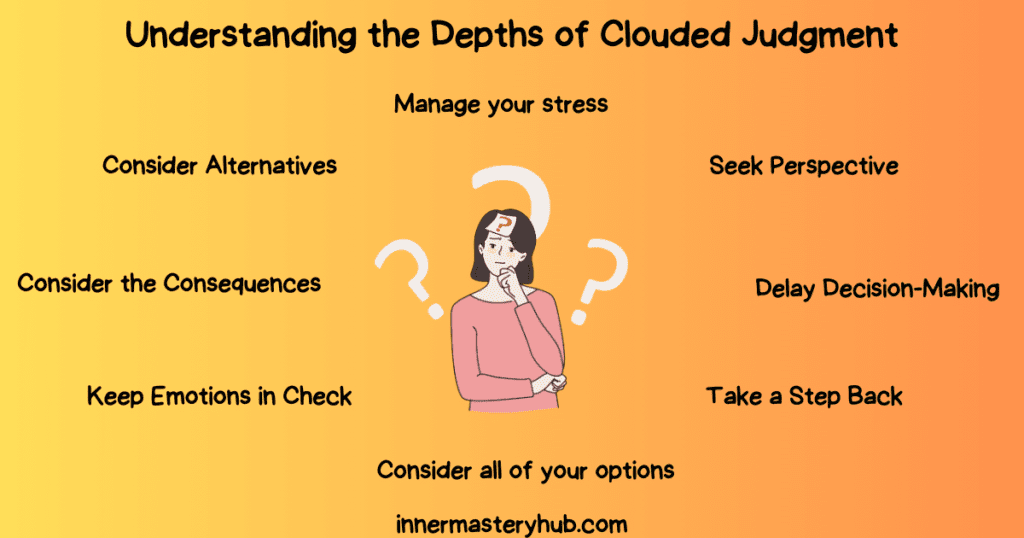
Keep Emotions in Check. Recognize that emotions are a natural part of decision-making, but strive to balance them with reason and logic.
Take a Step Back. Take a minute to distance yourself from the situation when you notice intense feelings. Because intense emotions impair your ability to reason, establishing a mental and emotional distance can help you think more clearly.
Take a deep breath and unwind. You can relax your nervous system by practicing deep-breathing exercises and relaxation techniques. Taking a few deep breaths can help people make more balanced decisions by reducing their body’s stress and anxiety response.
Look for viewpoints. Discuss the matter with a coworker or trusted acquaintance. They can provide you with advice or insight you would not have thought of before, as well as an outside viewpoint.
Delay in Making Decisions. When you are experiencing intense emotions, it is best to refrain from making important decisions. Allow yourself time to calm down and gather your thoughts.
Consider the Consequences. Examine the Repercussions. Consider the potential consequences of your choices. How might the decisions you make affect the people in your life or your future? You be able to concentrate better by doing this.
Think of everything you can do. All options should be considered when making a decision, even if they are not the most desirable. This will enable you to make a better-informed choice.
Examine your options. Examine several alternatives and the possible results. You may be able to make more logical choices with this wider viewpoint.
Don’t lose sight of the facts. Emotions can cause irrational thought. Compile the facts and supporting documentation related to the situation. This will enable you to make judgments based on factual knowledge.
Get enough sleep. You are better able to think properly and make logical decisions when you get enough sleep.
Take control of your stress. Finding healthy strategies to manage stress, such as exercising, practicing relaxation techniques, and spending quality time with loved ones, is crucial, as stress can impair your judgment. Invest in vitamins and supplements.
Stay away from drugs and alcohol. Making wise decisions can be challenging when under the influence of drugs or alcohol.
FAQS about Clouded Judgment
What does it mean when someone is clouded?
When someone has clouded judgment, or when emotions, biases, or external factors influence thinking. It implies a need for more clarity and objectivity in their decision-making, making it difficult to make rational choices.
Does anxiety cloud your judgment?
Yes, anxiety can cloud judgment. It triggers a fight-or-flight response, narrowing focus and often leading to irrational decisions. Anxiety also amplifies perceived threats, causing people to overreact or make choices based on fear rather than assessing the situation.
Does anger cloud judgment?
Anger clouds judgment by triggering intense emotions that can override rational thinking. It narrows focus, making it difficult to consider alternative perspectives or consequences. Anger can lead to impulsive actions and regrettable decisions driven by immediate emotional reactions rather than careful evaluation.
Why does exhaustion cloud mental judgment?
Exhaustion clouds mental judgment by depleting cognitive resources. Fatigue impairs concentration, problem-solving, and decision-making abilities. Mental processes slow down, leading to poor judgment, as the brain lacks the energy and clarity needed for practical analysis and reasoning.
How do we not let emotions cloud judgment?
To prevent emotions from clouding judgment, practice self-awareness, delay decision-making, gather facts, consult with others, and use structured decision-making frameworks. Balance emotions with logic and objectivity.
How can you ever let your emotions cloud your judgment for anyone?
To avoid letting emotions cloud judgment, practice self-awareness, delay decisions when emotions are high, gather facts, consult trusted individuals, and use structured decision-making techniques.