
Highly Intuitive Person: Meaning, 12 Signs and Common Myths

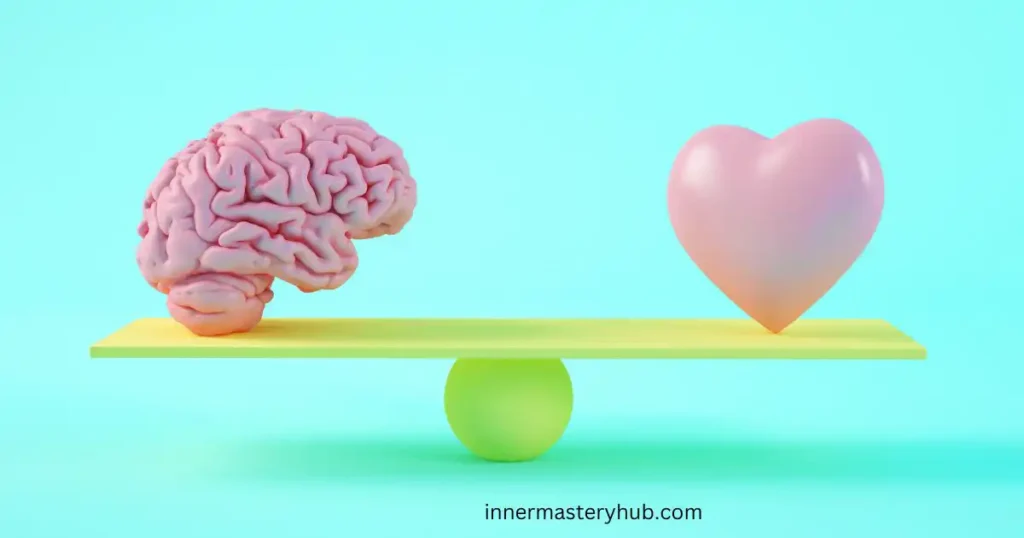
A highly intuitive person quickly picks up on other people’s moods and small changes around them, often without being able to say why.
What Is a Highly Intuitive Person?
A highly intuitive person picks up on tone, mood, and small changes in people and places quickly, often before they can say how they know. It’s an everyday label, not a diagnosis, and it overlaps with empathy and sensitivity.
What feels like a hunch is usually fast pattern recognition. Your mind has seen something like this before, say a certain tone just before an argument or a certain silence before bad news, and gives you a feeling before you’ve put it into words. In Thinking, Fast and Slow, Daniel Kahneman calls this quick, automatic kind of thinking “System 1”. Everyone uses it. Some people seem to notice the feeling more and act on it.
How far should you trust it? It depends. In 2009, Kahneman and Gary Klein, who started on opposite sides of this question, agreed that a gut judgment is worth trusting when two things are true: the situation is regular enough to learn from, and you’ve had plenty of practice with honest feedback.1
An experienced nurse sensing that a patient is getting worse fits that. A hunch about whether a new relationship will last, or what someone really thinks of you, usually doesn’t, especially when you’re anxious. If a feeling comes with a lot of worry attached, it may be anxiety rather than intuition, and it’s worth checking it against the facts before you act on it.
12 Signs You Might Be a Highly Intuitive Person
Most people will recognise a few of these. Having many doesn’t make you gifted or unusual. It usually means you pay close attention to people and to your own reactions. As you read, ask one question about each: could something else explain it?
1. You get a read on a situation before you can explain it.
You say “something’s off” or “this will be fine”, and later you can usually say why. Often it’s experience: you’ve seen a similar pattern before. It’s worth listening to when you know the area well, and worth double-checking when you don’t.
2. You react strongly to some people straight away.
You warm to someone within minutes, or feel uneasy around them without a reason. Sometimes you’ve spotted something real. Sometimes the person simply reminds you of someone from your past, so it helps to notice which it is. Emotional reasoning explains how a strong feeling can pass itself off as proof.
3. You notice small changes in how people behave.
A friend answers in one word, a colleague stops making eye contact, the room goes quiet after someone’s comment. You may be right, or you may be reading too much into it. Asking “Is everything okay?” settles it faster than guessing.
4. You walk into a room and feel the mood.
Tension, warmth, or an argument that just ended. Many people with this habit also end up carrying other people’s moods home. If that sounds familiar, read about absorbing others’ energy.
5. You’re worn out after crowded or tense places.
Noise, small talk, and unspoken conflict take a lot out of you, and you need quiet afterwards. That’s often a sign of being easily overstimulated, and it’s worth knowing the signs of emotional flooding.
6. You notice when what someone says doesn’t match what they do.
They say “I’m fine” in a flat voice, or agree to something and then drag their feet. It’s a useful skill, as long as you check before deciding what it means.
7. You connect dots quickly.
You see how a pattern at work links to something that happened last month. Everyone’s mind tends to find patterns, including ones that aren’t there, so test the idea before you act on it.
8. You often know how someone feels without being told.
You notice sadness behind a cheerful reply. Your guess can be wrong, and you may end up taking on feelings that aren’t yours. When that happens, look at toxic empathy.
9. Your body tells you first.
A tight stomach, a heavy chest, a restless feeling before you’ve worked out why. Many people describe hunches this way. A tight stomach can also be plain nerves, so treat it as a prompt to look closer, not as an answer.
10. You like to sleep on big decisions.
You want time alone to let your feelings settle before you choose. That gives you space to hear what you actually think, and it often leads to calmer decisions. If you also find you recover best alone, a preference for solitude is common.
11. Quiet time outdoors helps you settle.
A walk or a bench in the park lets the noise in your head drop. It isn’t nature “speaking” to you. It’s that slowing down makes your own thoughts easier to hear.
12. You feel relief when a choice matches how you feel.
It can be a good sign you’ve chosen something that suits you. But relief also comes from avoiding something hard, so ask whether you’re moving toward something or away from it. Why feelings aren’t facts helps with that.

Why Do Intuitive People Feel Overwhelmed, and What Helps?
The people who bring this to me rarely say “I’m overwhelmed”. They say, “I’m fine all day, and by seven in the evening I’m wiped out, and I can’t tell you why.”
When we go back through their day, there’s usually no single event. There’s a tight voice in the morning meeting, a friend who replied with one word at lunch, a partner who went quiet at dinner. Each one got noticed, turned over for a moment, and carried along. By evening the pile is heavy, and nobody else saw any of it being picked up.
Two habits tend to make it heavier. The first is turning a feeling into a fact. “She’s annoyed with me” gets decided on the spot, though the sigh may have been about her own day. The second is that there’s rarely a gap between noticing and reacting, so they reply, apologise or fix things before they’ve checked whether anything was wrong.
Research on sensitivity points in the same direction, with limits. Aron and Aron2 described sensory-processing sensitivity, a trait where people react more strongly to stimulation and take in more detail, and found it overlaps with introversion and emotionality but is a separate trait.3 A later brain-imaging study of 18 adults found that people who scored higher on this trait showed stronger activity in regions linked to awareness and empathy when they looked at photos of faces, particularly a partner’s face or a happy one.
Both studies are small or based on questionnaires, and the Arons were part of the research team behind the second. They suggest, but don’t prove, that some people respond more strongly to other people’s emotions. Not every intuitive person has this trait either.
Where emotion regulation comes in
Intuition is the noticing. What you do with it afterwards is what psychologists call emotion regulation. James Gross, who has studied it for decades, defines it as an attempt to influence which emotions you have, when you have them, and how you experience and express them.4 It doesn’t mean pushing feelings down. Gross and John found that people who habitually hide what they feel tend to have poorer relationships and lower well-being.5
People often mix up intuition and emotional intelligence. In practice, they work together:
| Intuition | Emotional intelligence | |
|---|---|---|
| What it is | A quick sense of how a person or situation is, often before you can explain it | Understanding your own and other people’s emotions and handling them well |
| How it happens | Automatically, before you’ve thought it through | With some awareness and effort |
| Example | You sense a friend is upset before she says a word | You notice you’re tense, take a breath, and ask her what’s wrong |
What tends to help
Three questions help when a feeling hits: Is this mine, or am I picking it up from someone else? Is it about now, or does it remind me of something from before? Is there anything I can do about it today, such as asking, waiting, or letting it go?
- Name it. “I’ve picked up on a lot today” is a good start. Putting a feeling into words can also take some of the force out of it. In a brain-imaging study of 30 adults, naming the emotion in a distressing image reduced the response in the amygdala, a region involved in emotional reactions, more than other ways of processing the same image.6 It was a lab task using photos, not a tense meeting, so treat it as a reason to try it, not a guarantee.
- Leave gaps in your day. Five minutes alone or outside between meetings is often enough to stop it piling up. If your evenings feel like you can’t switch off, read why you can’t relax even when nothing is wrong.
- Try a few simple tools. These free emotional regulation tools give you a place to start.
Why Do Intuitive People Doubt Themselves?
Most intuitive people I talk to aren’t short of hunches. They’re short of trust in them. One version goes: “I had a bad feeling about the new hire, couldn’t point to anything, so I said nothing. Three months later it fell apart.” The other version goes: “I was sure my friend was angry with me. She wasn’t, and I felt foolish.”
Both stories feed doubt. The first teaches you that staying quiet has a cost. The second teaches you that speaking up does.
Other people add to it. Many hear the same lines for years: “You’re overthinking.” “It’s all in your head.” “You’re too sensitive.” Said once, they sting. Said often enough, they become your own voice, and you start asking for proof before you let yourself believe your own read. If you’ve spent years being dismissed like this, that’s worth understanding in its own right. If someone says “it’s in your head” about things that really happened, and you’ve started to doubt your memory of events, read: am I being gaslighted?
“Too sensitive” is usually meant as a put-down, but noticing small changes in people is useful wherever reading a room matters, such as managing a team, teaching or looking after someone. It helps most when you check what you notice and give yourself time to recover. When you treat every observation as a conclusion, it mostly wears you out.
Some doubt is healthy. Kahneman and Klein found that gut judgments are reliable when the situation is regular enough to learn from, and you’ve had practice with honest feedback.7 Outside that, they can mislead, and it’s easy to remember the times you were right and forget the times you weren’t. So the aim isn’t to trust every hunch. It’s to get better at telling which ones to act on.
Two habits help:
- Keep a hunch log. When you get a strong feeling, write one line: the date, what you sensed, and what you did about it. A month later, mark it right, wrong, or unclear. After a few weeks, you may see which kinds of hunches hold up and which don’t. That’s the feedback Kahneman and Klein say builds reliable intuition. If you’ve never kept a journal, this beginner’s guide is a gentle way in.
- Say it as an observation, not a verdict. “I’ve noticed you’ve gone quiet. Is everything okay?” is easier to say, and to be wrong about, than “I know you’re upset with me.”
When Does Intuition Lead You Astray?
Most intuitive people don’t go wrong by sensing too little. They go wrong in what they do with what they sense. These are the four I’d watch for.
1. Telling people what they feel. “I know you’re upset with me” or “I can tell you don’t like her” gets said as fact, when it’s a guess. If you’re right, the person feels exposed. If you’re wrong, you’ve put a feeling on them they didn’t have. Try “You seem quiet today. Is everything okay?” You can still be right, and you’ll find out sooner. Why assuming what others feel goes wrong is worth knowing too.
2. Calling worry intuition. A feeling that comes back louder every time you try to settle it, or that arrives with a long list of “what ifs”, often has more to do with anxiety than with information. A hunch about a person or situation tends to feel quieter, and it doesn’t need to be repeated to be noticed. That’s a rule of thumb, not a test, and it isn’t always clear. There’s a longer comparison: is it anxiety or intuition?
3. Making other people’s feelings your job. You notice a friend is low, so you cheer her up, explain things to her, and apologise for something that wasn’t yours. Someone’s mood is information. It isn’t an assignment. If this is a habit, read about being a rescuer, and try the circle of control to sort what’s yours from what isn’t.
4. Sticking to the first read. Once you’ve sized someone up, you notice every sign that fits and brush past the ones that don’t. The first impression gets stronger, not because it’s right but because you keep collecting evidence for it. Try asking, “What would I expect to see if I were wrong?”
What Changes When You Work With Your Intuition
Being highly intuitive isn’t about predicting the future or reading minds. It’s noticing a lot about people and situations, quickly, and often before you can say how you know.
That noticing is useful, but it isn’t a verdict. It works best in areas you know well, and it can mislead when you’re tired, anxious, or short on experience. The people who do well with it tend to change two things. They stop reacting to every feeling straight away, and they start checking their hunches against what actually happens.
You don’t need to trust every feeling, and you don’t need to silence them. Next time one arrives, write down what you sensed, ask one question before you act, and see how it turns out. Over a few weeks, you’ll learn which of your hunches deserve more of your trust.
FAQs
How can I tell if I’m highly intuitive?
Signs include trusting your gut, sensing others’ emotions, having vivid dreams, and knowing things without being told. If these resonate with you, you might be more intuitive than you think.
Is intuition the same as instinct?
While both involve quick, subconscious responses, intuition is linked with higher reasoning and emotional intelligence, whereas instinct is closely tied to Survival and basic reactions.
Do highly intuitive people make better decisions?
Intuitive individuals make decisions that align with their values and inner guidance, leading to choices that feel right for them, even if they can’t always explain why.
Is there a link between intuition and creativity?
Absolutely. Intuition often sparks creative ideas and solutions by connecting seemingly unrelated concepts and allowing for innovative thinking.
Can everyone develop intuition?
Yes, with practice and openness, anyone can strengthen their intuitive abilities. It’s about becoming more aware of your inner signals and learning to trust them.
What is the difference between intuition and empathy?
Intuition refers to rapid subconscious pattern recognition, while empathy involves understanding or sharing another person’s emotional state. Highly intuitive individuals often possess strong empathy, but intuition focuses more on recognizing patterns and signals than feeling the emotion itself.
Are highly intuitive people also highly sensitive?
Often yes. Research on sensory processing sensitivity suggests that many intuitive individuals process environmental stimuli more deeply. This deeper processing can increase emotional awareness and pattern recognition, but may also lead to overstimulation.
Can intuition be wrong?
Yes. Intuition relies on past experiences and pattern recognition, which means biases or incomplete information can influence it. This is why reflective thinking helps refine intuitive insights.
Why do intuitive people feel drained around others?
Highly intuitive individuals detect emotional signals quickly. Constant exposure to strong emotions or social tension can overwhelm their nervous system, leading to emotional fatigue.
- Kahneman, D., & Klein, G. (2009). Conditions for intuitive expertise: A failure to disagree. American Psychologist, 64(6), 515–526. https://doi.org/10.1037/a0016755 ↩︎
- Aron, E. N., & Aron, A. (1997). Sensory-processing sensitivity and its relation to introversion and emotionality. Journal of Personality and Social Psychology, 73(2), 345–368. https://doi.org/10.1037/0022-3514.73.2.345 ↩︎
- Acevedo, B. P., Aron, E. N., Aron, A., Sangster, M.-D., Collins, N., & Brown, L. L. (2014). The highly sensitive brain: An fMRI study of sensory processing sensitivity and response to others’ emotions. Brain and Behavior, 4(4), 580–594. https://doi.org/10.1002/brb3.242 ↩︎
- Gross, J. J. (2015). Emotion regulation: Current status and prospects. Psychological Inquiry, 26(1), 1–26. https://doi.org/10.1080/1047840X.2014.940781 (Your original listed the title as “…and prospects”. The correct title is “…and prospects”.) ↩︎
- Gross, J. J., & John, O. P. (2003). Individual differences in two emotion regulation processes: Implications for affect, relationships, and well-being. Journal of Personality and Social Psychology, 85(2), 348–362. https://doi.org/10.1037/0022-3514.85.2.348 ↩︎
- Lieberman, M. D., et al. (2007). Putting feelings into words: Affect labeling disrupts amygdala activity in response to affective stimuli. Psychological Science, 18(5), 421–428. https://doi.org/10.1111/j.1467-9280.2007.01916.x ↩︎
- Kahneman, D., & Klein, G. (2009). Conditions for intuitive expertise: A failure to disagree. American Psychologist, 64(6), 515–526. https://doi.org/10.1037/a0016755 ↩︎
Written By Mehwish Qurayshi
Mehwish Qurayshi is a Trauma-Informed Emotional Wellness Counsellor trained through NICABM’s Treating Trauma Master Series, which includes NBCC-approved education in Trauma Treatment and Emotional Wellness & Emotional Intelligence – Sourcecode Academia. She has over five years of experience providing emotional wellness counselling, helping individuals heal from trauma, regulate emotions, and build healthy relationships.