
Introvert vs Social Anxiety: How to Tell the Difference

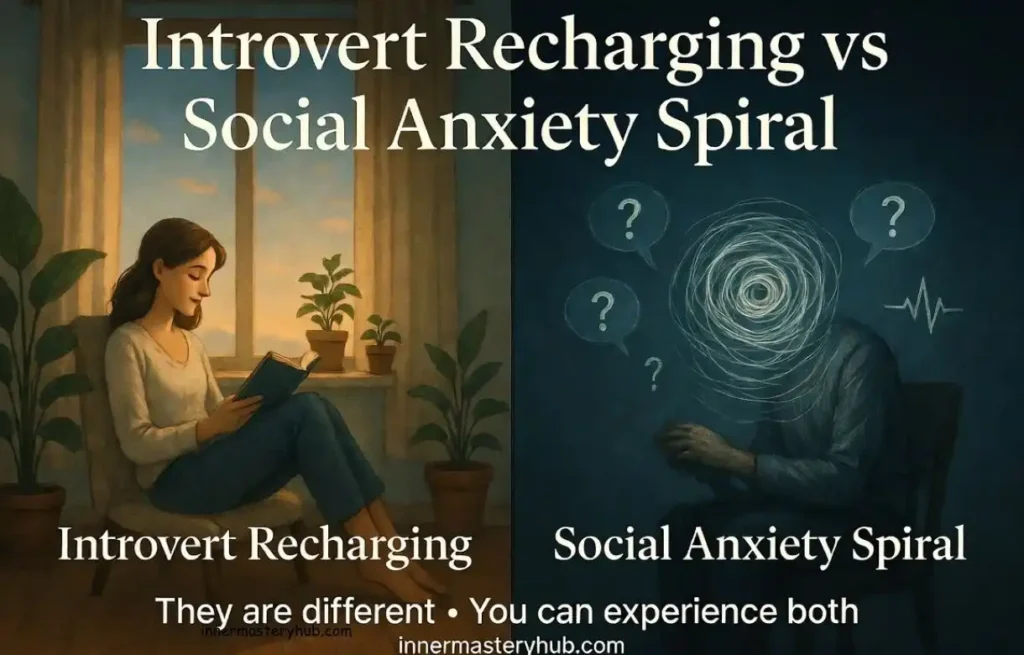
Introvert vs Social Anxiety: What’s the Difference?
Introversion is a personality trait characterized by gaining energy from solitude and quieter environments. Social anxiety is a mental health condition involving fear of judgment, embarrassment, or rejection in social situations. An introvert may enjoy being alone, while someone with social anxiety often avoids social situations due to fear.
You like to enjoy time alone and avoid large social gatherings. But does that mean you’re introverted, socially anxious, or both? While these two experiences look similar on the surface, they stem from very different causes. Understanding the difference can help you better understand your personality, emotions, and social needs.
Introvert vs Social Anxiety
| Area | Introvert | Social Anxiety |
|---|---|---|
| Core Cause | Personality trait | Anxiety disorder |
| Social Interaction | Can enjoy it in moderation | Often fears it |
| Energy Level | Drained by too much socializing | Drained by anxiety |
| Fear of Judgment | Usually low | Usually high |
| Desire for Connection | Present | Present but blocked by fear |
| Physical Symptoms | Usually absent | Common |
| Public Speaking | May dislike it | Often fears it |
| After Social Events | Needs recharge | Replays conversations |
| Avoidance Reason | Preference | Fear |
| Treatment Needed | No | Sometimes beneficial |
What Is Introversion?
Introversion is a personality style where a person feels more comfortable in quiet settings1. They prefer time alone or with a few close people instead of large, busy groups. It doesn’t mean they don’t like people; it just means their social energy runs out faster, and they need time to recharge.
Characteristics of an Introvert
Recharges alone
Introverts feel tired after too much social interaction. They usually regain their energy by spending time alone, reading, resting, or doing something peaceful.
Prefers smaller groups
Instead of big gatherings, introverts feel more relaxed in one-on-one talks or small groups where conversations feel easier and more meaningful.
Enjoys deep conversations
They usually don’t enjoy small talk for too long. They prefer real, thoughtful conversations about ideas, feelings, or life.
May become drained by excessive socializing
Too much social activity can feel overwhelming or exhausting. They may need quiet time afterward to feel balanced again.
Doesn’t necessarily fear people
Introversion is not shyness or social fear. Many introverts are socially confident; they just prefer limited, meaningful interaction rather than constant engagement.
What Is Social Anxiety?
Social anxiety is when a person feels strong fear or nervousness in social situations2. They often worry a lot about being judged, embarrassed, or doing something “wrong” in front of others. This fear can make even simple interactions feel stressful.
Characteristics of Social Anxiety
Fear of judgment
People with social anxiety worry about what others think of them. They overthink every word or action, afraid of being criticized.
Fear of embarrassment
There is a strong fear of saying or doing something awkward in public, even in normal situations like talking or eating in front of others.
Excessive self-consciousness
They become very aware of themselves, how they look, how they speak, or how they are being perceived. This can make them feel tense all the time in social settings.
Avoidance of social situations
Because of fear and discomfort, they may avoid parties, meetings, or even simple interactions such as phone calls or group conversations.
Physical anxiety symptoms
Social anxiety can also show in the body. This includes a fast heartbeat, sweating, shaky hands, blushing, or a feeling of tightness in the chest.
10 key differences between introversion and social anxiety
1. Introversion Is a Personality Trait; Social Anxiety Is a Mental Health Condition
Introversion is simply part of your natural personality, the way your brain is wired. It’s normal and healthy.
Social anxiety, on the other hand, is a treatable mental health condition involving intense fear that goes beyond normal nervousness3.
2. Introverts Enjoy Solitude; Socially Anxious People May Feel Isolated
Introverts genuinely love and feel refreshed by alone time. It feels peaceful and recharging.
People with social anxiety feel lonely and wish they could connect more easily, but fear holds them back.
3. Introverts Don’t Necessarily Fear Judgment.
Most introverts don’t worry much about being judged or embarrassed. They prefer quieter settings.
Social anxiety comes with a strong fear of negative evaluation, worrying that others will think you’re awkward, boring, or stupid.
4. Social Anxiety Often Causes Physical Symptoms
Introverts might feel tired after socializing, but they don’t usually get physical symptoms from it.
Social anxiety can trigger a racing heart, sweating, blushing, trembling, nausea, or trouble breathing in social situations.
5. Introverts Can Enjoy Socializing in the Right Setting
Introverts love deep, meaningful conversations with a few close people. They can have fun when the environment feels right.
With social anxiety, even small interactions can feel scary, no matter how much you like the people.
6. Social Anxiety Leads to Avoidance Due to Fear.
Introverts prefer to skip big events because they don’t enjoy them or need rest.
People with social anxiety avoid situations because they’re afraid of being humiliated or rejected.
7. Introverts Feel Drained After Social Events
After a party or meeting, introverts think, “That was nice, but I need quiet time now.”
Social anxiety leaves people thinking, “Did I say something stupid? Why did I go?”
8. Social Anxiety Creates Excessive Self-Monitoring.
Introverts can be present and enjoy the moment in comfortable settings.
Social anxiety involves constantly watching yourself, replaying conversations, worrying about how you look or sound, and overthinking every detail.
9. Introversion Doesn’t Need Treatment.
You don’t need to “fix” being an introvert; it’s not a problem.
Social anxiety is highly treatable with therapy (especially CBT), support, and sometimes medication. Many people recover well4.
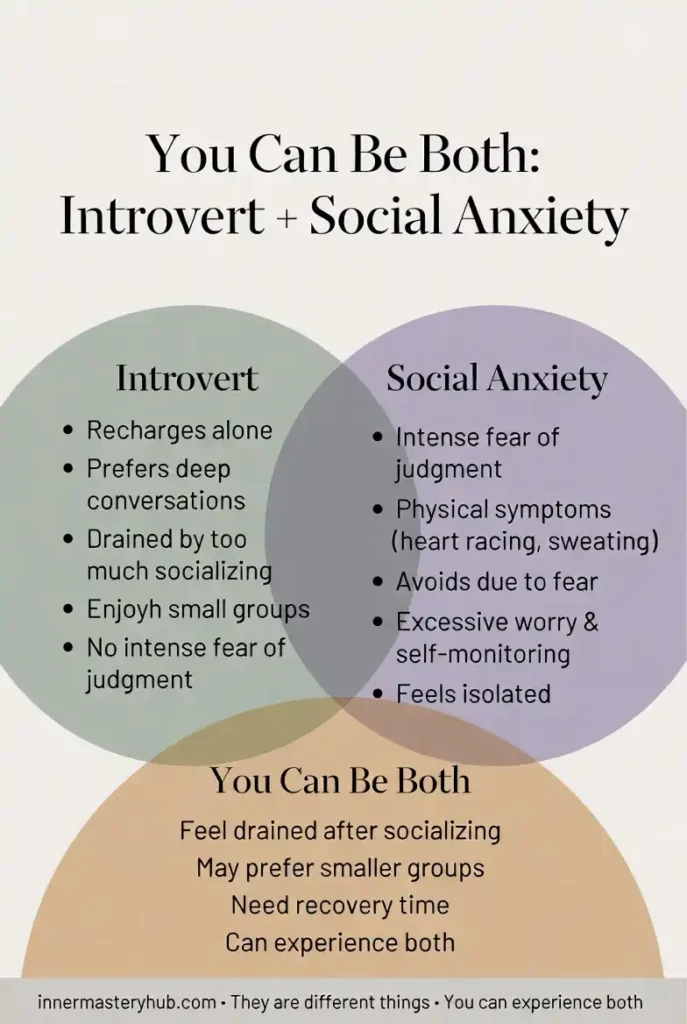
10. You Can Be Both Introverted and Socially Anxious.
This is very common. You can be a quiet, thoughtful introvert who also struggles with social anxiety. The good news is you can learn to manage the anxiety while still honoring your introverted needs.
Can You Be Both an Introvert and Have Social Anxiety?
Yes, a person can be an introvert with social anxiety. This is actually quite common, and it’s why people often confuse the two.
Introversion and social anxiety are related in how they show up in behavior, but they are not the same thing.
They often overlap
Both introverts and people with social anxiety may prefer quiet spaces, small groups, or alone time. From the outside, they can look similar, which is why people mix them up.
They are separate concepts.
Introversion is a personality trait. It’s about where you feel most comfortable and how you recharge.
Social anxiety is a mental health condition. It involves fear, worry, and stress in social situations.
One does not automatically cause the other.
Being an introvert does not mean you will develop social anxiety. And having social anxiety does not mean you are an introvert either.
An introvert can feel calm and confident in social settings but still prefers less interaction. Whereas a person with social anxiety actually wants to connect with others but feels blocked by fear and overthinking.
Why People Confuse Introversion With Social Anxiety
People often mix up introversion and social anxiety because the outward behavior can look similar. Both may seem “quiet” or “reserved” in social settings, but the reasons behind that behavior are very different.
Quiet behavior
Introverts are usually calm and quiet because that’s their natural comfort zone. People with social anxiety may also stay quiet, but it’s often because they feel nervous, overthink, or fear saying the wrong thing.
Avoiding parties
An introvert may skip parties simply because they find them draining or not enjoyable. Someone with social anxiety might avoid parties because they feel anxious, worried about judgment, or afraid of embarrassment.
Preference for smaller groups
Both may prefer small groups, but their motivations differ. Introverts like deeper, calmer conversations. A person with social anxiety may feel safer in small groups because it reduces pressure and fear.
Cultural stereotypes
Many people assume that anyone quiet, shy, or not very social must have social anxiety. In reality, personality and anxiety are not the same thing. This stereotype leads to confusion between the two.
Signs You May Be Introverted
- You feel more relaxed when you spend time alone
- You prefer small groups instead of big gatherings
- You enjoy deep, meaningful conversations more than small talk
- You need quiet time after social events to feel “recharged”
- You think carefully before speaking, especially in groups
- You are comfortable being on your own and don’t feel lonely easily
- You prefer listening more than talking in conversations
- You choose a few close friends over a large social circle
Signs You May Have Social Anxiety
- You often worry about being judged or criticized by others
- You feel nervous before or during social situations
- You avoid events like parties, meetings, or public speaking
- You replay conversations in your mind and overthink what you said
- You feel physical symptoms like sweating, shaking, or a fast heartbeat in social settings
- You fear embarrassment even in simple interactions
- You struggle to speak up, even when you want to say something
- You feel intense discomfort when attention is on you
Self-Reflection Questions
Am I Introverted or Socially Anxious?
- Do I avoid people because I’m tired or because I’m afraid?
- Do I enjoy socializing once I’m there?
- Do I fear being judged?
- Do I replay conversations afterward?
How to Work With Introversion and Manage Social Anxiety
Accept your introversion
If you are an introvert, there is nothing to fix. You recharge better in quiet places and small groups. Try to respect your need for alone time instead of forcing yourself into constant social activity.
Create a healthy balance.
Even if you are introverted, some social time is still important. You don’t need big events. Small meetups or one-on-one conversations can help you stay balanced without feeling drained.
If you have social anxiety
Social anxiety can be managed with small, steady steps. Start with easy social situations and slowly build confidence over time. Don’t push yourself too hard all at once.
Challenge anxious thoughts
If you often fear judgment or embarrassment, try to question those thoughts. Most people are not judging you as much as your mind tells you they are.
Use calming techniques
Simple things like slow breathing, grounding yourself, or taking short breaks can help reduce physical anxiety symptoms in social situations.
Seek support if needed.d
If fear is strong or affects your daily life, talking to a therapist or counselor can really help. Support can make social situations feel much easier over time.
Key Takeaways
Introversion
Introversion is a normal personality trait where a person feels more comfortable in calm, low-stimulation environments. They often prefer quiet spaces, smaller groups, and time alone to recharge.
Social Anxiety
Social anxiety is a fear-based condition where a person worries about being judged, embarrassed, or rejected in social situations. This fear can make everyday interactions feel stressful or overwhelming.
Important
You can be introverted, socially anxious, both, or neither. These are separate things, and one does not automatically cause the other.
Conclusion
Introversion and social anxiety may look similar from the outside, but they are not the same. Introversion is simply a natural personality style where someone prefers calm environments and alone time to recharge. Social anxiety, on the other hand, is driven by fear and worry in social situations, often linked to judgment or embarrassment. Understanding the difference helps reduce confusion and self-doubt. A person can be introverted, socially anxious, both, or neither, and each experience is valid and different.
People also ask
Is introversion the same as social anxiety?
No, they are not the same. Introversion is a personality trait, while social anxiety is fear and worry in social situations.
Can introverts have social anxiety?
Yes. A person can be both introverted and socially anxious at the same time.
How do I know if I’m introverted or socially anxious?
Introversion is about a preference for quiet and alone time, while social anxiety involves fear, worry, and avoidance of social situations.
Is social anxiety a mental illness?
Yes, social anxiety is considered a mental health condition that can be treated with therapy and support.
Why do introverts avoid social events?
Introverts may avoid social events because they feel drained by too much interaction, not because of fear.
Can social anxiety be treated?
Yes, it can be treated with therapy, coping skills, and sometimes medication if needed.
Are introverts shy?
Not always. Introversion is about energy preference, while shyness is about feeling nervous in social situations.
Can an extrovert have social anxiety?
Yes. Even outgoing people can experience fear and anxiety in social settings.
- Cain, S. (2012). Quiet: The Power of Introverts in a World That Can’t Stop Talking. ↩︎
- American Psychiatric Association. (2013). Diagnostic and Statistical Manual of Mental Disorders (DSM-5). ↩︎
- Hofmann, S. G., & DiBartolo, P. M. (2010). Social Anxiety: Clinical, Developmental, and Social Perspectives. ↩︎
- National Institute of Mental Health (NIMH). Social Anxiety Disorder. ↩︎
Written By Mehwish Qurayshi
Mehwish Qurayshi is a Trauma-Informed Emotional Wellness Counsellor trained through NICABM’s Treating Trauma Master Series, which includes NBCC-approved education in Trauma Treatment and Emotional Wellness & Emotional Intelligence – Sourcecode Academia. She has over five years of experience providing emotional wellness counselling, helping individuals heal from trauma, regulate emotions, and build healthy relationships.