
15 Tell-tale Signs of People Who Play the Victim

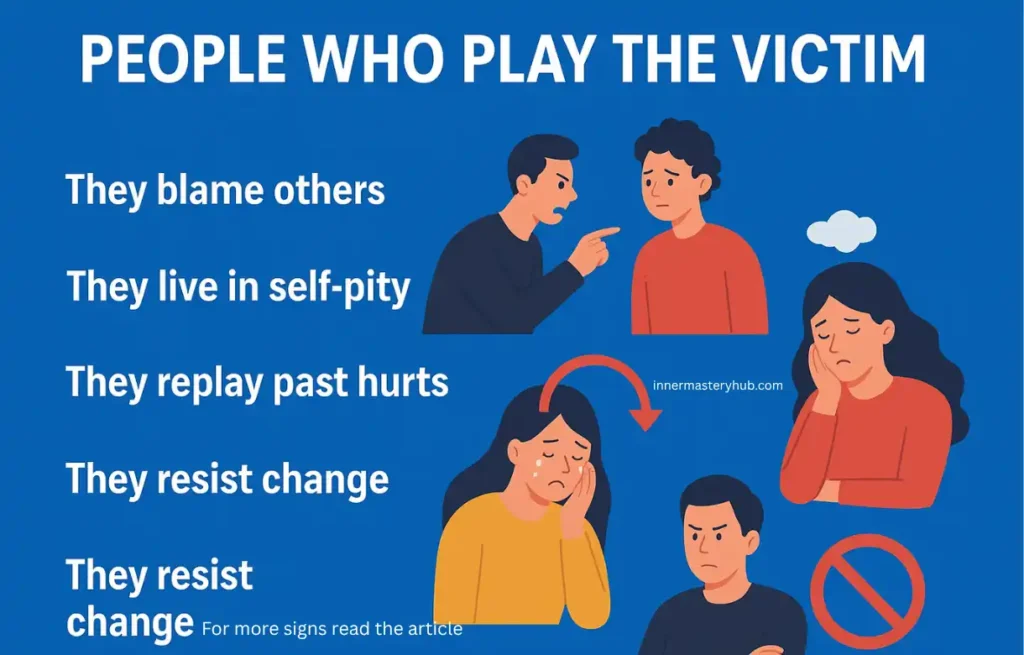
People who play the victim often feel emotionally unsafe, powerless, or deeply misunderstood. While their behavior may look manipulative from the outside, it is usually connected to unresolved trauma, emotional conditioning, fear of rejection, low emotional regulation, or a learned Survival response. Victim mentality can damage relationships, emotional health, and self-growth because the person unconsciously avoids responsibility while seeking emotional protection.
You may have met someone who always seems hurt, blamed, misunderstood, or treated unfairly. Maybe every disagreement turns into a story about how others failed them. Maybe they avoid accountability, while also wanting sympathy, reassurance, or emotional rescue. After a while, you stop asking yourself, “Why are they acting like this?” and start wondering something deeper:
“Do they actually believe they are the victim?”
That question matters because people who play the victim are not always pretending. In many cases, they genuinely experience life through the lens of emotional threat, abandonment, shame, or helplessness. Their nervous system reacts before logic does. Their mind interprets discomfort as proof that someone else caused their pain. And naturally, this creates repeated emotional cycles in relationships, families, friendships, and workplaces.
Over the last 5 years, working with clients in emotional regulation and trauma-informed healing spaces, I have noticed something important. Most people think victim mentality is about manipulation alone. But underneath the behavior, there is usually emotional Survival happening. The person often learned very early that pain brought attention, safety, or protection. So even as adults, they continue repeating the same emotional pattern without realizing it.
This does not excuse harmful behavior. But it explains why logic alone rarely changes it.
Research also shows that chronic feelings of helplessness can deeply affect emotional regulation, stress responses, and relationship patterns. Psychologist Martin Seligman’s work on learned helplessness found that repeated experiences of powerlessness can condition people to stop believing they can change outcomes, even when opportunities exist1.
Understanding people who play the victim requires more than judgment. It requires understanding the emotional process happening underneath the behavior.
Can trauma make someone play the victim?
Yes. Trauma can condition the nervous system to expect danger, rejection, or helplessness. As a result, some people interpret conflict through the lens of old emotional wounds and react defensively, even in situations that are not truly threatening.
What Does It Mean When Someone Plays the Victim?
Victim mentality is a psychological pattern where a person repeatedly sees themselves as the harmed or powerless one in situations. Even when solutions exist, they may focus more on blame, unfairness, or emotional suffering.
People who play the victim consistently position themselves as powerless, unfairly treated, or emotionally attacked, even when they contribute to the problem. They often avoid responsibility while focusing heavily on how others hurt, misunderstood, or rejected them.
The behavior is not always conscious manipulation. Sometimes it is a deeply learned emotional defense mechanism connected to trauma, fear of abandonment, emotional insecurity, or nervous system dysregulation.
Common signs include:
- Constant blaming of others
- Difficulty accepting accountability
- Feeling emotionally attacked often
- Seeking validation through suffering
- Passive behavior and helplessness
- Emotional manipulation in relationships
- Repeating the same unhealthy patterns
- Negative thinking and resentment
A partner forgets to call after work. Instead of expressing hurt directly, the other person says:
“You never care about me. Everyone leaves eventually.”
The situation shifts from one missed call into a larger emotional story about rejection and abandonment.
That emotional interpretation often matters more than the actual event.
Why Do People Play the Victim?
People play the victim because their mind and nervous system learned to associate emotional pain with safety, attention, protection, or Survival. Trauma, childhood conditioning, emotional neglect, shame, and fear of rejection often shape this behavior.
The person is not only reacting to the present moment. They are reacting to old emotional experiences that their bodies still remember.
The Emotional Process Behind Victim Mentality
Most people think victim behavior starts with manipulation. But psychologically, it starts much earlier.
A small emotional trigger happens first. Then the brain interprets the situation through the lens of old emotional wounds. That interpretation evokes strong emotions such as shame, fear, anger, or helplessness. Finally, the person reacts defensively to avoid emotional pain.
For example:
A friend gives constructive feedback.
But internally, the person hears:
“You are failing.”
“You are being rejected.”
“You are not good enough.”
The nervous system reacts before conscious reasoning happens.
This is why conversations with people who play the victim can become emotionally exhausting. They are often responding to emotional memory rather than present reality.
Research from the American Psychological Association shows that unresolved childhood trauma can significantly affect emotional regulation, perception of threat, and interpersonal relationships later in life2.
Is Victim Mentality Connected to Trauma?
Yes. Victim mentality is connected to unresolved trauma, emotional neglect, attachment wounds, or chronic invalidation. Many people who constantly feel victimized learned early in life that they were powerless, unseen, or emotionally unsafe.
Trauma changes how the brain interprets stress, conflict, and rejection.
How Trauma Shapes Victim Behavior
Children who grow up in emotionally unstable homes often adapt by becoming hyperaware of emotional danger.
They may learn:
- Conflict means abandonment
- Mistakes lead to shame
- Needs are ignored
- Vulnerability is unsafe
- Love feels inconsistent
Over time, these experiences shape relationship psychology and emotional attachment patterns.
As adults, they may unconsciously expect betrayal, criticism, or rejection. So even neutral situations feel emotionally threatening.
Research from Harvard Medical School explains that chronic stress and trauma can keep the nervous system in Survival Mode, increasing emotional reactivity and fear responses3.
Are People Who Play the Victim Narcissists?
Not always. Some people who play the victim have narcissistic traits, but many are emotionally wounded, insecure, or trauma-conditioned. Victim behavior alone does not automatically mean narcissism.
The key difference is intention and self-awareness.
Victim Mentality vs Narcissistic Victimhood
A narcissistic person may use victimhood strategically to:
- Gain control
- Avoid accountability
- Protect their image
- Manipulate emotions
But trauma-driven victim behavior often comes from emotional fear, shame, or learned helplessness.
This distinction matters because the emotional treatment approach differs significantly.
Example
A narcissistic victim might distort facts to maintain power.
A trauma-conditioned victim might genuinely believe they are under attack because their nervous system interprets disagreement as emotional danger.
Both behaviors can harm relationships. But the emotional roots are different.
How Does Victim Mentality Affect Mental Health?
Victim mentality can increase anxiety, depression, resentment, emotional dependency, and hopelessness. Over time, it reinforces negative thinking patterns and weakens emotional resilience.
The brain starts expecting pain before it happens.
The Psychological Impact
When someone repeatedly sees themselves as powerless, the nervous system remains stuck in a state of stress.
This can lead to:
- Chronic anxiety
- Emotional dysregulation
- Relationship insecurity
- Fear of abandonment
- Low self-worth
- Emotional exhaustion
- Passive coping patterns
Research on learned helplessness found that repeated feelings of lack of control increase depressive thinking and emotional withdrawal4.
Emotional Regulation and the Nervous System
People who play the victim often struggle with emotional regulation because their nervous system reacts intensely to perceived rejection or criticism.
Their body may enter:
- Fight Mode (anger, blame)
- Flight Mode (avoidance)
- Freeze Mode (helplessness)
- Fawn Mode (seeking reassurance)
This is why nervous system healing matters in emotional recovery.
Why Do Victims Repeat the Same Relationship Patterns?
People repeat victim patterns because emotional familiarity feels safer than uncertainty. The brain often chooses familiar emotional pain over unfamiliar emotional health.
Trauma bonding and attachment wounds reinforce these cycles.
The Cycle of Emotional Repetition
Someone with unresolved emotional wounds may unconsciously choose relationships that recreate earlier emotional experiences.
For example:
- Emotionally unavailable partners
- Critical friendships
- One-sided dynamics
- Rescue-based relationships
Why?
Because the nervous system recognizes the emotional pattern.
Even painful familiarity can feel safer than emotional unpredictability.
Relationship Psychology and Emotional Attachment
Attachment theory shows that early caregiver relationships strongly influence adult emotional attachment styles.
Someone with anxious attachment may:
- Fear rejection constantly
- Interpret distance as abandonment
- Seek excessive reassurance
- Feel emotionally unsafe quickly
This creates repeated emotional conflict.
Research by Bowlby and attachment researchers consistently shows that insecure attachment affects emotional regulation and relationship stability5.
What Are the Signs of a Person With a Victim Mentality?
People with a victim mentality often repeat emotional patterns where they avoid responsibility, feel misunderstood, and focus heavily on external blame. Their reactions are usually emotionally charged because they feel internally threatened.
They Avoid Responsibility.
When someone is playing the victim, you’ll observe that they never take full responsibility. Their first reaction when anything goes wrong is to blame someone else, such as a family member, a coworker, or simply “bad luck.” It allows them to avoid taking responsibility for their part in the circumstance.
They Crave Constant Reassurance.
They have an endless hunger for approval and pity. They will tell you their stories again and over again, not to solve the problem, but only to hear you agree, “You’re right, that’s so unfair.” For people around them, this continual need for validation can be emotionally taxing.
They Focus Only on the Negative.
Pessimism affects their entire worldview. People who play the victim focus only on the negative, disregarding any positive aspects or potential bright spots. This negative focus fuels their belief that life’s hardships uniquely target them.
They Struggle with Problem-Solving.
When they face a challenge, they freeze. Because they believe they are powerless, they don’t even try to find a way out. Instead of asking, “How can I fix this?” they proclaim, “I can’t fix this,” reinforcing their victim identity.
They Manipulate with Guilt.
In their dealings, this is a necessary tool. They are skilled at making people feel bad about setting limits, being content, or not lending a hand enough. A person’s victim mentality makes you feel like the bad guy, as if you’re seeking ongoing support and attention.
They Compare Their Struggles.
To prove that their difficulties are worse than others’, they compare their own to others’. They will respond with an anecdote about how their day was considerably more challenging if you mention a bad day. They do this to keep their position as the one who suffers the most.
They Hold Onto Grudges.
They don’t know what forgiveness is. Years later, people who play the victim will bring up previous offenses and scars. Maintaining these grudges enables them to defend their victim narrative and present negative emotions.
They Reject Constructive Advice.
They reject constructive advice. They will quickly shoot it down with a list of reasons why it won’t work if you gently offer a way they might improve their circumstances. They are searching for an audience to affirm that their situation is poor, not for answers.
They Lack Self-Reflection.
They don’t reflect on themselves. They hardly ever, if at all, examine themselves. Analyzing their own behavior and role in an issue is too dangerous. Self-reflection for a person with a victim mentality would include questioning the identity they have created for themselves.
They replay past hurts.
People who play the victim tend to revisit past wrongs. In your life, you may notice someone dragging up old insults or dismissals long after healing should have happened. You may even find yourself doing the same if you recognize this in yourself.
To move forward, you can introduce a deliberate break point in the story. Decide on a cutoff date or moment and say: “I choose to stop revisiting this after today.
They show distorted thinking.
Individuals with a strong tendency toward “interpersonal victimhood” have interpretation biases, attribution biases, and memory biases. For example, they misinterpret neutral behavior as hostile. If you are interacting with someone like this, you might feel that they expect harm, assume the worst, or refuse to trust.
A helpful step is to introduce curiosity rather than assumption. Ask: “Is there another way to interpret this behavior? Strengthening your flexible thinking cleanses the black-and-white victim filter.
They resist change even when opportunity presents itself
People who play the victim role resist taking action because they prefer staying in their comfort zone. The signs include resistance to change and a preference for the passive role of being harmed.
You may notice them saying: “It’s always been this way,” “Nothing will fix it,” or “Why bother?” That resignation feeds the pattern. The remedy is to set very modest, manageable goals. If you think “I’ll fix everything,” it feels too big. Instead, try: “Today I will do one thing differently,” and then reflect on how you felt. Build momentum step by step.

They seek moral superiority through being wronged.
Some people who play the victim get a sense of moral high ground from their suffering, feeling “I’ve been through more than you” or “Look how unfair my life is.” Studies show that this need for recognition is part of the trait called “tendency for interpersonal victimhood.”
You may feel drained if you’re around someone who uses their narrative to one-up others or is always complaining about how they are worse off. The solution is to bring humility and mutuality. Encourage comparing action instead of suffering. You might say: “We both face challenges. What can we try together?” This shifts the conversation from contest to collaboration.
They show low empathy for others while seeking high empathy for themselves
A person with a victim mentality shows less trust in others and is less willing to help, especially in uncertain situations. In your life, you may find someone who expects others to listen endlessly to their pain but becomes impatient or dismissive when you share yours.
To counter this, you can practice balanced empathy. When you feel triggered by that attitude, try saying internally: “I feel unheard, too. How can I express that?” Or externally: “I’m struggling now, can we both share and then move on?”
They lose sight of their own agency and become stuck
When someone is playing the victim mentality, they believe they have no control, they are powerless, and life just happens to them. The very definition of a victim mentality is feeling little control over one’s life.
You might feel stuck, watching life go by, waiting for someone else to act or to rescue you. If this resonates, you might ask: “What am I waiting for? What can I initiate?”
What Mistakes Do People Make When Dealing With Someone Who Plays the Victim?
Most people either over-rescue or over-attack the person. Neither approach helps because both ignore the emotional process underneath the behavior.
Common Mistakes
Trying to “Fix” Them Constantly
Rescuing reinforces emotional dependency.
Invalidating Their Pain
Saying:
- “You are overreacting.”
- “Stop acting like a victim.”
usually increases defensiveness.
Taking Full Responsibility
Many partners become emotionally exhausted trying to stabilize someone else’s emotions.
Confusing Compassion With Enabling
Understanding trauma does not mean tolerating manipulation or emotional harm.
Healthy boundaries still matter.
How do you deal with someone who always plays the victim?
Stay compassionate but maintain healthy boundaries. Avoid rescuing, arguing excessively, or taking responsibility for their emotions. Clear communication, accountability, and emotional consistency are more effective than criticism or emotional overinvolvement.
Can Someone Stop Playing the Victim?
Yes, but real change happens through emotional awareness, accountability, nervous system healing, and self-reflection. The person must begin recognizing how their interpretations shape their emotional reality.
Awareness changes patterns more than shame does.
What Actually Helps
Healing begins when the person notices:
- Their emotional triggers
- Their fear responses
- Their avoidance of accountability
- Their attachment wounds
- Their emotional conditioning
This creates emotional separation between:
“What happened?”
and
“What my nervous system believes happened.”
Over years of trauma-informed client work, I have seen people change dramatically once they stop identifying completely with the role of being harmed.
Not because their pain was fake. But because they finally understood it differently.
Conclusion
People who play the victim are often misunderstood because their behavior can appear intentional from the outside. But internally, many are reacting to emotional wounds, nervous system patterns, fear of abandonment, and years of feeling emotionally unsafe.
That does not mean harmful behavior should be excused. Accountability still matters. Boundaries still matter. But understanding the psychology behind victim mentality changes the conversation completely.
Because underneath the blame, defensiveness, or emotional chaos, there is usually a person trying to protect themselves from pain they never fully processed.
And sometimes, the biggest shift happens when someone realizes:
“I am not only reacting to this moment. I am reacting to everything this moment reminds me of.”
If this article resonated with you and you are working through emotional triggers, attachment wounds, trauma bonding, or emotional regulation struggles, inner healing begins with understanding your nervous system instead of fighting yourself.
The way out is to reclaim choice, even small ones. Choose how you talk to yourself, choose one action for the day, and choose who you spend time with. Each small choice restores a sense of agency.
People Also Ask
What does it mean when someone plays the victim?
It means a person constantly sees themselves as the one being wronged. They blame others for their problems instead of taking responsibility. This behavior helps them avoid accountability and gain sympathy or attention, often keeping them stuck in unhealthy emotional patterns.
How can I tell if I am playing the victim?
You might notice yourself often blaming others, feeling powerless, or believing life is unfair to you. You may resist change or struggle to see your role in problems. Frequent self-pity or the expectation that others will fix things are also signs that you may be playing the victim.
Why do some people always act like the victim?
Many act like victims because it helps them avoid guilt, shame, or responsibility. It can come from past trauma, learned helplessness, or fear of failure. Playing the victim can also draw sympathy from others, providing emotional comfort or attention they crave but cannot express directly.
What are the signs of a person with a victim mentality?
Signs include constant blame, negative self-talk, a focus on unfairness, feeling powerless, and avoiding accountability. People with this mindset often exaggerate hardships and expect others to rescue them. They may also replay past hurts, resist advice, and view themselves as always being mistreated.
Is it a personality disorder when someone is playing the victim?
No, it isn’t classified as a personality disorder, but it can appear alongside traits found in narcissistic or borderline personalities. It’s more of a learned behavior or coping style that becomes habitual. Therapy can help uncover deeper emotional causes behind the repeated victim mindset.
How does a person’s victim mentality affect relationships?
It creates emotional imbalance. One person feels drained by constant complaints, while the other feels unheard. Over time, trust and closeness fade when one partner refuses to take responsibility. The relationship often becomes tense, repetitive, and exhausting for both sides, blocking honest communication and growth.
What triggers a person’s victim mentality?
Triggers often include rejection, criticism, or failure. These experiences can reactivate old feelings of helplessness or trauma. When people feel insecure or threatened, they may slip into victim Mode to protect their ego and gain sympathy rather than confronting uncomfortable emotions directly.
What strategies help someone stop playing the victim?
Start by accepting personal responsibility and focusing on what you can control. Practice gratitude, challenge negative thoughts, and stop replaying past hurts. Build problem-solving skills and surround yourself with honest, supportive people who encourage accountability instead of feeding your victim mindset.
- Seligman, M. E. P. (1975). Learned Helplessness, Depression, and Emotional Conditioning ↩︎
- American Psychological Association, Trauma and emotional regulation
↩︎ - Harvard Medical School, Effects of trauma and stress on the brain ↩︎
- Seligman, M. E. P. (1975). Learned Helplessness, Depression, and Emotional Conditioning ↩︎
- Bowlby, J. Attachment and Loss Theory
Attachment Theory Overview ↩︎
Written By Mehwish Qurayshi
Mehwish Qurayshi is a Trauma-Informed Emotional Wellness Counsellor trained through NICABM’s Treating Trauma Master Series, which includes NBCC-approved education in Trauma Treatment and Emotional Wellness & Emotional Intelligence – Sourcecode Academia. She has over five years of experience providing emotional wellness counselling, helping individuals heal from trauma, regulate emotions, and build healthy relationships.