
The Seemingly Calm but Anxious Underneath Persona: The Silent Conflict

People who seem calm but anxious underneath experience hidden nervous system activation caused by emotional conditioning, trauma responses, emotional suppression, hypervigilance, and high-functioning anxiety patterns despite appearing emotionally stable externally.
It’s easy to believe that, in today’s society, people who appear calm on the surface are always at peace on the inside. Many people have a tranquil external appearance, but underneath that, anxiety subtly affects them. We overlook this problem, which can have detrimental effects on one’s physical and mental well-being. What it means to be “seemingly calm but anxious underneath,” why it occurs, and coping mechanisms to deal with it.
Why do you feel anxious even when nothing is wrong?
Because anxiety is not always caused by present danger, sometimes your nervous system learns to stay alert long before the current moment. Your body may still respond as if emotional danger could happen at any time, even while your conscious mind says, “Everything is okay.”
Over the past 5 years, working with clients on emotional regulation and nervous system healing, I’ve repeatedly seen this pattern. Many people do not struggle with obvious panic. Instead, they struggle with silent hypervigilance. They appear calm because they learned how to function while suppressing emotional overload.
This hidden anxiety often develops slowly. You adapt to it. Eventually, constant tension starts feeling normal.
Research supports this connection between chronic stress and nervous system activation. The American Psychological Association explains that prolonged emotional stress can keep the body in a heightened physiological state, even without immediate danger1.
What does “seemingly calm but anxious underneath” actually mean?
It means you appear emotionally controlled externally, but internally you experience worry, tension, overthinking, emotional suppression, or nervous system activation that rarely turns off.
This form of hidden anxiety goes unnoticed because it does not always look dramatic.
Seemingly calm but anxious underneath describes a state where:
- You function normally socially or professionally
- You suppress visible emotional reactions
- Your mind stays overly alert internally
- Your body rarely feels deeply relaxed
- You constantly monitor situations, people, or outcomes
This experience is closely connected to:
- high-functioning anxiety
- emotional masking
- nervous system dysregulation
- hypervigilance
- emotional suppression
- trauma responses
- overthinking
- fear of abandonment
- emotional burnout
Cause
For many people, calmness became a Survival strategy.
Maybe you grew up in environments where emotional expression felt unsafe. Maybe conflict, criticism, unpredictability, or emotional neglect taught you to stay composed at all times.
So instead of expressing fear openly, your mind learned to contain it internally.
You became “easy.
Strong.
Independent.
But beneath the surface, your nervous system never fully relaxes.
Effect
Over time, this creates internal contradictions:
- Your body feels tired while your mind stays alert
- You crave rest but cannot fully switch off
- You appear emotionally stable while feeling overwhelmed internally
- You avoid burdening others but silently carry emotional pressure
Example
Someone asks, “Are you okay?”
You immediately say yes. But afterward, your chest still feels heavy. Your thoughts continue replaying conversations. You worry whether you sounded strange, needy, rude, or distant.
Externally calm. Internally activated.
That is hidden anxiety.
Why do some people hide anxiety so well?
Many people hide anxiety because they learned early that emotional control feels safer than emotional honesty.
This misunderstanding is important.
People assume anxiety always looks visible. They imagine panic attacks, emotional breakdowns, or obvious distress.
But many anxious people become highly functional instead.
- They overprepare.
- Overthink.
- Overanalyze.
- Overperform.
Not because they are naturally calm, but because their nervous system fears mistakes, rejection, uncertainty, or emotional exposure.
Harvard Medical School notes that chronic anxiety can become deeply integrated into daily functioning, making it difficult to recognize because the patterns feel normal over time2.
The Hidden Psychological Process
Usually, the cycle begins quietly.
A small trigger happens. Maybe someone replies late. A conversation feels slightly different. A mistake happens at work.
Your brain interprets the situation emotionally before logically.
- What if something is wrong?
- What if I upset them?
- What if I fail?
- What if I lose control?
Then your nervous system activates.
- Your body tightens.
- Your thoughts speed up.
- You mentally scan for danger.
But because you learned to stay composed, you continue functioning externally.
That internal split becomes exhausting over time.
Is this connected to trauma or emotional conditioning?
Yes, often it is. Hidden anxiety frequently develops from emotional experiences where safety, connection, or stability is felt to be unpredictable.
Not all trauma looks extreme.
Sometimes trauma is repeated emotional inconsistency.
Sometimes it is:
- Growing up around criticism
- Feeling emotionally unseen
- Walking on eggshells
- Being praised only for achievement
- Experiencing emotional neglect
- Having unpredictable caregivers
- Learning that emotions create conflict
When this happens repeatedly, your nervous system adapts to protect itself.
You may become:
- emotionally guarded
- highly self-aware
- people-pleasing
- perfectionistic
- hyper-independent
- constantly alert to emotional shifts
This is why many people with hidden anxiety look “fine.”
Their anxiety became internalized.
Research in the Journal of Traumatic Stress shows that chronic emotional stress can shape long-term nervous system responses related to hypervigilance and emotional regulation difficulties3.
What are the signs of being seemingly calm but anxious underneath?
Common signs include constant overthinking, difficulty relaxing, emotional suppression, people-pleasing, physical tension, and feeling mentally exhausted despite appearing composed.
Emotional Signs
- Fear of disappointing people
- Difficulty expressing needs
- Feeling emotionally detached
- Constant self-monitoring
- Fear of conflict
- Fear of abandonment
- Quiet emotional overwhelm
Physical Signs
- Jaw tension
- Tight chest
- Digestive issues
- Restlessness
- Trouble sleeping
- Chronic fatigue
- Shallow breathing
Cognitive Signs
- Overthinking conversations
- Imagining worst-case scenarios
- Constant future planning
- Difficulty feeling emotionally safe
- Mental replaying after interactions
Behavioral Signs
- Staying busy constantly
- Avoiding vulnerability
- Overworking
- Perfectionism
- Seeking reassurance indirectly
- Emotional masking
Why does your body stay anxious even when your mind says you’re safe?
Because the nervous system responds to emotional memory, not only to present reality.
This confuses many people.
They think:
“My life is okay now. Why am I still anxious?”
But healing is not only cognitive. The body remembers emotional Survival patterns.
If your nervous system spent years expecting criticism, instability, emotional unpredictability, or rejection, safety can feel unfamiliar.
Your body may continue preparing for danger automatically.
This is why people say:
“I know logically everything is okay, but I still feel anxious.”
The anxiety is no longer just a thought. It became a conditioned bodily response.
Research from neuroscientist Joseph LeDoux shows that emotional threat responses can be activated automatically before conscious reasoning fully processes safety cues4.
What is high-functioning anxiety?
High-functioning anxiety describes people who remain productive and socially functional despite ongoing internal anxiety. They often appear successful, organized, and emotionally controlled while privately experiencing stress, perfectionism, and emotional exhaustion.
Why Does This Happen?
People who appear to be calm on the outside but feel nervous on the inside for several reasons. Cultural and social issues, as well as the fear of rejection or judgment, are significant. Let’s examine some typical explanations for why someone may appear composed on the surface but be experiencing anxiety on the inside.
Social Expectations. Expressing emotions is viewed as a sign of weakness in many cultures. While people who are anxious underneath are occasionally stigmatized, those who seem calm often get commended for their demeanor. People who conceal their actual feelings as a result of this pressure to avoid being called “weak” or “out of control.” The result of this is the condition known as “seemingly calm but anxious underneath.”
High-functioning Anxiety. With internalizing anxiety, some people can perform their everyday responsibilities effectively. A common term for this is high-functioning anxiety. These people appear to be the epitome of success, maintain their social life, and perform exceptionally well at work, but on the inside, they are always anxious. Perfectionism, overanalyzing, and a never-ending urge to prove oneself are all signs of high-functioning anxiety.
The Fear of Burdening Others. Many nervous people worry about bringing their troubles to their friends, family, or workplace. Because of this fear, they suppress their feelings and remain composed even when they are having difficulty. A cycle of stress and silence results from the desire to avoid causing others distress.
Lack of Awareness. People who aren’t even aware that they are anxious do not notice the symptoms of underlying distress because they are so used to controlling their emotions. The body and mind continue to exert extra effort to maintain the impression of calmness, which can result in more acute anxiety symptoms.
Can you have anxiety and still appear calm?
Yes. Many people experience high-functioning anxiety where they appear composed externally while internally struggling with racing thoughts, tension, hypervigilance, or emotional overwhelm. Calm behavior does not always mean inner calmness. Some people learned to hide anxiety as a coping mechanism.
Authentic Everyday Scenarios
To better understand this phenomenon, let’s look at a few examples.
- High-Performing Professional. Polished executive delivering presentations, inwardly battling fear of failure or imposter syndrome.
- Social Butterfly. Charms at parties with wit, secretly overanalyzing every word due to social anxiety.
- Stoic Parent: Manages household calmly, hiding worries about kids, finances, or work-life balance.
- Performer/Public Speaker. Exudes stage confidence, masking intense stage fright or fear of forgetting lines.
- Caregiver. Reassures patients or family with a steady demeanor, concealing anxiety about responsibilities or mistakes.
How to Help People Who Appear to Be Calm but Are Anxious Underneath
The first step in resolving this issue is recognizing that people who appear calm on the outside may be worried on the inside. Even for people who seem to have everything under control, anxiety is a common and human feeling. Let’s now explore some useful strategies for dealing with this hidden anxiety and supporting people who feel caught in this pattern.
1. Recognize the Signs
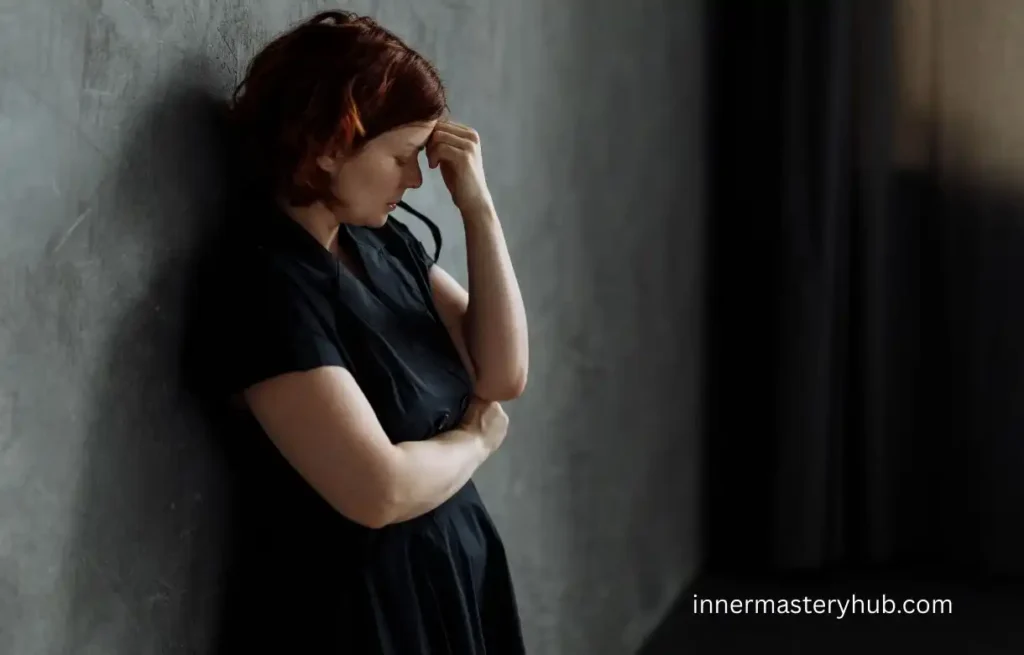
When someone experiences anxiety despite their calm exterior, it’s difficult to pinpoint the signs to watch for. These signs include subtle behaviors such as frequent fidgeting, shallow breathing, or difficulty sitting still. Individuals who appear calm but anxious beneath the surface also have trouble concentrating and appear distracted, even in moments of apparent stillness. Look for these signs if you have been facing them for quite some time.
2. Create Space for Open Conversations
Make Room for Honest Discussions. Talking about anxiety is one of the best strategies to deal with it. Because they are afraid of being judged or believe their anxiety isn’t “bad enough” to be taken seriously, many people who appear to be calm may not open up.
Have an environment where people can freely talk about their mental health without worrying about being stigmatized. The need to keep a controlled façade can be reduced by allowing friends, family, and coworkers to express their emotions in a safe atmosphere. This fosters a sense of unity and gives them the impression that they are being heard. For those who are experiencing anxiety to get help without feeling embarrassed, it is indispensable that we as a society mainstream conversations about mental health.
3. Implement Relaxation Techniques
People who appear calm on the outside but are actually worried can benefit significantly from mindfulness practices. They can learn to control their anxiety before it becomes too much by pursuing mindfulness practices, which increase awareness of their inner states. Those who practice mindfulness are more likely to accept their feelings without passing judgment and to concentrate on the here and now.
Over time, people might stay grounded and experience reduced anxiety by incorporating everyday mindfulness practices such as meditation or deep breathing. One easy way to prevent anxious sensations from manifesting as physical symptoms, such as chest tightness or racing thoughts, is to acknowledge them as they arise.
4. Healthy Lifestyle Choices
Physical well-being is very important for mental health. Do regular exercise, take a balanced diet, and get adequate sleep to manage anxiety. Exercise, in particular, has been shown to release endorphins, which help improve mood and reduce stress. When combined with stress-management techniques, these lifestyle choices can greatly enhance a person’s ability to manage anxiety.
5. Set Boundaries
People who appear calm on the outside but nervous on the inside have trouble setting limits, and burnout and increased anxiety result from the intense need to please others. An important first step in anxiety management is establishing clear boundaries. This could entail declining more obligations or taking time off when necessary.
Another thing about controlling hidden anxiety is self-care. People can refuel and lower their stress levels by investing in relaxing activities like reading, working out, or spending time in nature. Maintaining one’s physical and emotional well-being requires self-care, which is not selfish.
6. Get Professional Help
Professional help, such as therapies like Cognitive Behavioral Therapy (CBT), can successfully treat anxiety. Through the identification and questioning of negative thought patterns, cognitive behavioral therapy (CBT) allows people to replace them with more realistic and balanced ones.
With high-functioning anxiety to appearing successful or composed on the outside, it doesn’t imply they do not need support. Through the development of coping mechanisms and anxiety management techniques, therapy helps people to be productive without compromising their well-being.
7. Supportive Relationships
Developing strong, supportive relationships is another vital aspect of anxiety management. Because they conceal their emotions, those who are anxious on the inside often feel alone. It can make a huge difference to have a family member or close friend who is sympathetic to their difficulties. Emotions can be expressed in supportive relationships without fear of judgment.
Strong social support can greatly lessen the effects of anxiety, according to research. It’s immensely comforting to know that there are people who care, whether that support comes from a close-knit group of friends or a therapy group.
What mistakes do people make when dealing with hidden anxiety?
Most people try to control anxiety intellectually while ignoring the emotional and nervous system patterns underneath it.
This creates frustration because anxiety is rarely solved through self-criticism or over-analysis.
1. Calling yourself “too sensitive.”
You may judge yourself for feeling deeply instead of understanding the protective function underneath the anxiety.
2. Staying constantly productive
Many people use achievement to outrun emotional discomfort.
Busyness becomes emotional avoidance.
3. Overconsuming self-help advice
You keep searching for the “perfect mindset” while your nervous system remains exhausted.
4. Suppressing emotions
You avoid expressing fear, sadness, anger, or needs because emotional exposure feels unsafe.
5. Believing a calm appearance means emotional health
Functioning is not the same as feeling safe internally.
This misunderstanding keeps many people stuck.
Can relationships make hidden anxiety worse?
Yes. Relationships activate hidden anxiety because emotional closeness increases vulnerability, uncertainty, and fear of emotional loss.
This is especially true for people with:
- anxious attachment
- emotional abandonment wounds
- trauma bonding patterns
- fear of rejection
- emotional inconsistency history
You may appear calm in relationships externally while analyzing everything internally.
Example
A partner becomes quiet for a few hours.
Externally, you stay normal. Internally, your mind races:
- Did I do something wrong?
- Are they pulling away?
- Should I message again?
- What if they stop caring?
This is not a weakness. It is a nervous system trained around emotional unpredictability.
Research on attachment theory by Bowlby and subsequent attachment researchers has found that early relational experiences strongly influence adult emotional regulation and relationship anxiety5.
How does emotional suppression increase anxiety?
Suppressing emotions keeps the nervous system activated because the body continues holding unresolved emotional energy internally.
When emotions are repeatedly ignored, minimized, or hidden, the body does not simply “move on.”
Instead, emotional activation stays stored physiologically.
You may notice:
- tension headaches
- emotional numbness
- irritability
- panic during stillness
- inability to relax deeply
- emotional burnout
Research published in Psychological Science found that emotional suppression increases physiological stress responses rather than reducing them.
Framework Breakdown
Trigger
An emotionally uncomfortable moment occurs.
Interpretation
Your brain decides that emotional expression feels unsafe.
Emotion
Fear, shame, sadness, or anxiety rise internally.
Consequence
You suppress the emotion externally while your nervous system stays activated internally.
Over time, this becomes automatic.
Why do quite anxious people feel lonely?
People usually respond to visible distress, while hidden anxiety remains unseen and unsupported.
Many people around you may think:
- You seem fine.
- You’re strong.
- You handle things well.
Meanwhile, internally, you may feel emotionally overwhelmed and deeply misunderstood.
This creates emotional isolation.
You become surrounded by people while still feeling unseen.
That loneliness becomes heavier because you may also struggle to ask for support directly.
Breaking the Cycle For People Who Are Anxious Underneath
The concept of being “seemingly calm but anxious underneath” is more common than we realize. People who appear to be calm sometimes carry anxiety in ways that are not immediately visible to others. This hidden anxiety impacts mental and physical health, but the good news is that it is manageable.
Create spaces for open conversation, practicing mindfulness, seeking professional help, setting boundaries, and cultivating supportive relationships, and you can break the cycle of hiding anxiety. Looking calm on the outside doesn’t necessarily mean someone is at peace on the inside, either. If you or someone you know is struggling with anxiety, remember that help is available. You don’t have to face it alone.
People Also Ask
What does “seemingly calm but anxious underneath” mean?
It describes people who appear to be calm on the outside but are anxious on the inside. This happens in high-functioning anxiety, where an outward calmness hides underlying stress.
How can I tell if someone is anxious underneath?
Overanalyzing, perfectionism, restlessness, and trouble relaxing are symptoms. These people typically conceal their feelings to appear calm.
What is high-functioning anxiety?
High-functioning anxiety describes people who remain productive and socially functional despite ongoing internal anxiety. They often appear successful, organized, and emotionally controlled while privately experiencing stress, perfectionism, and emotional exhaustion.
- American Psychological Association. Stress Effects on the Body
APA Stress Research ↩︎ - Harvard Medical School — Understanding Anxiety Disorders
Harvard Health Anxiety Overview ↩︎ - Van der Kolk, B. (2006). Clinical implications of neuroscience research in PTSD. Annals of the New York Academy of Sciences.
Research Overview ↩︎ - LeDoux, J. (1996). The Emotional Brain: The Mysterious Underpinnings of Emotional Life.
Book Reference ↩︎ - Bowlby, J. (1969). Attachment and Loss: Vol. 1. Attachment. Basic Books.
Attachment Theory Reference ↩︎
Written By Mehwish Qurayshi
Mehwish Qurayshi is a Trauma-Informed Emotional Wellness Counsellor trained through NICABM’s Treating Trauma Master Series, which includes NBCC-approved education in Trauma Treatment and Emotional Wellness & Emotional Intelligence – Sourcecode Academia. She has over five years of experience providing emotional wellness counselling, helping individuals heal from trauma, regulate emotions, and build healthy relationships.