
Why You May Pull Away Emotionally as an INTJ Woman

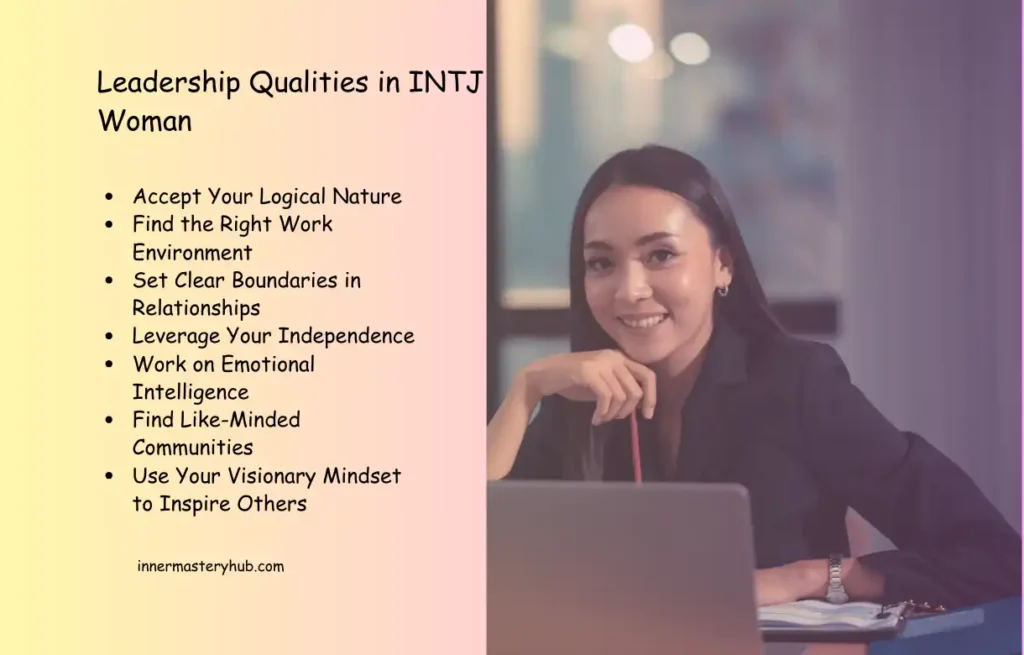
An INTJ woman may prefer thinking things through before speaking, making decisions independently, and spending time alone when she needs to concentrate. In the Myers-Briggs system, INTJ stands for Introversion, Intuition, Thinking, and Judging.
Some women who identify with INTJ preferences find it easier to solve practical problems than explain their feelings in the moment. Others may be direct in conversation or prefer having time to consider a decision.
These are personality preferences, not rules about how INTJ women behave. Stress, upbringing, relationships, and personal experiences can also affect how someone communicates and responds emotionally.
What Are the Common Traits of an INTJ Woman?
INTJ is one of the 16 personality types described by the Myers-Briggs Type Indicator (MBTI). Women who identify with this type may recognise some of the following preferences:
1. Preferring Time to Think Before Speaking
You may listen to a conversation, consider what others have said, and respond after you’ve formed an opinion. That doesn’t necessarily mean you’re shy or uninterested.
2. Making Decisions Independently
You may prefer researching your options and deciding for yourself rather than asking several people what they think. You can still value advice and accept help.
3. Thinking About Long-Term Plans
You may enjoy considering where a decision could lead, whether it’s choosing a career, managing money, or working toward a personal goal.
4. Looking for Logical Explanations
When something goes wrong, you may first want to understand what happened and how to address it. In emotional conversations, another person may want comfort before discussing solutions.
5. Being Direct in Conversations
You may say what you think without adding much explanation. Sometimes others appreciate that clarity; sometimes they may misunderstand your tone.
6. Enjoying Privacy
You may prefer sharing personal experiences with a few trusted people rather than discussing them openly with everyone.
7. Needing Time After Emotional Conversations
When a discussion becomes upsetting, you may want some quiet before responding. Taking time can be helpful when you eventually return to address the issue.
8. Valuing Competence and Preparation
You may enjoy understanding how things work, improving a skill, or preparing carefully before taking on a challenging task.
These preferences are not exclusive to INTJ women. They also aren’t a psychological diagnosis or a reliable way to predict an individual’s behaviour.
What Might Make You Pull Back Emotionally?
You may sometimes notice yourself becoming quieter when a conversation feels emotionally intense. Instead of responding right away, you might need a little time to understand what you’re feeling and decide what you actually want to say.
For some people, thinking privately feels easier than processing everything out loud. You may prefer to reflect first, especially when you feel misunderstood, pressured, emotionally tired, or unsure how to explain what is happening inside.
| What you might notice | A question worth asking yourself |
|---|---|
| You want time alone after an emotional conversation | Does the space help you return feeling clearer? |
| You prefer solving problems yourself | Can you still ask for support when you need it? |
| You think before expressing emotion | Can you eventually share what matters with people you trust? |
| Planning helps you feel settled | Can you adjust when things don’t go as expected? |
Taking space is not automatically a sign that you are shutting someone out. Sometimes, a pause gives you room to settle, sort through your thoughts, and return to the conversation with more clarity.
You might be more likely to pull back when:
- too much is happening at once
- you are unsure how to put your feelings into words
- you expect the conversation to become more intense
- you feel misunderstood or rushed to respond
- you are socially or emotionally tired
- being vulnerable feels uncomfortable in that particular relationship
Your reasons may be different in different situations. Your INTJ preferences don’t explain all of this, but your relationships, past experiences, boundaries, stress level, and sense of emotional safety may matter too.
A more helpful question than “Why am I withdrawing?” can be:
“What is this space helping me do right now?”
Building a little more emotional awareness can make that question easier to answer.
Sometimes the answer may be that you need a little quiet to think and come back feeling steadier. Other times, you may notice you keep avoiding a conversation you actually want to have.
When pulling back becomes a repeated pattern, misunderstandings can develop. The other person may not know whether you need an hour, a day, reassurance, or simply some quiet. You may also find it harder to explain what you need if too much time passes.
If you do need space, you can still protect the connection. A simple sentence such as, “I need some time to think, but I want to come back to this,” can communicate both your need for quiet and your intention to reconnect.
Being emotionally private does not mean you care less. What matters more is whether your quiet gives you room to understand yourself and return to the people and conversations that matter to you.
Independence, Privacy and Receiving Support
An INTJ woman may prefer handling things on her own, especially when she already knows what needs to be done. She might research a problem, make a plan, and try to solve it before asking anyone for help.
There is nothing wrong with enjoying independence. What I pay attention to is what happens when someone offers support.
For example, a woman may have a difficult week at work but tell her partner everything is fine. When he offers to help, she says, “I’ll manage,” even though she is exhausted. She may appreciate the offer but feel uncomfortable letting someone else take over.
Sometimes she simply wants privacy. Other times, she may worry that asking for help will make her seem incapable or create expectations she doesn’t want.
Research by Ognibene and Collins (1998) examined attachment styles and support-seeking in 81 young adults. Participants with secure attachment reported more available support and were more likely to seek help during stress. Those with dismissing or fearful attachment patterns were generally less likely to seek support.1
This research was about attachment patterns, not INTJ personality types. It helps explain why people can differ in how comfortable they feel asking for help.
For some women, the difficulty is not managing responsibilities independently. It is finding it hard to accept help even when they want it.
If that sounds familiar, the experiences discussed in emotionally guarded people may help you examine why sharing personal concerns sometimes feels uncomfortable.
You can enjoy your privacy while telling someone, “I’ve had a rough day. I don’t need you to fix anything, but I’d like some company.”
You don’t have to share every feeling or accept every offer. You can decide when you’d rather manage something yourself and when having someone beside you would be welcome.
How INTJ Women May Show Care in Relationships
Some INTJ women may find it easier to show affection through actions than through long emotional conversations.
For example, your partner mentions that he has an important meeting coming up. You help him prepare, remember the date, or check in afterward to see how it went.
Or a friend tells you she is struggling with a decision. You listen, ask questions, and help her compare the options.
You may see these things as ordinary ways of caring. But the other person might be hoping for a hug, reassurance, or simply someone to listen without suggesting a solution.
I’ve noticed that misunderstandings can happen when someone offers practical help while the other person wants to talk about how they feel.
You might think you’re being helpful because you’re trying to solve the problem. Your partner may wonder why you’re moving straight to solutions instead of acknowledging that they’re upset.
Research reviewed by Simpson and Rholes (2017) suggests that adult attachment patterns can influence how people seek and respond to support during stressful situations. However, the research does not show that INTJ women express affection differently because of their personality type.2
If these situations come up often, learning more about intellectual intimacy may help you recognise how conversations, shared interests, and understanding each other’s thinking can be part of closeness.
Sometimes the simplest approach is to ask:
“Do you want me to help you work this out, or would you rather I just listen?”
You can still offer practical help when it is wanted. And if explaining your feelings takes time, you can say that without leaving the other person guessing.
Being thoughtful, remembering small details, helping with responsibilities, or making time for someone can all show care. But when a partner needs reassurance, it helps to say what you feel as well as show it through what you do.

Why Quiet or Direct Communication Can Be Misunderstood
An INTJ woman may prefer listening before speaking or giving a straightforward answer without explaining every detail. She might feel comfortable with this way of communicating, but other people may interpret it differently.
For example, during a group conversation, you listen while everyone shares their opinions. You speak only when you have something to add. Later, someone asks why you seemed uninterested, even though you were paying attention the whole time.
Something similar can happen when you’re direct.
A friend asks what you think about a decision. You point out a problem they haven’t considered. You believe you’re being helpful, but your friend feels criticised because they were hoping for encouragement.
In my experience, these misunderstandings often become clearer when people talk about what they expected from the conversation. Someone may want an opinion, while another person may simply want to feel heard.
Research by Hentschel et al. (2019) found that gender stereotypes continue to associate women more strongly with warmth and communal qualities. These expectations may influence how people interpret a woman’s communication, although the study did not specifically examine INTJ women.3
You may sometimes feel pressure to sound friendlier, explain yourself more, or join conversations when you’d rather listen. If this happens frequently, our article on introverted women in emotional relationships explores similar communication differences.
You don’t need to change how you naturally communicate. But when you notice someone has misunderstood you, a little explanation may help.
For example, you could say, “I’m listening. I’m just thinking about what you’ve said,” or “I wasn’t trying to criticise you. I thought you wanted my opinion.”
It also helps to notice how the other person responds. If they explain what bothered them, you can discuss it. If they repeatedly treat your quietness as rejection or your honesty as an attack, you may need a longer conversation about how you both prefer to communicate.
INTJ Woman vs INFJ Woman: What’s the Difference?
INTJ and INFJ women share Introversion, Intuition, and Judging. The main difference is Thinking (T) and Feeling (F).
In MBTI, Thinking and Feeling describe how you tend to make decisions. Thinking gives more weight to logic and consistency, while Feeling gives more weight to values and people.[8]
| Area | INTJ Woman | INFJ Woman |
|---|
| Decision-making | May focus first on logic, consistency, and what makes sense.[8] | May focus more on values, relationships, and how a choice affects people.[9] |
| Communication | Often more direct and matter-of-fact.[8] | Often more focused on tone, harmony, and understanding. |
| Helping someone | May offer solutions or practical help. | May focus more on listening and emotional support.[9] |
| Conflict | May prefer to address the issue directly.[8] | May focus more on understanding both sides and reducing tension.[8] |
Thinking does not mean “without feelings,” and Feeling does not mean “without logic.”4
Your MBTI type may describe some preferences, but it does not explain every emotional or relationship pattern.5
INTJ Preferences vs Attachment Patterns
MBTI preferences and attachment patterns describe different things. Identifying as an INTJ does not tell you whether you have a secure, anxious, avoidant, or other attachment pattern.
Research on adult attachment suggests that attachment anxiety and avoidance can influence how people respond when relationships feel stressful.[9] People higher in attachment avoidance, for example, may be more likely to create emotional distance or rely on themselves during distress, while people higher in attachment anxiety may become more concerned about closeness, reassurance, or a partner’s availability.[6]
These are patterns rather than fixed identities, and they should not be used to diagnose yourself from a personality type.
Instead, you might notice what happens when closeness feels emotionally demanding.
- Do you ask for reassurance?
- Do you want more distance?
- Do you find it difficult to explain what you need?
- Or can you take some space and return when you feel ready?
Those questions may tell you more about your relationship pattern than an INTJ label alone.
What matters is not fitting perfectly into a personality or attachment category. It is developing enough emotional flexibility to communicate your needs while also making room for the needs of the person you care about.
How to Communicate Your Needs More Clearly
If thinking things through helps you make sense of what you feel, there is no reason to give that up. You can use the same thoughtful side of yourself to notice what happened, what bothered you, and what you need next.
Not every feeling needs to be solved straight away. Sometimes it helps just to name what is there before deciding what to do about it.
Take Space Without Leaving People Guessing
You may need time before you can talk clearly about something difficult.
That is fine. The important part is letting the other person know what your silence means.
You can simply say:
“I need some time to think about this, but I do want to come back to it.”
That gives you breathing room without making the other person wonder whether you are shutting them out.
Say What You Need More Clearly
You may know exactly what feels uncomfortable, but still find it hard to explain it in the moment.
Maybe you need a quieter conversation. Maybe you need time before answering. Maybe you need someone to listen without pushing you for a quick response.
Try saying the need plainly.
“I want to talk about this, but I need a little time first.”
Clear communication can make emotional situations feel less exhausting.
Notice the Feeling Before Looking for the Solution
If you are used to fixing problems, you may do the same thing with emotions.
You might immediately ask, “What caused this?” or “How do I fix it?”
Sometimes a better first question is:
“What am I feeling right now?”
It could be disappointment, anger, embarrassment, sadness, fear, or simply confusion.
You do not need the perfect answer. Even noticing the feeling can make it easier to understand what you need.
Let Other People Help Sometimes
You can be independent and still accept support.
That might mean telling someone you had a rough day, asking a trusted person to listen, or accepting help instead of automatically saying, “I’ve got it.”
You do not have to share everything. Start with what feels comfortable.
Over time, you may find that relying on someone in small ways does not take away your independence.
Make Room for More Than One Response
Some days you may need space. Other days you may want reassurance or company.
You do not have to respond the same way every time.
You can think things through on your own and still talk when you are ready. You can be private without cutting yourself off. You can ask for help without becoming dependent on someone else.
What matters is having enough room to respond in the way that fits the situation, rather than feeling that you always have to handle everything alone.
Key Takeaways
- You may understand your feelings better after some quiet time.
- Taking space can sometimes help you settle before returning to a difficult conversation.
- Being emotionally private doesn’t mean you don’t care.
- Past relationship experiences may affect how comfortable support or vulnerability feels.
- The important question is whether your space helps you reconnect or keeps you isolated.
Final Thoughts
Being an INTJ woman doesn’t explain everything about the way you feel or relate to people.
You may need time before talking about something personal. You may prefer to think things through on your own, or keep some feelings private until you are ready to share them.
That does not mean you are cold or distant.
What matters is how those habits affect you. If taking space helps you come back feeling clearer, it can be helpful. If you often want support but still find yourself pulling away, that may be something worth noticing.
You can be independent and still want closeness. You can think logically and still feel deeply. And you do not have to force yourself to express emotions in a way that does not feel natural to you.
Frequently Asked Questions
Why might an INTJ woman go quiet during conflict?
You may need some time before you know what you want to say. If the conversation feels intense, answering straight away can feel harder.
Taking a little space can help you think more clearly. The important part is coming back to the conversation instead of leaving it unresolved.
Are INTJ women emotionally unavailable?
Not always.
You can be private with your feelings and still care deeply about people. You may simply need more time to open up or prefer showing care through actions rather than constant reassurance.
If you want closeness but keep pulling away even when you do not want to, there may be more going on than personality type alone.
Why might an INTJ woman feel misunderstood in relationships?
Sometimes your way of communicating may be different from what your partner expects.
You may want time to think, while they want an answer straight away. You may offer a solution when they were hoping to be heard. Or you may go quiet when they want more reassurance.
A lot of the confusion can come from not knowing what the other person needs in that moment.
Can childhood emotional invalidation affect how you express feelings as an adult?
It can play a part, but it is not specific to INTJ women.
Research has found links between recalled childhood emotional invalidation and more difficulty expressing feelings later in life.[3]
That does not mean your childhood decides how you will relate to people now. It is one part of the picture, alongside your personality, relationships, culture, and later experiences.
How Rare Is an INTJ Woman?
INTJ is generally described as an uncommon MBTI preference combination among women. The Myers-Briggs Company has reported estimates around 2.2% in its global figures, although percentages depend on the population and assessment data used.
Being uncommon doesn’t mean INTJ women all behave alike or have particular emotional difficulties.
- Ognibene, T. C., & Collins, N. L. (1998). Adult attachment styles, perceived social support and coping strategies. Journal of Social and Personal Relationships, 15(3), 323–345. https://doi.org/10.1177/0265407598153002 ↩︎
- Simpson, J. A., & Rholes, W. S. (2017). Adult attachment, stress, and romantic relationships. Current Opinion in Psychology, 13, 19–24. https://doi.org/10.1016/j.copsyc.2016.04.006 ↩︎
- Hentschel, T., Heilman, M. E., & Peus, C. V. (2019). The multiple dimensions of gender stereotypes: A current look at men’s and women’s characterizations of others and themselves. Frontiers in Psychology, 10, Article 11. https://doi.org/10.3389/fpsyg.2019.00011 ↩︎
- Myers & Briggs Foundation. (n.d.). The preferences: Extraversion–Introversion, Sensing–Intuition, Thinking–Feeling, Judging–Perceiving. Myers & Briggs Foundation. https://www.myersbriggs.org/my-mbti-personality-type/the-mbti-preferences/ ↩︎
- The Myers-Briggs Company. (n.d.). INFJ relationships: The Insightful Visionary. MBTIonline. https://www.mbtionline.com/mbti-types/infj/relationships ↩︎
- Simpson, J. A., & Rholes, W. S. (2017). Adult attachment, stress, and romantic relationships. Current Opinion in Psychology, 13, 19–24. https://doi.org/10.1016/j.copsyc.2016.04.006 ↩︎
Written By Mehwish Qurayshi
Mehwish Qurayshi is a Trauma-Informed Emotional Wellness Counsellor trained through NICABM’s Treating Trauma Master Series, which includes NBCC-approved education in Trauma Treatment and Emotional Wellness & Emotional Intelligence – Sourcecode Academia. She has over five years of experience providing emotional wellness counselling, helping individuals heal from trauma, regulate emotions, and build healthy relationships.