
Why Modern Life Starves Us of Connection

Sandy walks past the fresh produce aisle. She hesitates for a second and glances at the grocery store employee next to her. He’s packing the rest of the fruit.
She says, “Hi, can you hand me that one?” while pointing at the orange in front of him. He smiles gently. Reaches over and places it in her waiting hand.
Fingertips brush against each other. His fingers feel warm to the touch and connection. Her body reacts. Static electricity. Euphoria. A free thrill.
Romance has nothing to do with it. The brief exchange is an intimacy of a different kind; the only physical contact she’s had with a person in the past week.
The urge to be seen, touched, and regarded is what brings her to the grocery store every Wednesday. It’s called connection, and modern life is increasingly starving us of it.
We’re Surrounded, But Isolated
From the outside, it looks like we’re constantly interacting. Most of that interaction? It’s shallow.
Psychology Today explains that modern lifestyles can reduce meaningful, face-to-face interaction, which is essential for emotional bonding.
Social media gives the illusion of closeness. And yet, liking a post isn’t the same as sitting across from someone and being fully present.
Conversations have changed. Quick replies. Short texts. Multitasking. They replace pointed exchanges. Over time, it shows.
We’re Starved of Touch
Connection is physical, too.
Humans are wired for touch. A hug. A handshake. A hand on your shoulder can regulate stress and improve mood. Without it, something feels off.
While writing for The New York Times, Christina Caron describes “touch starvation” (also called skin hunger) as a growing issue. It’s particularly common among people who live alone or spend long hours online.
Likewise, Verywell Mind reports that a lack of physical touch can increase anxiety, depression, and feelings of isolation.
It’s biological. When touch disappears from daily life, the body notices.
The Emotional Impact Is Real
Loneliness is uncomfortable and affects mental and physical health.
According to Humans Connecting, strong social bonds are essential for emotional well-being, resilience, and longevity. And people are feeling the gap.
Online forums openly talk about how difficult it has become to form genuine relationships in modern society. That sense of shared struggle is telling.
This isn’t an individual problem. It’s a cultural issue.
Healthcare Is Feeling the Disconnect
The impact of disconnection is showing up in places you might not expect, like healthcare.
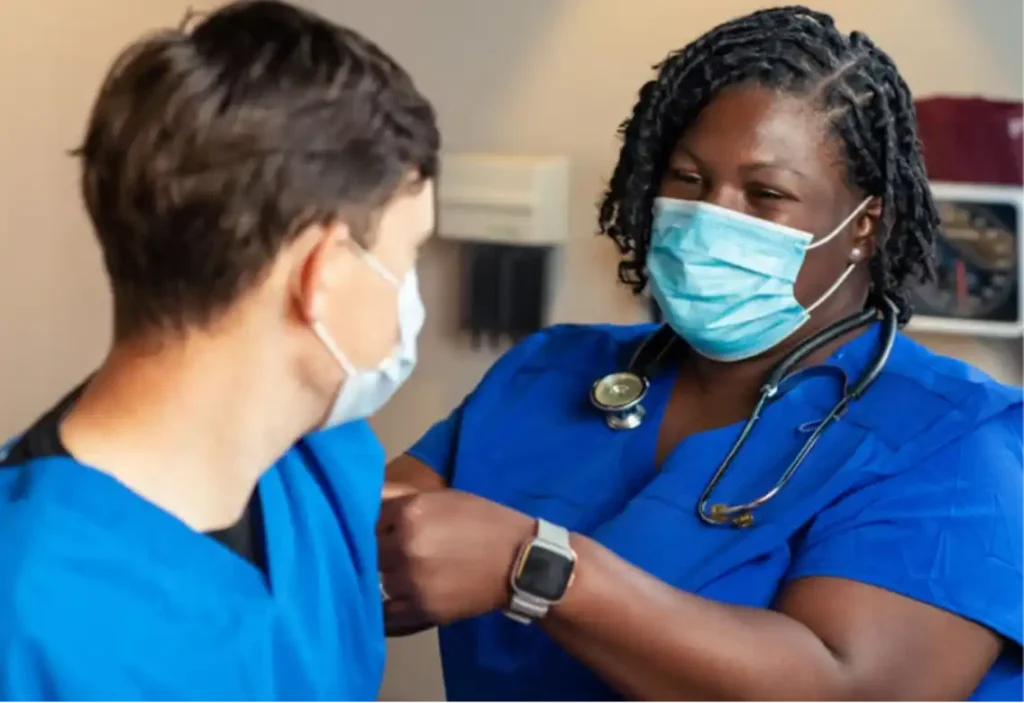
Human connection plays a critical role in patient care, influencing trust, communication, and outcomes. Patients need to feel seen and heard.
That’s why training pathways such as psychiatric nurse practitioner programs emphasize relationship-building, empathy, and communication. Many nursing professionals choose psychiatric nurse practitioner schools online to acquire this credential.
Accredited PMHNP programs improve on these soft skills, the very skills that many people lack. Cleveland State University says that nursing students, once graduated, are equipped to provide services in mental healthcare settings.
We’re Losing Practice at Being Human Together
Connection is a skill, and like any skill, it weakens when we don’t use it.
When most interactions happen through screens, we lose:
- Nonverbal cues
- Emotional nuance
- The ability to sit with discomfort
A young writer’s musings shared on Medium point out that modern isolation isn’t always about being alone. It’s about lacking meaningful engagement.
Even when we’re around others, we can feel disconnected. That’s a different kind of loneliness. And a harder one to explain.
We’re Busier, Not Closer
Another contradiction: we’re constantly busy, but not necessarily connected.
Work demands, side hustles, and digital distractions fill up time that might otherwise go toward nurturing relationships.
Younger generations, despite being digitally connected, are experiencing declines in meaningful social interaction.
It’s not that people don’t want connection. Modern life doesn’t make it easy to prioritize.
Connection Is Still Within Reach
Humans haven’t lost the ability to connect. We’ve just changed the environments that support it.
Small shifts can make a difference:
- Prioritizing in-person time
- Being fully present in conversations
- Reintroducing physical connection where appropriate
- Slowing down enough to engage meaningfully
Even cultural conversations are starting to reflect an awareness of the need for deeper connection. People are noticing what’s missing. And that awareness is the needle drop.
We’re Built for Connection
Modern life didn’t set out to isolate us. It is optimized for speed, convenience, and efficiency. In doing so, it removed many of the natural touchpoints that once supported human connection.
Now we’re left with a choice: Keep moving faster or start reconnecting intentionally. For that very reason, connection isn’t a nice-to-have. It’s something we’re built for.
Written By Mehwish Qurayshi
Mehwish Qurayshi is a Trauma-Informed Emotional Wellness Counsellor trained through NICABM’s Treating Trauma Master Series, which includes NBCC-approved education in Trauma Treatment and Emotional Wellness & Emotional Intelligence – Sourcecode Academia. She has over five years of experience providing emotional wellness counselling, helping individuals heal from trauma, regulate emotions, and build healthy relationships.