
12 Signs of Emotionally Guarded People (and What They Look Like)


Title
An emotionally guarded person tends to limit what they reveal about their feelings, needs, or vulnerabilities. You might notice this in everyday behavior: keeping personal conversations brief, taking a long time to trust, saying “I’m fine” when upset, or pulling back when a relationship becomes more personal.
You can care about someone and still find it difficult to let them see when you’re hurt.
You might listen closely when other people talk about their problems, but answer “I’m fine” when they ask about yours. You may rewrite a personal message several times before sending it, change the subject when a conversation gets too close, or need months before telling someone something important about yourself.
These behaviours are often described as being emotionally guarded.
Being guarded does not tell us why someone behaves this way. Past hurt, difficult relationships, family experiences, fear of rejection, personality, current stress, or simply a privacy preference may all be relevant. Trauma can be part of the picture for some people, but it should not be assumed from guarded behaviour alone.
From an emotional regulation perspective, the useful question is not “Why am I like this?” but what happens in specific moments. Do you say you’re fine when you’re angry? Pull away instead of saying you need reassurance? Stay silent because you need time to work out what you want to say?
Those moments give you something concrete to notice, and something you can begin to handle differently if the pattern is getting in the way of your relationships.
What does it mean to be emotionally guarded?
Being emotionally guarded means holding back feelings, needs, or personal information that you do not feel ready to share.
You may talk easily about work, films, family news, or weekend plans. Then someone asks:
“What are you worried about?”
You laugh it off, give a short answer, or change the subject.
The same thing can happen in a relationship. Your partner says something that hurts you. Instead of saying, “That bothered me,” you answer, “It’s fine.” A friend offers help, and you say you can handle it, even though part of you wanted to accept.
None of these behaviours, by itself, tells us why someone is emotionally guarded. One person may simply prefer privacy. Another may take longer to trust after being criticised, rejected, let down, or hurt in a previous relationship. For some people, trauma may also be part of that history.
The pattern becomes easier to notice in what you do: you want to explain why you’re upset but say nothing, you need help but don’t ask, or you start getting close to someone and then share less rather than more.
How can being emotionally guarded affect connection?
Being careful about what you share does not automatically make relationships difficult. Problems are more likely when the other person repeatedly has to guess what you feel or need.
For example, your partner asks:
“Are you upset with me?”
You are upset, but you say:
“No, I’m fine.”
Later, you become quieter or reply less. You know something is wrong, but your partner only knows what you have told them.
Or a friend asks whether you need help. You want to say yes, but you answer:
“I’ve got it.”
These small moments can add up. You may care about the relationship while still finding it difficult to say “That hurt me,” “I need some reassurance,” or “Can we talk about what happened?”
Research links higher attachment avoidance with discomfort around emotional closeness, greater emotional deactivation, and less willingness to seek support. However, emotionally guarded behaviour alone is not enough to identify someone as having an avoidant attachment style.[1]
In everyday relationships, a more useful thing to notice is what happens after you hold something back: Do you come back and talk about it later, or does the other person continue having to guess?
Are emotionally guarded people emotionally unavailable?
Not necessarily. Being emotionally guarded and being emotionally unavailable are not the same thing, although the behaviours can sometimes look similar.
Someone who is guarded may take a long time to talk about personal feelings. For example, after an argument, they might say:
“I need some time to think about this.”
What happens next tells you more. They may return later and explain what upset them, listen to your side, and continue the conversation.
In another relationship, someone may repeatedly avoid the conversation altogether. They change the subject when feelings come up, dismiss requests to talk, or disappear for days after conflict.
From the outside, both people may initially seem distant. But one is taking time before opening up; the other is repeatedly leaving important parts of the relationship unaddressed.
Being quiet, private, or slow to trust does not tell you how deeply someone feels. Look instead at what they do over time: Can they tell you when something is wrong? Can they listen when you bring up a difficult subject? Do they return to conversations after asking for space?
Research on emotional suppression helps explain why this matters. Suppressing the outward expression of emotion can reduce what other people can see without necessarily reducing the emotional experience itself. Research has also linked suppression with social and physiological costs during interaction (Gross, 2002).[2]
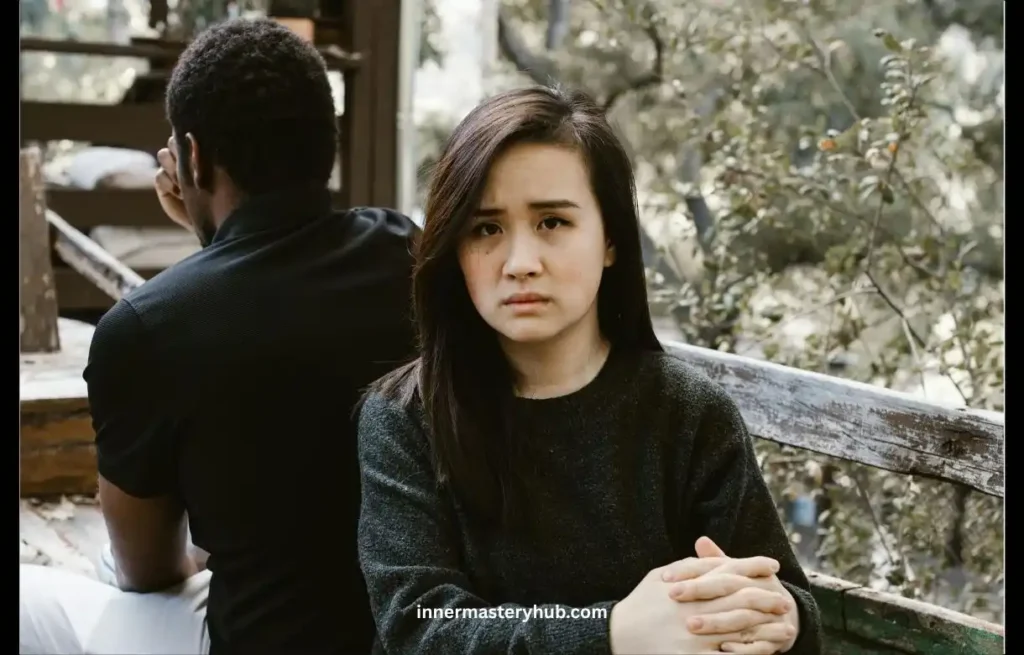
12 Signs of an Emotionally Guarded Person
Being emotionally guarded is easier to recognise in repeated behaviour than in assumptions about what someone feels inside.
One person may be naturally private. Another may become quieter after being criticised or hurt. Someone else may talk openly with close friends but become guarded during conflict.
So instead of treating any one behaviour as proof, look at what happens repeatedly.
1. You edit what you really want to say
Someone asks:
“Did what I said upset you?”
Your first thought is, “Yes, it did.”
But you answer:
“No, we’re good.”
Or you type a personal message, reread it several times, remove the sentence that says how you actually feel, and send the safer version.
Pausing before speaking can be useful for emotional regulation. The difficulty comes when you repeatedly leave out the information another person would need to understand you.
2. You take longer to share personal things
You can spend hours with someone and still reveal very little about what worries you, what you need, or what has been difficult lately.
A new friend tells you something personal. You listen, ask questions, and support them. When they ask about you, your answer is:
“Nothing much. Same old stuff.”
Taking time to trust someone is not automatically unhealthy. What is worth noticing is whether you want to share but repeatedly stop yourself.
3. You change the subject when conversations become personal
You are comfortable talking about work, plans, films, or other people.
Then someone asks:
“How did you actually feel when that happened?”
You make a joke.
You give a one-word answer.
You ask them a question instead.
Or suddenly there is something in the kitchen that urgently needs doing.
Changing the subject once means very little. Doing it almost every time a conversation turns toward your own feelings is more noticeable.
4. You read heavily into small changes
A friend normally ends messages with a heart. Today they don’t.
Your partner’s reply is shorter than usual.
Someone takes three hours to text back.
You may find yourself rereading the message, checking the previous conversation, or wondering whether you said something wrong.
Sometimes a change in tone really does mean something. Sometimes the person is simply busy, tired, distracted, or typing quickly. The useful question is whether you have enough information to know which explanation is true.
5. You find it easier to help than to ask for help
A friend calls you at midnight, and you stay on the phone with them.
A week later, you’re having a difficult day yourself.
They ask:
“Do you want to talk?”
You answer:
“No, I’m okay.”
You may be comfortable being dependable while feeling much less comfortable being the person who needs something.
That can show up in small ways too: refusing a lift when you need one, saying you can manage a task alone, or waiting until a problem becomes much harder before telling anyone about it.
6. You pull back after getting closer to someone
You have several personal conversations with someone and enjoy them.
Then you notice yourself replying less.
You stop initiating plans.
You keep the next few conversations lighter.
This does not automatically mean closeness frightened you. Interest can change, people get busy, and relationships naturally move at different speeds.
But if you repeatedly enjoy getting close to someone and then create distance once the relationship becomes more personal, that pattern is worth noticing.
Research on adult attachment shows that attachment anxiety and attachment avoidance can affect how people think, feel, and behave during stressful relationship situations.[3]
7. You stay silent instead of explaining what hurt
Someone says something that bothers you.
Later they ask:
“You’ve been quiet. Is something wrong?”
You say:
“It’s fine.”
But it isn’t.
Maybe you cannot find the words yet. Maybe you expect the conversation to become an argument. Maybe you simply need more time.
Whatever the reason, the other person cannot respond to something they have not been told.
A more useful sign of emotional regulation is not whether you can discuss everything immediately. It is whether you can return later and say:
“I wasn’t ready to talk earlier, but I want to explain what bothered me.”
8. You hide needs you don’t want other people to see
You want reassurance but don’t ask for it.
You miss someone but wait for them to contact you first.
You need help but say:
“Don’t worry about me.”
You want your partner to stay but answer:
“Do whatever you want.”
The words you say and what you actually want can end up telling two different stories.
9. You try to handle difficult things alone
When something goes wrong, your first response may be:
“I’ll deal with it myself.”
You research the problem alone, make the decision alone, and tell people about it only after everything has been handled.
Independence can be a strength. It becomes more limiting when asking for reasonable support feels harder than carrying the whole problem yourself.
10. You put difficult feelings aside
You argue work and tell yourself:
“I don’t have time for this right now.”
That may be exactly what the situation requires.
The question is what happens later.
Do you return to what happened once you have time to think, or do you keep pushing the conversation to another day until nobody mentions it again?
Emotional regulation does not require discussing every feeling immediately. Sometimes it means choosing a better time to deal with it rather than avoiding it indefinitely.
11. You test people instead of asking directly
You want to know whether someone cares, but instead of asking, you stop messaging first to see whether they notice.
You are unsure whether your partner will support you, so you hint at the problem rather than saying:
“I need your help with this.”
You may learn something from watching how people behave. But indirect tests can also create situations where the other person does not know they are being tested.
A direct question often gives you better information.
12. You want closeness but sometimes create distance
You want someone to check on you, but tell them you need to be alone.
You want to resolve an argument, but leave their message unanswered for two days.
You want your friend to know you’re struggling, but keep saying:
“Everything’s fine.”
That does not prove that you fear intimacy or have a particular attachment style. The reason can differ from one person to another.
What you can observe is the gap between what you wanted from the interaction and what you actually did.
If you notice that gap repeatedly, start there. Instead of trying to become completely “open,” try one clearer response: “That upset me,” “I need some time, but I’ll come back to this,” or “I could actually use some help.”
A client example: pulling back instead of speaking up
One client I’ll call Lily noticed that starting relationships was not particularly difficult for her. The change usually came later, when conversations became more personal.
If someone asked how she was really doing, she often gave a short answer and moved on.
If a message made her uncomfortable, she might leave it unanswered for hours rather than say what bothered her.
And after a disagreement, she was more likely to become quieter than to say:
“I’m upset about what happened yesterday.”
At first, Lily described this as “protecting my peace.”
As we looked at specific situations together, a more useful question emerged: Was taking space helping her return to the conversation, or was the conversation simply never happening?
That distinction mattered in her relationships.
Taking an evening to think before replying sometimes helped her choose her words more carefully. But when days passed, and she never returned to the subject, the other person often had no idea what had happened.
For Lily, emotional regulation did not mean forcing herself to talk the moment she felt upset. A more workable change was learning to say:
“I don’t want to talk about this right now, but I don’t want to avoid it either. Can we come back to it tomorrow?”
That gave her time without leaving the other person to guess.
How does emotional guardedness affect relationships?
The difficulty is often not that you have fewer feelings. It’s that the other person has less information to work with.
You may think, “I’m upset, but I don’t want to make this a big thing,” and say nothing.
Your partner sees you become quieter and asks:
“Is something wrong?”
You answer:
“No.”
Now both of you are working with different information. You know you’re hurt; they only know you’ve become distant.
If this happens repeatedly, disagreements can remain unresolved, and both people may start making assumptions about what the other person means.
Taking time before talking is not necessarily a problem. A clearer alternative can be as simple as:
“Something is bothering me. I need a little time before I can explain it properly.”
You still get space, but the other person does not have to guess what your silence means.
Research on intimacy has found that emotional self-disclosure and a partner’s responsive reaction are part of how people experience interpersonal closeness.[4]
Research on emotional intelligence also adds useful context. A 2022 systematic review and meta-analysis covering 90 effect sizes from 78 samples found a positive association between emotional intelligence and romantic relationship satisfaction.[5]
That finding should not be reduced to “emotionally intelligent people have good relationships.”
In everyday behavior, the relevant skills are more concrete: noticing what you feel, recognising what another person may be feeling, communicating enough information to address a problem, and regulating a response without simply hiding it.
Is being emotionally guarded a trauma response?
It can be, but not always.
Some people become more guarded after trauma or relationships in which opening up was repeatedly followed by criticism, rejection, humiliation, or emotional neglect.
But being emotionally guarded by itself does not show that someone has experienced trauma.
A person may also be naturally private, take longer to trust people, have grown up in a family where feelings were rarely discussed, or simply feel uncomfortable opening up in a particular relationship.
This is why the behaviour matters more than trying to diagnose its cause from the outside.
For example, someone who grew up hearing “stop being so sensitive” may now hesitate before telling another person that a comment hurt. Someone else may behave in the same way for a completely different reason.
Attachment experiences can also influence how people approach closeness and relationships, but attachment theory should not be used to explain every instance of emotional guardedness.
Attachment experiences can also shape behavior during closeness and conflict. Research reviews link attachment insecurity with patterns that can interfere with relationship functioning, especially in stressful couple interactions.[3]
Can emotionally guarded people change?
Yes. Becoming less guarded does not mean telling everyone everything or forcing yourself to talk before you’re ready.
Often, the change is much smaller.
Instead of disappearing after an argument, you say:
“I need some time. I’ll message you tomorrow.”
Instead of “I’m fine,” you try:
“That did bother me, but I need a minute to work out why.”
Instead of hoping someone notices that you’re struggling, you ask:
“Can you help me with this?”
These responses still give you control over what you share and when you share it. The difference is that the other person receives enough information to respond to you.
If opening up brings intense distress, memories of trauma, or difficulties that are affecting your daily life or relationships, working through it with a qualified mental health professional may be more appropriate than trying to push yourself into greater vulnerability.
Conclusion
Being emotionally guarded can be as ordinary as deleting the honest sentence from a text, saying “I’m fine” when something hurt, refusing help you actually wanted, or becoming quieter after getting close to someone.
None of those behaviours tell us automatically whether the reason is personality, privacy, previous relationships, attachment experiences, trauma, or something else.
What matters is whether the way you communicate is working for you.
The next time you notice yourself holding something back, you do not have to tell the whole story. You could start with one accurate sentence:
“That bothered me.”
“I don’t know how to explain this yet.”
“I need some time, but I want to come back to this.”
“I could use some help.”
Being less guarded does not have to mean becoming less private. Sometimes it simply means making what you need a little easier for another person to understand.
FAQs About Emotionally Guarded People
Why are emotionally guarded people hard to read?
Emotionally guarded people may share less about what they feel or need, so other people have fewer clues about what is happening.
For example, someone may become quiet after a disagreement but still say “I’m fine” when asked about it. The other person can see the behaviour change but does not know what caused it unless they are told.
Do emotionally guarded people fall in love?
Yes. Being emotionally guarded does not mean someone is unable to fall in love.
A person can care about a partner while still finding some personal conversations difficult or taking longer to share certain feelings. How much someone talks about emotions is not, by itself, a measure of how much they care.
What causes someone to become emotionally guarded?
There is no single cause of emotional guardedness.
Some people are naturally private or slow to trust. For others, previous criticism, rejection, difficult relationships, family experiences, emotional neglect, or trauma may play a part.
The behaviour alone cannot tell you which explanation applies to a particular person.
How do you communicate with an emotionally guarded person?
Give them room to answer without trying to force a personal conversation.
Instead of saying “Why won’t you ever open up?”, you might ask:
“Do you want to talk about what happened, or would you rather have some time first?”
At the same time, being patient does not mean ignoring your own needs. If someone’s silence or withdrawal is affecting the relationship, you can say clearly what information or communication you need from them.
Do emotionally guarded people avoid relationships?
Not necessarily.
Some emotionally guarded people have close friendships and long-term romantic relationships. Others may find certain parts of a relationship, such as asking for help, discussing conflict, or sharing personal feelings, more difficult.
Being emotionally guarded should not be treated as proof that someone fears relationships or does not want closeness.
Can therapy help someone who is emotionally guarded?
Therapy may help when difficulty expressing feelings, trusting others, or discussing problems is causing distress or repeatedly affecting relationships.
A therapist can help you look at specific situations, for example, what happens when conflict begins or when you want to ask someone for support, without requiring you to disclose everything before you are ready.
If guardedness is connected with trauma or other significant mental health concerns, working with a suitably qualified mental health professional can also provide more individualised support.
- Mikulincer, M., & Shaver, P. R. (2019). Attachment orientations and emotion regulation. ↩︎
- Gross, J. J. (2002). Emotion regulation: Affective, cognitive, and social consequences. Psychophysiology, 39(3), 281–291. DOI: 10.1017/S0048577201393198. ↩︎
- Overall, N. C., Pietromonaco, P. R., & Simpson, J. A. (2022). Buffering and spillover of adult attachment insecurity in couple and family relationships. Nature Reviews Psychology, 1, 101–111. ↩︎
- Laurenceau, J.-P., Barrett, L. F., & Pietromonaco, P. R. (1998). Intimacy as an interpersonal process: The importance of self-disclosure, partner disclosure, and perceived partner responsiveness in interpersonal exchanges. Journal of Personality and Social Psychology, 74(5), 1238–1251. DOI: 10.1037/0022-3514.74.5.1238. ↩︎
- Jardine, B. B., Vannier, S., & Voyer, D. (2022). Emotional intelligence and romantic relationship satisfaction: A systematic review and meta-analysis. Personality and Individual Differences, 196, 111713. DOI: 10.1016/j.paid.2022.111713. ↩︎
Written By Mehwish Qurayshi
Mehwish Qurayshi is a Trauma-Informed Emotional Wellness Counsellor trained through NICABM’s Treating Trauma Master Series, which includes NBCC-approved education in Trauma Treatment and Emotional Wellness & Emotional Intelligence – Sourcecode Academia. She has over five years of experience providing emotional wellness counselling, helping individuals heal from trauma, regulate emotions, and build healthy relationships.