
10 Things Tight Knit Families Share That Keep Them Close Always
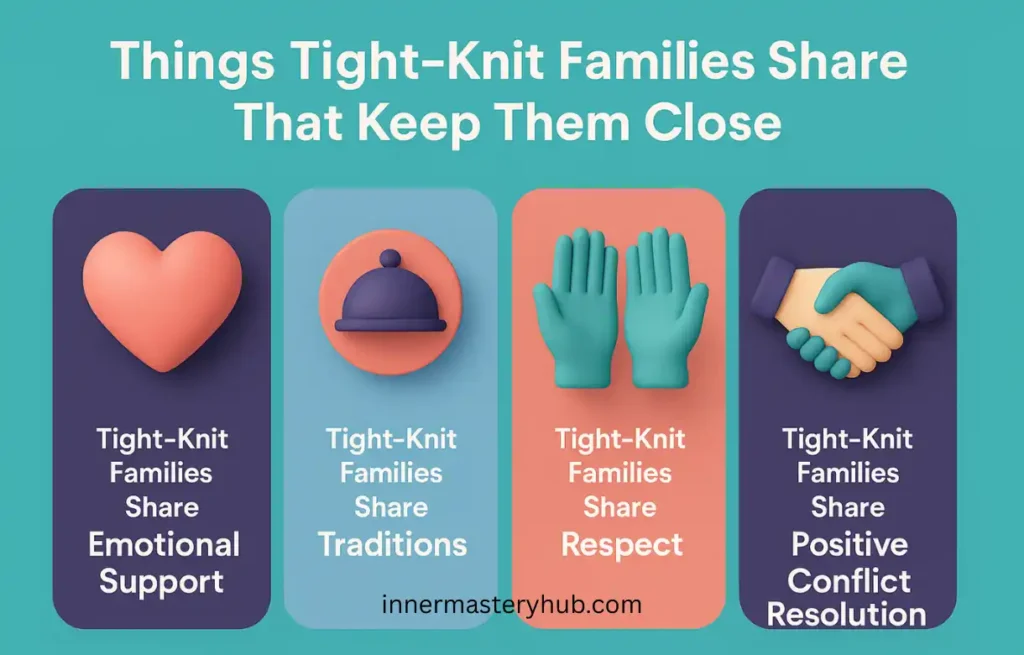
Tight knit families share strong emotional bonds, open communication, and deep trust. They support each other during challenges and celebrate successes together. Quality time, shared traditions, and mutual respect strengthen their connection. In close families, members feel valued, understood, and comfortable being themselves without fear of judgment.
You may have felt it, sitting at the dinner table, everyone on their phones, conversations fading. Closeness doesn’t disappear overnight. It fades quietly.
When you look at families that stay close through the years, you begin to notice the things tight knit families share, certain habits that make their bond feel almost unbreakable. If you have ever wondered why some families grow stronger while others drift apart, you are not alone. As someone who has spent years studying relationships and observing how families interact, I’ve seen how easily distance can creep in when life gets busy.
You may even feel that happening in your own home, everyone moving in different directions, conversations getting shorter, and connections beginning to fade. Yet families that stay close don’t avoid challenges. They build practices that help them hold on to each other even when life becomes complicated. These habits are not exclusive to a few lucky people. You can create them in your own home with intention and consistency.
1. Tight Knit Families Share Consistent Quality Time
Shared time is one of the best indicators of family connectedness. Families that regularly spend quality time together have lower levels of conflict and greater emotional stability, according to several studies published in the Journal of Marriage and Family1.
Spending time is essential, as you may well know, but finding it can be difficult. Meaningful moments are easily missed due to hectic work and school schedules and our reliance on phones. Before you know it, you haven’t had a meaningful discussion for a whole week.
Your home feels more cohesive again when you resume rituals like weekly family activities, shared meals, and nightly check-ins. Your family’s emotional foundation is built on these shared events. Even if life feels hectic, you will notice that small but consistent pockets of time can hugely shift the way everyone relates to each other.
This study found that increased parent-child quality time (e.g., singing, storytelling, shared meals) is strongly associated with higher levels of child flourishing, including attachment, resilience, learning, and contentment with life2.
2. Tight Knit Families Share Open and Honest Communication
When under hardship, families that communicate openly show more resilience. However, sincere communication is more difficult than it seems. Conversations at home may have become hurried, or you may find yourself avoiding particular subjects out of a fear of disagreement. Misunderstandings deepen, and emotional distance becomes apparent.
You establish a safe environment when you start talking openly, asking more in-depth questions, and listening without interjecting. Trust develops organically. When everyone feels heard, family interactions become considerably softer. You might be surprised. I’ve seen families change just by creating room for previously awkward conversations. Over time, communication becomes more about building intimacy than avoiding conflict.
3. Tight Knit Families Share Emotional Support
Emotional support in families improves mental health and builds long-term resilience, according to research from Harvard’s Centre on the Developing Child. However, providing emotional support is not always easy. You may fear that you won’t say the right thing or be unsure how to console someone you care about. Supporting others can feel strange in certain houses where emotions were never modelled as children.
However, providing emotional support begins with small gestures, such as checking in when someone appears quiet, encouraging them at trying times, or praising their efforts even when the outcome isn’t ideal. These actions eventually strengthen the idea that your house is a secure space for you to express yourself, grow, and feel. The family relationship strengthens when everyone feels they have a solid emotional foundation.
This research demonstrated that perceived family support significantly enhances emotional, social, and psychological well-being, emphasising how emphasis on and support systems promote individual mental health3.
4. Tight Knit Families Share Traditions and Rituals
Family customs include more than just sentimental pursuits. Research from Emory University shows that family rituals improve children’s long-term well-being and help them develop stronger identities. Thanks to rituals, everyone can consistently look forward to something that is specifically “yours”. Perhaps there are some childhood customs that you still find appealing. That acknowledgement alone demonstrates the strength of customs.
You can start with modest rituals, such as monthly game evenings, holiday routines, seasonal outings, or special meals, if your family doesn’t already have strong ones. Repetition and purpose are essential. Customs become emotional pillars, serving as a constant reminder to everyone that, despite life’s constant changes, some moments never change.
5. Tight Knit Families Share Respect and Healthy Boundaries
Although it may seem necessary, respect is often overlooked in day-to-day activities. You may have a great deal of respect for your family members, but you may not consistently demonstrate it. Mutual respect reduces conflict and strengthens long-term relationships in households. Boundaries are also important. Having clear boundaries helps everyone express their needs without feeling guilty, protects emotional space, and reduces resentment.
Giving everyone the freedom to express themselves, make mistakes, and develop at their own speed develops respect. Even disputes feel safer when there is respect. Families that are adept at handling disagreements maturely seldom let minor conflicts undermine their intimacy.
6. Tight Knit Families Share Responsibility
Families that distribute duties equitably report greater levels of happiness and improved teamwork. Tension rises when one person is responsible for all tasks. Even if you didn’t mean to, you may have experienced this yourself: tiredness turning into frustration.
Sharing duties builds unity, lowers stress levels, and teaches teamwork. Adults feel supported, children learn responsibility early, and nobody takes on more than they can manage. Even minor adjustments, like sharing meal preparation or work rotation, can completely change the atmosphere of a household.
7. Tight Knit Families Share Positive Conflict Resolution
Families are ruined by bad conflict management, not by conflict itself. Families that resolve conflicts amicably have stronger, more enduring bonds. You may have grown up seeing conflict resolved by avoidance, quiet, or rage. If so, it makes sense that confrontation is now uncomfortable.
However, when disagreement is managed correctly, people might get closer. Your family grows stronger when you listen to understand rather than defend, when you express your emotions without placing blame, and when you strive for solutions rather than victory. Everyone learns that connections matter more than pride when they learn to settle disputes as a team.

8. Tight Knit Families Share Encouragement and Appreciation
Motivation, self-worth, and emotional bonding are all strengthened by encouragement. Family members who express gratitude are happier and experience less stress. However, because everyday life feels hurried, appreciation is frequently lost. You might think your family “already knows” how much you appreciate them, but verbal gratitude usually has a greater effect than unspoken gratitude.
Your home environment changes when you begin to celebrate little victories, express gratitude for daily efforts, and show pride. I’ve seen kids get excited when someone says, “I noticed how hard you tried.” Those words are as important to adults. Everyone is reminded that they are important and appreciated when they are encouraged.
A study found that family communication patterns are linked to parent-child attachment and overall quality of life, highlighting the importance of open dialogue in tight-knit families4.
9. Tight Knit Families Share Flexibility and Adaptability
Adaptable families keep closer through life’s continual changes, jobs change, children grow, routines change. Adaptable families manage difficulties with less stress and uphold stronger emotional ties. You might have noticed that the families with the strongest bonds are the ones that adapt to life’s unexpected turns with ease.
You minimise by remaining receptive to change. Perhaps children’scommunication patterns vary as they get older, routines need to change, and responsibilities need to be rearranged. Being adaptable enables your family to endure changes without losing touch.
10. Tight Knit Families Share Deep Commitment
Commitment lies at the core of any close family. Not the dramatic type, but the everyday kind, the unspoken promise to be present, maintain communication, encourage one another, and continue improving the relationship. One of the best indicators of long-term marital stability is commitment.
Commitment is about coming back to each other repeatedly, not about avoiding mistakes. It is the choice to mend what breaks, honour what flourishes, and safeguard what is essential. Your family becomes an enduring source of strength when there is dedication.
A systematic review showed that strong emotional bonds, communication, adaptability, and family support are major dimensions of family cohesion, which in turn support psychological and social development5.
Why Tight Knit Families Share These Habits and How You Can Build Them
Upon closer inspection, you notice that tight knit families share common, uncomplicated behaviours rather than unique traits. They are not flawless. They consistently select connection. Knowing that proximity is not something you “have” or “don’t have” may even inspire you. Like any other significant connection, it is something you develop.
Start with a single behaviour, such as spending more time together, communicating more honestly, or showing more gratitude, if you want your family to feel closer. These modest deeds create momentum. You will eventually notice changes in your home’s atmosphere and in the way your family interacts. As new behaviours take hold, the link silently strengthens.
Tight knit families share connection-building behaviours daily, and if you practice them consistently, you will begin to feel your own family becoming closer in ways that feel natural and lasting. Your effort matters more than yourealisee, and you can become a place where everyone always feels supported, understood, and deeply connected.
Key Takeaways
- Tight-knit families share consistent quality time.
- Open communication builds trust.
- Emotional support strengthens resilience.
- Shared traditions create identity.
- Commitment keeps families connected long-term.
FAQs
What do tight knit families share that keeps them close?
Tight knit families share consistent communication, emotional support, shared routines, trust, and mutual respect. These habits create stability and connection. They check in with one another often and handle conflicts calmly, which strengthens long-term closeness. Small daily actions build the feeling of being valued and supported.
How do tight-knit families share strong, consistent connections over time?
They stay connected by prioritizing quprioritizingven when schedules are busy. They maintain traditions, talk openly about their struggles and successes, and stay emotionally available. Their connection grows because they regularly express appreciation, offer encouragement, and work through challenges together rather than drifting apart.
What habits do tight knit families share?
Habits include shared meals, honest conversations, active listening, helping each other with responsibilities, celebrating milestones, and respecting differences. These habits make the home feel safe and supportive. Over time, consistency in these routines builds strong emotional bonds and creates a sense of belonging among all family members.
Why is communication a trait that tight knit families share?
Communication helps family members understand each other’s emotions, needs, and perspectives. It reduces misunderstandings and strengthens trust. When families talk openly and listen patiently, they work through problems more quickly and maintain closeness. Healthy communication makes everyone feel heard, valued, and connected, even during stressful times.
Do tight knit families argue less?
They don’t argue less; they claim more. Conflict is handled with respect, calmness, and understanding. Instead of blaming one another, they focus on solutions. Their mindset is “protect the relationship first.” This approach prevents emotional damage and helps them grow closer after disagreements, rather than drifting apart.
Can a distant family become tight knit again?
Yes, with consistent effort. Families can rebuild closeness through honest conversations, shared time, forgiveness, and new routines. It won’t happen instantly, but small steps—like checking in, showing appreciation, and resolving old misunderstandings—can slowly repair the bond. Many families grow even stronger after reconnecting intentionally.
What role do family traditions play in tight knit families?
Family traditions create shared memories and emotional stability. Rituals such as holiday meals, weekly outings, or birthday routines give everyone something to look forward to. Research shows traditions strengthen identity and belonging. They anchor the family during change and help future generations feel connected to their roots.
How does emotional support strengthen a family?
Emotional support makes each person feel safe, understood, and valued. When you know your family will listen without judgment, you handle stress better and feel more confident. This safety net creates trust and closeness. People naturally bond more deeply with those who consistently show compassion and encouragement.
Why is flexibility necessary for tight knit families?
Flexibility helps families adjust to life changes without breaking their connection. Jobs, school, health, and responsibilities shift over time. When families adapt together rather than resist change, they reduce unnecessary stress. Flexibility strengthens cooperation and ensures everyone feels supported through different seasons of life.
How can I make my family more tight knit starting today?
Start by adding small habits: eat a meal together, ask about someone’s day, share appreciation, limit phone distractions, or plan a weekly family moment. These simple steps quickly build closeness. When practised consistently, they transform the atmosphere at home and deepen your family’s emotional bond.
- Goldberg, Julia S., and Marcia J. Carlson. “Parents’ Relationship Quality and Children’s Behaviour in Stable Married and Cohabiting Families.” Journal of Marriage and Family, vol. 76, no. 4, 2014, pp. 762–777, doi:10.1111/jomf.12120. ↩︎
- Chang-Yong, L., Linares, J., & Westphaln, K. (2023). The association between parent-child quality time and children’s flourishing. Children and Youth Services Review. https://doi.org/10.1016/j.childyouth.2023.106257 ↩︎
- An, J., Zhu, X., Shi, Z., & An, J. (2024). A serial mediating effect of perceived family support on psychological well-being. BMC Public Health, 24, 940. https://doi.org/10.1186/s12889-024-18476-z ↩︎
- Doe, A., & Smith, B. (2024). The impact of family communication patterns on parent-child attachment and child quality of life. European Psychiatry, 67(S1). https://doi.org/10.1192/j.eurpsy.2024.502 ↩︎
- Smith, J., & Lopez, R. (2025). Strengthening family bonds: A systematic review of factors influencing family cohesion. Societies, 14(6), 371. https://doi.org/10.3390/socsci14060371 ↩︎