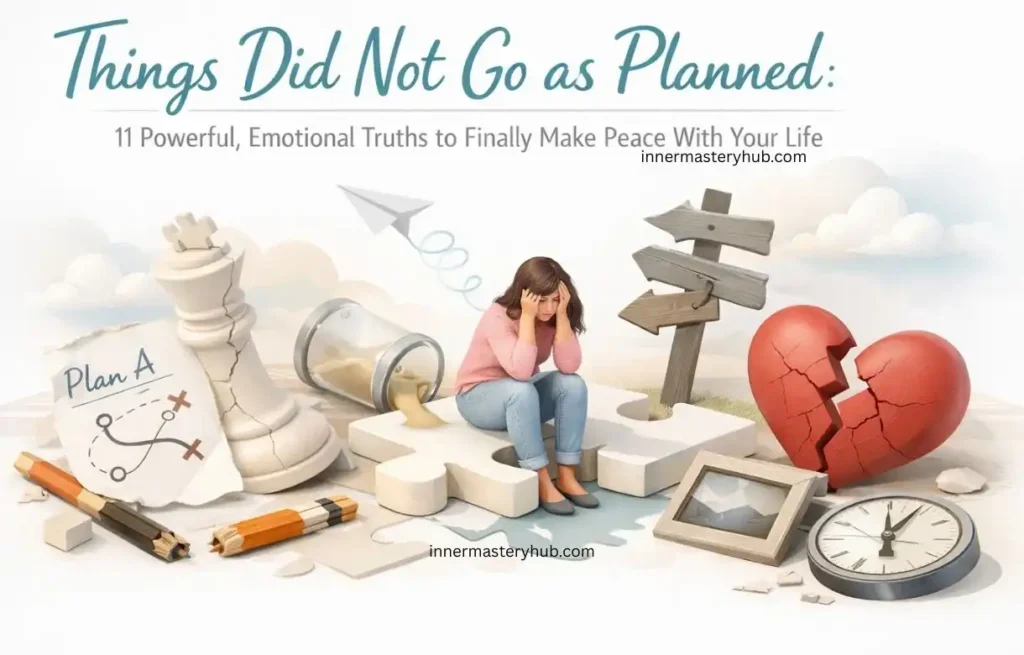
When Things Did Not Go as Planned: 11 Powerful, Emotional Truths to Finally Make Peace With Your Life
When things did not go as planned
When things did not go as planned, the pain isn’t only about what you lost, but about the story you built around who you were supposed to become. Peace begins when you stop fixing the outcome and start understanding the inner meaning your mind attached to the failure.
The Quiet Grief No One Sees
At some time, even though you were doing everything correctly, you look around and realise that things did not go as planned, not in a single, dramatic moment, but gradually, softly. The toughest part is that no one told you how lonely this realisation would be. Despite following the guidelines, making the sacrifices, and waiting patiently, your life continued to drift in an unknown direction.
You lament more than just unfulfilled dreams; you grieve the version of yourself you thought you would be by now. This sorrow feels like guilt, and an internal push to “catch up.” Underneath all of this, the true dilemma is not how to make my life better, but rather how to live with myself once the plan is gone.
Why does it hurt so much when things do not go as planned?
It hurts because when reality breaks away from the plan, it feels more like a personal failure than a life event since your brain connects plans with safety and control. You’re responding to the meaning your mind gave to the person you believed you had to become rather than just the circumstances.
When your plan fails, your mind immediately interprets it as “I did something wrong” or “I’m behind,” which naturally causes anxiety. Over time, this emotional loop changes your confidence and self-trust without you even realising it.
What’s the common misunderstanding about life not going as planned?
The most common misconception is that the agony stems from failure itself, but in truth, it stems from clinging to an old identity and refusing to accept the new reality. The issue isn’t that life took a different turn; rather, it’s that your internal expectations didn’t move with it.
The majority of counsel advises you to maintain your optimism or work harder. Still, these strategies fall short because they fail to recognise the internal grieving process that is taking place beneath the surface, where your mind is still devoted to a past version of your life.
What’s really happening inside you when plans fall apart?
Your brain senses an internal danger to stability, which triggers stress reactions designed to shield you from unpredictability. When a trigger upsets your expectations, you perceive it as self-blame, feelings like regret or anxiety surface, and the result is either emotional shutdown or overcontrol.
According to research on uncertainty intolerance, people are more distressed by uncertainty than by actual bad outcomes, which explains why unfulfilled ambitions cause more pain than obvious losses.
Why does common advice fail when things do not go as planned?
Common advice is unhelpful here because it puts action over meaning, urging you to “set new goals” or “move on” while your nervous system is still processing loss. Growth appears phony, and
Pretending to be alright makes you feel worse. Emotional suppression indicates that avoiding minimising disappointment increases long-term stress and reduces well-being.
How comparison makes unplanned lives feel unbearable
Pain is made worse by comparison because it transforms your personal disappointment into a public judgment, leading you to believe that everyone else is superior and you are flawed. Social comparison amplifies shame and shifts reality by triggering the brain’s reward and fear centres.
Research from Stanford University shows that curated success narratives increase feelings of inadequacy and depression, especially when personal goals feel unmet.
Why acceptance doesn’t mean giving up
Acceptance is letting up on the internal struggle against reality, not giving up ambition. Your energy returns, and clarity takes the place of self-punishment when you stop fighting what has already happened. This enables you to make more sincere decisions about what truly matches your life right now.
Acknowledging pain without identifying with it increases psychological flexibility, which is closely associated with mental health.

How to redefine success when things did not go as planned
Redefining success involves shifting away from outcome-based worth and towards alignment-based living, where meaning is derived from your actions rather than how closely life sticks to a predetermined path. Without discounting disappointment, this reframing reduces long-term stress and returns autonomy.
Long-term studies on life satisfaction show that internal values predict happiness more reliably than external milestones.
Subscribe to our newsletter to get the latest articles!
Why peace comes before clarity, not after
Emotional control leads to clarity rather than binding conclusions. Your brain can digest information without threat bias and panic-driven thinking when your nervous system is calm, which naturally leads to insight.
Neuroscience research confirms that stress narrows cognitive flexibility, while emotional safety expands perspective and creativity.
What making peace with your life actually looks like
Making peace is more about self-honesty and allowing pain without making it a life sentence than it is about confidence. You start paying attention to what is going on inside of you instead of wondering what ought to have happened.
This internal approval signals the point at which expansion stops being exhausting and becomes sustainable.
Key Takeaway: When the Plan Ends, Life Begins Differently
When things don’t go as planned, the true effort isn’t using new tools to recreate the same ideal; rather, it’s realizing that your worth isn’t based on following the plan exactly. Something
Your connection with your history needs to be updated in order to find peace, and that change alone has the power to change the course of the rest of your life.
Failure itself was not the source of the agony when things did not go as planned, but rather identity loss and unfulfilled expectations. Accepting reality, integrating emotions, and reframing success in terms of alignment rather than results are all necessary for achieving peace of mind.
FAQs: Things Did Not Go as Planned
What to say when things don’t go as planned
When things don’t go as planned, take a moment to think things through before acting, since calmness brings clarity. Instead of repressing your emotions, acknowledge them, adjust your expectations to reality, concentrate on the things you can manage at the moment, and take a single, sincere step forward instead of sticking to the previous plan.
What to say when things don’t go as planned?
Depending on the situation, you can say the following when things don’t go as planned:
1. “I’ll figure it out, but this isn’t how I imagined it.
2. “It’s okay that things didn’t turn out the way I had hoped.”
3. “Before deciding what to do next, I need a moment to process this.”
4. “I’m adjusting because plans changed.”
5. “It’s not the end, but it’s disappointing.”
These statements allow for improvement while understanding reality without placing blame on yourself.
Things will not always go as planned, but even the unplanned can be beautiful…
Things will not always go as planned, but even the unplanned can be beautiful, because it leads you to growth you couldn’t have imagined, lessons you didn’t know you needed, and versions of yourself you would never meet if everything went exactly right.
Why do I get so upset when things don’t go as planned?
You get upset when things don’t go as planned because plans give your brain a sense of control, safety, and identity. When reality breaks that plan, it can feel like a personal failure or a loss of direction, triggering stress and strong emotions, even if nothing is “wrong” with you.
I get so angry when things don’t go my way. What should I do?
Getting angry when things don’t go your way usually means you feel out of control. Pause before reacting, take a few deep breaths, and remind yourself that setbacks aren’t personal attacks. Change what you can change now, not what already happened.
What’s the first sign I’m making peace with my life?
The first sign is less urgency to explain or justify your path. When you stop arguing with reality internally, emotional energy returns naturally.
Why do I feel stuck when things did not go as planned?
Feeling stuck often comes from unresolved grief, not lack of motivation. Your mind may still be loyal to an old future, which blocks emotional movement. Until that loss is acknowledged internally, forward motion feels unsafe rather than exciting.