11 Signs You Are Not Controlling but Scared Inside

You are not controlling; you are trying to feel safe, understood, or secure, not trying to dominate others. What looks like control is anxiety, fear of uncertainty, or a need for emotional stability. It’s protection, not manipulation.
If you keep hearing that you are too controlling, it can mess with your head, because deep down, you don’t feel like a control freak at all. You have the impression of someone attempting to maintain stability, maintain relationships, and prevent a crisis from getting out of control. Furthermore, fear is typically the true version when you are honest with yourself. You are attempting to feel secure while taking charge.
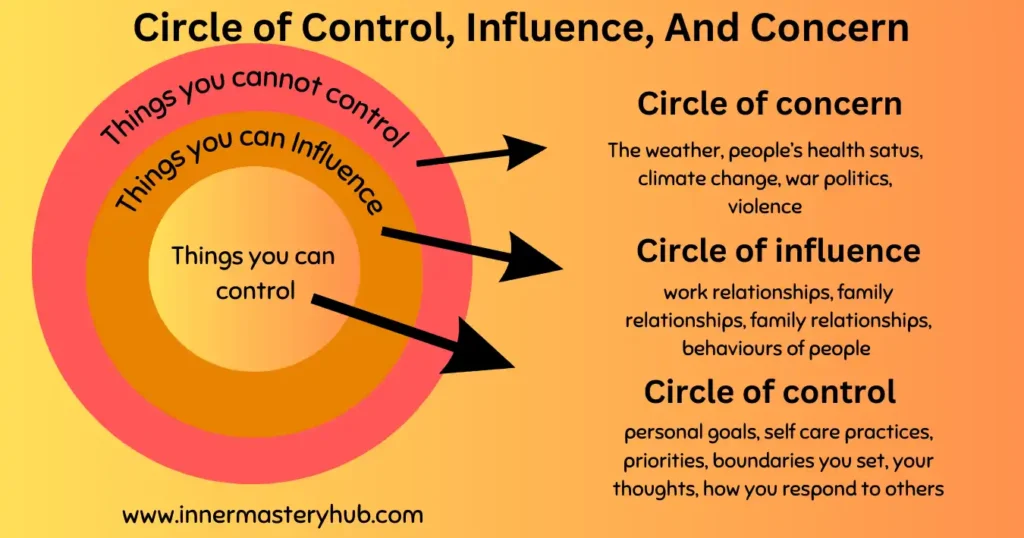
This distinction matters because boundaries are about what you will and won’t engage in, whereas control is about making someone do what you want. Control is attempting to select someone else’s activities, whereas a boundary is making your own decisions. To put it simply, control is intended to force others to do what you want, whereas limits convey what you’re willing and unwilling to interact with.
What Does “You Are Not Controlling but Scared Inside” Really Mean?
It means your need to control situations is not about power but about reducing fear. Your mind tries to manage uncertainty because it feels emotionally unsafe.
- Emotional Regulation: The ability to manage and respond to emotional experiences effectively.
- Control Behaviour: Actions aimed at reducing uncertainty or discomfort by managing people, outcomes, or environments.
When you try to control everything, it usually starts with a trigger. Something feels unpredictable. Your mind interprets it as a risk. That creates anxiety. Then you act, by controlling, to reduce that feeling.
But while it feels helpful, it also keeps the fear alive.
Why Do You Feel the Need to Control Everything?
You feel the need to control because uncertainty triggers fear, and control gives a temporary sense of safety.
Your brain is wired for Survival. According to research, humans are highly sensitive to uncertainty because it activates threat responses1.
Here’s what happens naturally:
- Something uncertain happens
- You interpret it as a potential problem
- Anxiety rises
- You try to control the situation
- Temporary relief comes
But because the fear isn’t resolved, the cycle repeats.
How Is Emotional Regulation Connected to Control?
Control is a substitute for emotional regulation when you don’t know how to process fear directly.
Instead of feeling emotions, you try to manage situations. That feels easier. But emotional regulation works differently.
Healthy emotional regulation includes:
- Noticing emotions without reacting immediately
- Allowing discomfort without fixing it instantly
- Understanding what the feeling is trying to tell you
Research shows that avoiding emotions increases anxiety over time2.
So while control feels like strength, it is often avoidance in disguise.
What Is the Common Misunderstanding About Control?
The biggest misunderstanding is believing that control equals strength, when in reality it signals unresolved fear.
You might think:
- “I just like things perfect”
- “I need things done right”
But underneath, there may be thoughts like:
- “What if this goes wrong?”
- “What if I lose something important?”
“The attempt to escape from pain creates more pain.” — Gabor Maté
Control is not the problem. The hidden fear behind it is.
What Happens Inside Your Mind? (Psychological Process Explained)
Your mind moves from trigger to fear to control behaviour automatically, often without conscious awareness.
Let’s break it down naturally:
- A situation feels uncertain
- Your brain interprets it as unsafe
- You feel anxiety or discomfort
- You act to regain control
- You feel temporary relief
But because the fear is not processed, it returns stronger.
A person constantly checks messages to avoid missing something important. The real issue with them is not the messages; it is the fear of being ignored or unimportant.
11 signs you are not controlling but scared inside
1) You ask for reassurance, but you don’t actually want to trap anyone
“Do you still love me?” you may ask. Or “Are we okay?” when you ask this question more than once. You’re not attempting to confine someone. You’re trying to soothe your body’s discomfort. Tension, worrying thoughts, and a tense feeling that prevents you from relaxing are common symptoms of anxiety.
Ask yourself, are you attempting to ease anxiety or to confirm love when you ask for assurance? Rather, try this: Request a brief, precise assurance that doesn’t require a drawn-out discussion. “At the moment, I’m feeling nervous. Please let me know if we’re alright and if we can talk later tonight.
2) You over-explain your needs because you’re afraid you’ll be judged
You write lengthy messages. Add extra context. You keep saying the same things using various examples. You strive to make your needs seem reasonable enough to be met since you don’t want to come across as “difficult.”
Self-examination: Do you believe that having a need is something you have to “earn”?
Stop after using a single, clear statement. That doesn’t feel right to me. I need us to approach it differently. Breathe and wait if your body starts to panic after you send it; your composure is part of the boundary.
3) You feel guilty after saying no, even when your no is reasonable
A domineering person typically feels entitled. On the other side, you refuse and then become the target as a result. You repeat their expression, their voice, and their quiet. You begin to question your selfishness.
Do you worry that setting limits would make you less loving?
Rather, try this: Combine your “no” with a firm “yes.” “I can do that tomorrow, but I can’t do it tonight.” This preserves your kindness without sacrificing your boundaries.
4) You focus on “rules” for yourself first, not on restricting someone else
This is a major hint. Usually, control involves the other person’s actions. However, boundary discussions focus on what you will do, what you will tolerate, and what you will avoid.
This can be a useful method to assess yourself: control is about their compliance, whereas a boundary is about your involvement.
When you feel the need to control someone, ask yourself: Do you choose your answer, or are you attempting to coerce them? Rather, try this: Change your phrases from “You can’t” to “I won’t.” “You can’t yell at me,” for instance, becomes “I won’t stay in a conversation where I’m being yelled at.”
5) You get triggered by silence, delayed replies, or changes in tone
You are capable of handling a lot of situations, but as soon as someone stops talking, your mind starts to imagine the worst. A brief pause is the beginning of a whole ending. This is related to anxiety, which often includes worrying about potential future events as opposed to merely the present.
Self-reflection: What is your mind’s first narrative about fear when you don’t receive a response? Make a plan to “pause.” “If I don’t hear back in two hours, I will do one grounding activity and then send one calm check-in, not five messages,” is an example.
6) You want clarity because your body hates uncertainty
You’re not attempting to control people like pieces on a chessboard. Your nervous system perceives uncertainty as danger, which is why you are trying to lower it.
When your plans are unclear, do you experience bodily tension? Clearly ask for clarification. “I do better when I have a plan. Can we decide by 6 pm? If they are unable to, you make your own decision and proceed.
7) You apologise quickly, sometimes even when you didn’t do something wrong
To maintain harmony, you apologise early, only to feel insignificant later. That tendency can stem from a fear of confrontation rather than a desire to rule.
Do you apologise to show kindness or to avoid trouble? Express gratitude rather than specific complaints. Try saying “Thanks for taking a minute to hear me” instead of “Sorry for bothering you.”

8) You can accept “no,” but you struggle with “maybe.”
People are surprised by this one. You can breathe if someone clearly says no. However, you spiral if someone is unclear, inconsistent, or contradictory. Because your brain is unable to predict what is safe, inconsistent signals can be a powerful trigger for nervous attachment behaviours.
Is uncertainty, rather than rejection, your main trigger? Set a time restriction and request a more precise response. “I can deal with yes or no, but I can’t remain in the middle. Will you be able to decide by tomorrow?
9) You try to “fix” the relationship fast because you can’t tolerate tension
You want the argument resolved right now, so the air is cleared before sleep. But you want to talk until it’s okay.
Do you push to solve things because you value peace, or because you fear abandonment? Agree on a repair window. “I want to fix this, but we’re both heated. Let’s pause and talk at 8 pm. I’m not going anywhere.”
10) You feel your fear in your body before you feel it in your thoughts
when your chest constricts, your stomach sinks. And your jaw tightens. You’re not being controlling in that way. That’s the activation of your stress reaction. Physical tension and symptoms, including tense muscles, difficulties sleeping, impatience, and trouble focusing, are frequently associated with anxiety.
When this happens, in what part of your body does fear initially settle?
Say, “My chest feels tight,” to describe the bodily sensation. That may seem straightforward, but it helps your brain shift from a state of panic to one of awareness.
11) You care a lot about fairness and respect, not about winning
Safety and respect are major factors in fear-based behaviour. You’re not pursuing domination if your desires are to be treated with respect, taken into consideration, included, and not misled. You want to be stable.
Do you want to be in charge, or are you just requesting basic respect?
Clearly express your value. “I care about respect. I’ll go if we can’t have a calm conversation and return later.
How to calm the fear without giving up your needs
You don’t require a personality makeover if you recognise yourself in these clues. You need tools for repair, safety, and clarity. Here are some easy ways to achieve that without changing who you are.
Start by practising “slow clarity.” You slow down and ask for what you need in a single sentence rather than rushing to get answers. Being calm makes you speak more clearly, while fear makes you talk more.
Secondly, set personal boundaries. Return to “Here’s what I will do” if you see yourself slipping into “You must do this.” This respects their decisions, maintains your dignity, and is consistent with what boundaries are supposed to be.
Third, create a relaxing routine for the specific moments when you are stuck in a spiral. Water, a quick stroll, and three deep breaths can be all that is needed. Body-based relaxation is beneficial since anxiety resides in the body as much as the thoughts.
Fourth, distinguish between danger and terrifying. Although fear can seem urgent, it’s not always a warning that something negative is happening right now. Psychiatric sources define fear as an immediate threat response, whereas anxiety is more concerned with the future and anticipates it. When you keep it in mind, you can approach your fear as an emotion rather than an order.
Fifth, have one honest conversation about your pattern. Not a dramatic confession, but a calm truth. You can say, “I’m working on how I react when I feel insecure. I don’t want to control you. I want to feel safe, and I’m learning better ways.” That sentence alone can change the tone of a relationship, because it shows accountability without self-hate.
What Mistakes Do People Make When Dealing With Control?
People try to control behaviour directly instead of understanding the fear behind it.
Common mistakes include:
- Trying to “stop controlling” without addressing fear
- Judging themselves harshly
- Ignoring emotional needs
- Seeking perfection instead of safety
According to Brené Brown:
“We cannot selectively numb emotions. When we numb pain, we also numb joy.”
So when you suppress fear, you also limit emotional freedom.
Is Being Controlling Actually a Form of Anxiety?
Yes, controlling behaviour is a manifestation of anxiety, especially related to uncertainty and fear of loss.
Studies show that intolerance of uncertainty is strongly linked to anxiety disorders3 (Carleton, 2016).
This means:
- The more you fear uncertainty
- The more you try to control
- The more anxiety increases
It becomes a loop, not a solution.
How Can You Tell If You Are too much Controlling or Just Afraid?
If your actions are driven by fear of “what if” rather than present needs, it is likely fear-based control.”
Ask yourself:
- Am I trying to prevent something bad?
- Do I feel anxious when things are uncertain?
- Do I struggle to let things be?
If yes, then the issue is not control; it is fear seeking safety.
You are not controlling, you are scared inside, and you can still be healthy.
You are not controlling just because you desire clarity, respect, and reassurance. If you have been feeling guilty about your reactions, let this settle lightly. It doesn’t make you a bad person, even though you may be afraid on the inside, and that fear may be driving you towards unhelpful habits. It makes you human, particularly if you’ve discovered that love can vanish, emotions can change quickly, or individuals can abruptly leave.
Being “chill” all the time when your needs are neglected is not the intent. Losing the panic and maintaining your needs is the aim. You are not controlling when you express what you will and won’t accept, when you respect the other person’s choices, and when you handle your fear without turning it into pressure. With a few steady tools and honest self-reflection, you can build a calmer bond and a calmer mind, because you deserve safety that doesn’t depend on control.
FAQs
What’s the difference between boundaries and you not controlling?
You are not in control when you set limits on what you will accept and how you will respond. You become controlling when you try to force someone’s choices. Boundaries protect your peace and safety, while too much control removes the other person’s freedom and creates pressure.
How do I know that I am not controlling and I’m just protecting myself?
Look at your goal and your behaviour. If you’re asking for respect, honesty, and emotional safety, you’re likely protecting yourself. If you’re demanding compliance, monitoring them, or punishing them to get your way, it leans toward too much controlling. Intent and delivery both matter.
What if they keep crossing boundaries and say “you are not controlling” is still wrong?
If they repeatedly disrespect your limits and then label you as too much controlling, the issue may be their refusal to be accountable. At that point, your boundary becomes action: creating distance, reducing access, or leaving. Boundaries are meant to protect your well-being, not just keep the peace.
Why do people say “you are not controlling” even when I set boundaries?
Some people dislike boundaries because they lose easy access to you. Others may genuinely feel your tone is intense if you speak from fear. You can keep the boundary and still adjust the delivery by using calm words, clear limits, and steady follow-through.
Is asking for reassurance proof that “you are not controlling”?
Asking for reassurance can be normal, especially when you feel anxious or insecure. It becomes unhealthy when you demand constant reassurance, test them, or panic when they don’t reply fast. You can ask for support while also learning to calm yourself between responses.
Is it “you are not controlling” if I ask my partner not to do something?
It depends on how you ask. “You can’t do that” can sound too much controlling, but “I’m not okay being in a relationship where that happens” is a boundary. You’re explaining what you will accept and what you’ll do next, not controlling their life.
How do I respond when someone says, “You are not controlling,” but they still blame me?
Stay calm and get specific. Say, “I’m not trying to control you. I’m explaining what I need and what I will do if it continues.” Then name the behaviour and your boundary. If they refuse to set limits and shame you, pay attention to that pattern.
Are boundaries the same as ultimatums if “you are not controlling”?
They’re not the same. A boundary is about your safety and your actions. An ultimatum feels like pressure or a threat to force a result. The clean test is a choice: you state your limit, they choose what they do, and you follow through respectfully.
Does checking their phone or location mean “you are not controlling”?
Usually, checking becomes controlling because it turns you into a monitor and removes trust and privacy. If trust is broken, it’s better to talk about it directly and decide what you need to feel safe. Monitoring may calm you briefly, but it increases anxiety long-term.
How can I set limits so “you are not controlling” and I don’t sound harsh?
Use “I” statements, keep it short, and focus on your behaviour. Try: “I won’t stay in a conversation with yelling, so I’ll step away and talk later.” Calm tone helps. You can be firm without being mean, and clear without sounding like a boss.
- Grupe, D. W., & Nitschke, J. B. (2013). Uncertainty and anticipation in anxiety. Nature Reviews Neuroscience, 14(7), 488–501. ↩︎
- Gross, J. J. (2015). Emotion regulation: Current status and prospects. Psychological Inquiry, 26(1), 1–26. ↩︎
- Carleton, R. N. (2016). Fear of the unknown: One fear to rule them all? Journal of Anxiety Disorders, 41, 5–21. https://doi.org/10.1016/j.janxdis.2016.03.011 ↩︎