
Healing The Wounded Feminine Energy: 10 Signs and Causes

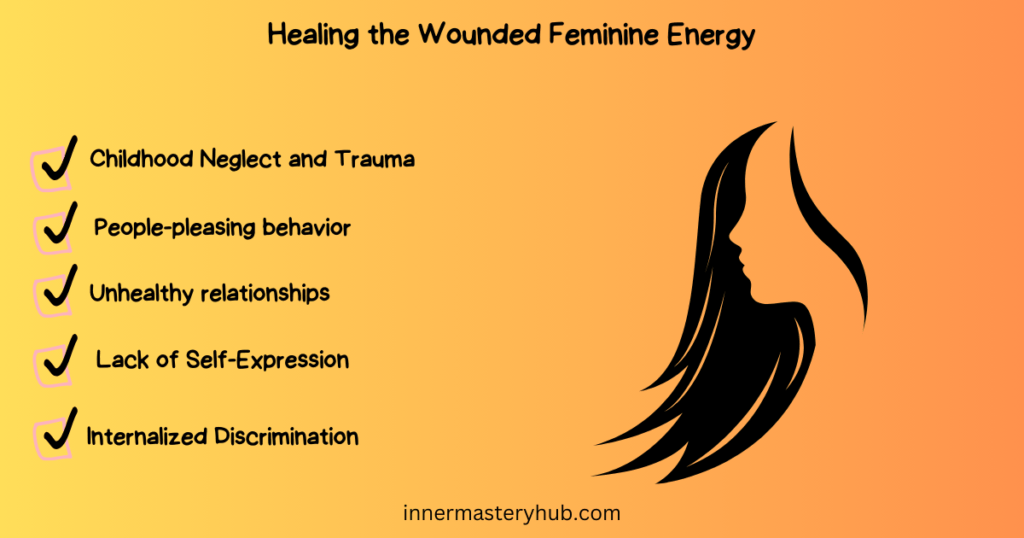
Wounded feminine energy refers to emotional wounds that disconnect a person from inherent qualities like intuition, self-worth, vulnerability, and healthy emotional expression. It develops through childhood trauma, emotional neglect, unhealthy relationships, or societal conditioning. Healing includes self-awareness, inner child work, boundary setting, emotional regulation, and reconnecting with one’s authentic self.
The wounded aspects of our feminine energy are represented by the wounded feminine archetype, which profoundly shapes society. This personality type can show up in various ways, including emotional sensitivity, difficulty setting boundaries, and a tendency to prioritise others’ needs over one’s own.
Kristin Neff found that self-compassion helps reduce self-criticism, anxiety, and depression while increasing emotional resilience and psychological well-being1. Learning to treat yourself with kindness rather than judgment is an important step in healing the wounded feminine energy.
Although these characteristics can be charming, they can also lead to selflessness, jealousy, and a feeling of disconnection from our true selves. To accept our feminine essence in our completeness, rather than rejecting it, to heal the wounded feminine.
Causes of wounded feminine energy
Some factors are included in wounds of feminine energy; they stem from social conditioning and early-life experiences. Strong and fearless women are often not appreciated in certain cultures and societies.
Tradition, manners, literature, art, and habits shape gender stereotypes. A male culture expects women to nurture and care for others, not themselves. Men prefer monetary success, personal achievement, and power. Women must hide their divinity and uniqueness.
Wounds can manifest in various ways:
1. Childhood Neglect and Trauma
Negative experiences, such as emotional abuse and neglect, that a woman had as a child, with traumatic stress, can have a significant impact on her feelings of self-worth and female vitality. She may feel insecure, ashamed, and overcome with a sense of inadequacy as a result of these factors.
Trauma researcher Bessel van der Kolk explains that childhood trauma is not only remembered by the mind but is also stored in the body, affecting emotional regulation, relationships, body awareness, and the ability to feel safe2. Trauma-informed practices, mindfulness, and body-based therapies can support recovery.
2. Societal Expectations and Cultural Conditioning
Social conventions and belief systems devalue the feminine archetype and prefer qualities typically linked with masculine energy, such as aggressiveness and competitiveness. This conditioning can cause women to repress their natural gifts and intuition, which further damages their energy.
3. Unhealthy relationships
Having unhealthy relationships can make the wounded feminine archetype and encourage negative self-beliefs, especially when they involve romantic partners or family members. Feelings of codependency, emotional manipulation, and a lowered sense of self-worth can result from these interactions.
According to John Bowlby’s Attachment Theory, our earliest relationships with caregivers shape our sense of safety, trust, and self-worth3. Inconsistent, neglectful, or emotionally unavailable caregiving can contribute to insecure attachment patterns that resemble what many describe as wounded feminine energy.
4. Lack of Self-Expression and Emotional Suppression
Women lose touch with their true selves when they fail to express their self-image, deny their needs, and repress their emotions. This repression may result from feelings of emptiness, frustration, and a sense of being lost or disconnected from one’s authentic self.
Physician and author Gabor Maté emphasizes that emotional suppression, chronic people-pleasing, and abandoning one’s authentic needs often develop as survival strategies during childhood4. Healing involves reconnecting with your authentic emotions, establishing healthy boundaries, and learning to respond to yourself with compassion instead of self-judgment.
5. Internalized Discrimination
Wounded feminine energy can be shaped by internalised discrimination based on masculine and feminine archetypes, which is the unintentional acceptance of unfavourable stereotypes and ideas about women. It can result in resistance to embracing one’s feminine power, self-criticism, and a lack of self-acceptance.
The healing journey of the wounded feminine energy involves introspection and personal development. It includes figuring out the underlying reasons for the hurt, accepting how it affects our lives, and making the necessary adjustments to heal and integrate our feminine energy into our wholeness.
Signs of wounded feminine energy
Common indicators of wounded feminine energy:
1. Self-esteem and Self-worth
Women with wounded feminine energy have low self-esteem and self-worth. She may feel unlovable, unimportant, or inadequate and seek validation from others.
2. Trouble defining boundaries
Healthy boundaries safeguard emotional and physical health. However, women with damaged feminine energy may struggle to say no, express their needs, or assert themselves. They put others before themselves, which can lead to feelings of anger and exhaustion.
3. People-pleasing behavior
A lady with wounded energy may put others’ needs before her own. She may feel pressured to hide her genuine self to please others and seek external validation.
4. Sensitive and Emotional
Women are naturally sensitive and emotional. This sensitivity can be heightened when hurt, leading to emotional reactivity and difficulties in controlling emotions. She may have significant mood swings, feel overwhelmed by negative emotions, or have trouble communicating.
Due to her overly sensitive nature, stemming from past hurts and wounds, she may tend to exaggerate her perceptions. She finds it hard to forgive others for even petty mistakes or for the hurt they have caused her.
5. Fear of intimacy and vulnerability
Genuine partnerships require closeness and vulnerability. However, wounded feminine energy women might fear intimacy and vulnerability owing to past hurt or betrayal. They may isolate themselves, build walls, or harbour resentment towards people.
6. Overexpression of masculine energy
Women may overexpress assertiveness, anger, or competition to compensate for suppressed feminine energy. Overcompensation can further separate them from femininity.
7. Body Image and Self-Acceptance
Wounded feminine energy can lead to challenges with body image and self-acceptance. She may criticise her appearance, compare herself to others, or engage in destructive activities to meet unrealistic beauty standards.

5 Ways To Heal The Wounded Feminine Energy
Here are five steps to healing injured femininity. Cultivating your feminine divine takes effort, healing, and self-compassion, but the trip is well worth it.
1. Identify your wounds
Create an inner dialogue with yourself, compassionately acknowledging all those past wounds, as the first step in healing. Let forgiveness flow during this inner dialogue. Please forgive others who may have contributed to the healing of wounded feminine and masculine energies, and most importantly, forgive yourself for judging or expecting that young, vulnerable spirit. Release blame and replace it with understanding to heal.
Rekindle your childlike curiosity. What made her smile? What sparked her passion? Bring those elements back into your life. Enjoy the simple pleasures and sincerity of rediscovering your youth’s genuine passion.
Healing your inner child means rewriting your present and future narrative, not just healing past scars, but also taking a path of self-discovery, self-love, and empowerment. Healing the wounded feminine requires patience and tenderness to recover the strength of vulnerability. Your inner kid is supporting you along.
2. Heal your inner child
Healing your inner child is vital in healing the wounded feminine. The inner child represents the part of us that holds onto the emotional pain and trauma from our childhood experiences. Connecting with and healing our inner child can release these negative patterns and reclaim our true feminine power.
Create an environment within yourself that allows you to communicate with your inner child without judgment. Envision this as a pleasant and understanding space. Acknowledge your inner child’s pain and wounds to begin the healing process.
Consider times when vulnerability and innocence met challenges and hardships. Feel the feelings and don’t avoid the discomfort. Speak gently with your inner child and reassure her that you will listen and understand. Forgiveness helps in healing the wounded feminine. Accept that others have been shaped by their experiences and forgive those who have caused them harm. Most importantly, forgive yourself. Recognise that you did your best and release any self-blame or guilt.
Reconnect with your inner child’s optimism and curiosity. What delighted her? What sparked her curiosity? Bring your passions back into your life. Joyful activities can restore and restore the wounded feminine energy.
3. Connect with your intuition.
Intuition, or “inner wisdom,” can help you develop life with sincerity and self-trust. Start by practising mindfulness daily. Slow down, breathe, and be present. Mindfulness quiets external noise, letting your intuition speak. Meditation helps you hear signals within yourself. Body wisdom is valuable. Be mindful of bodily, gut, and emotional responses. Body signals convey intuition. If something feels odd or resonates deeply, investigate. The body is a vital tool for inner awareness.
Journal your thoughts, feelings, and decisions in a notebook. Reflecting on past choices and experiences may reveal patterns and insights. Making time for reflection, through nature walks, solitude, or meditation, deepens your relationship with your inner guidance. Use creativity to access your intuition. Creativity allows natural expression through art, music, and writing.
4. Set Boundaries
Setting boundaries is necessary in healing the wounded feminine energy. When you set boundaries, you send a message to yourself and others that you are worthy of respect and that your needs are essential. This can be a complicated process, especially if you are accustomed to putting the needs of others over your own. However, it is necessary to reclaim your power and live a more fulfilling life.
Spend less time with energy drainers. Limit interaction with friends and family who make you feel terrible about yourself or continually demand your time. Say no. It’s okay to decline time- or energy-intensive requests.
5. Heal generational trauma
Generational patterns refer to the beliefs, behaviours, and attitudes that we pass down from one generation to the next. They can be positive or negative, but they can also be harmful, especially when they reinforce dangerous stereotypes about women. Generations pass down wounded masculine and feminine energy.
The first step to unlearning generational patterns is to become aware of them. What beliefs, behaviours, and attitudes did you learn from your parents, grandparents, or other caregivers? How are these patterns affecting your life today?
If you were taught to care for others while disregarding your own needs, to give of yourself without receiving anything in return, or that your looks don’t matter, even being an overly independent woman who takes pride in not needing anyone.
Once you are aware of your generational patterns, it’s important to challenge them. Are these beliefs still relevant today? Are they causing you harm? If so, it’s time to let them go. As you let go of harmful generational patterns, you can create new, positive patterns for yourself. What do you want to believe about yourself and women in general? What behaviours do you want to adopt?
People Also Ask
1. What does “Healing the Wounded Feminine” mean?
It means restoring the parts of your feminine self (intuition, receptivity, nurturing, sensuality) that have been hurt, suppressed, or ignored due to trauma, shame, societal pressure, or past relationships. It’s about reclaiming emotional balance, self-worth, and authentic expression.
2. What are common signs that your feminine energy is wounded?
You may avoid vulnerability, suppress emotions, overgive in relationships, fear intimacy, struggle to receive love or pleasure, feel disconnected from your body, or constantly seek approval from others.
How long does healing the wounded feminine take?
There’s no fixed timeline. It’s a gradual process that depends on the severity of the wounds, your readiness to heal, and how consistently you practice self-awareness, self-care, therapy, and inner work. Healing may continue over many months or years.
4. What practices help in healing the wounded feminine?
Some helpful practices: journaling, meditation, body awareness (yoga, dance), expressive art, shadow work, breathwork, emotional release, inner child healing, boundary setting, and receiving safe support (therapist, coach, sisterhood).
5. Can men experience wounded feminine energy, too?
Yes. “Feminine energy” refers here to qualities such as vulnerability, receptivity, intuition, and emotion. Anyone (regardless of gender) can carry wounds in those areas. Healing can benefit all by restoring balance within.
6. Will healing the wounded feminine energy change my personality?
Not in a drastic way. Instead, you reclaim your wholeness, so your true self becomes clearer. Some traits suppressed before may emerge (softness, intuition), but it’s less “change” and more “rediscovery” and integration.
7. Does healing mean forgetting the past?
No. Healing is not about ignoring or erasing trauma; it’s about acknowledging, integrating, and transforming those wounds. The goal is not to be controlled by the past while learning from its wisdom.
8. How do I know I’m making progress?
You’ll notice small shifts: better emotional regulation, healthier boundaries, more ease in saying no, deeper self-love, stronger intuition, allowing pleasure, and fewer anxious patterns in relationships.
9. Can therapy help in healing the wounded feminine?
Absolutely. A trauma-informed therapist or counsellor can guide you safely through exploring deep emotional wounds, offer tools, provide holding space, and help navigate complex parts of the healing journey.
10. Are there risks or pitfalls in attempting this healing?
Yes, going too deep too fast may trigger overwhelming emotions, retraumatization, or burnout. Without proper support or boundaries, you might get stuck. It’s essential to pace yourself, work with professionals, and establish grounding practices.
- Neff, K. D. (2003). Self-compassion: An alternative conceptualization of a healthy attitude toward oneself. Self and Identity, 2(2), 85–101. ↩︎
- The Body Keeps the Score. (2014). Viking. ↩︎
- Bowlby, J. (1988). A Secure Base: Parent-Child Attachment and Healthy Human Development. Basic Books. ↩︎
- Maté, G. (2022). The Myth of Normal: Trauma, Illness, and Healing in a Toxic Culture. Avery. ↩︎
Written By Mehwish Qurayshi
Mehwish Qurayshi is a Trauma-Informed Emotional Wellness Counsellor trained through NICABM’s Treating Trauma Master Series, which includes NBCC-approved education in Trauma Treatment and Emotional Wellness & Emotional Intelligence – Sourcecode Academia. She has over five years of experience providing emotional wellness counselling, helping individuals heal from trauma, regulate emotions, and build healthy relationships.